
Brown Oak Hallway Table
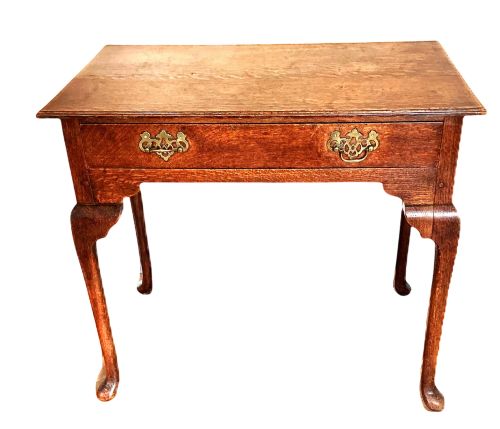
A brown oak hallway table brings deep grain and sturdy domestic timber to an entrance, offering a practical surface for daily use.

Brown Oak Hallway Table
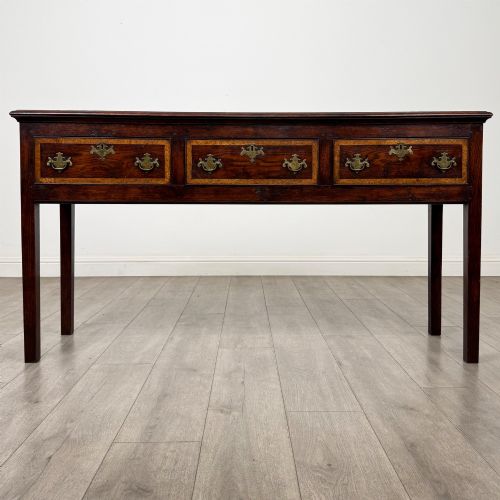
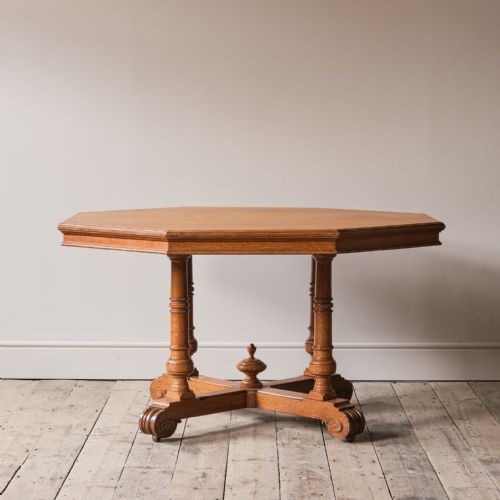
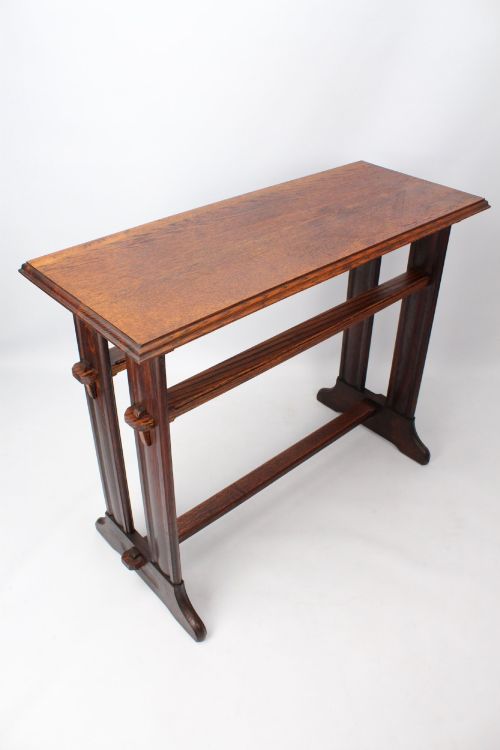
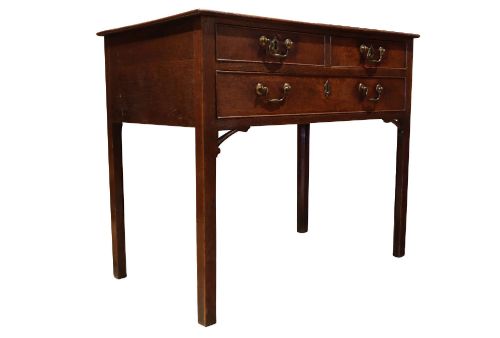
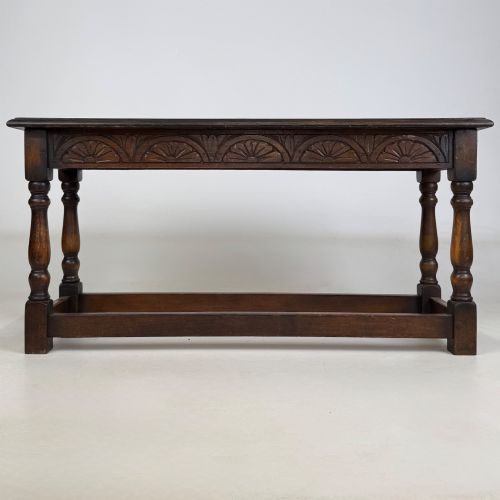
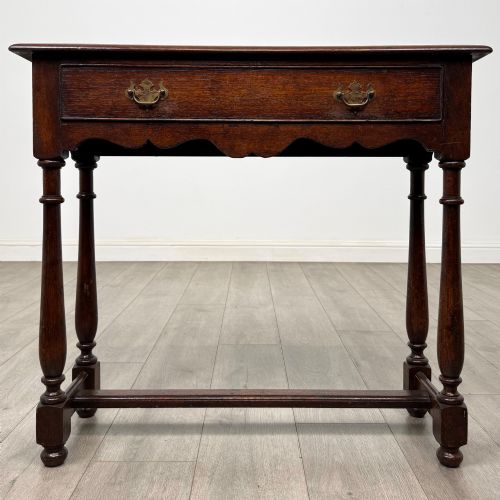
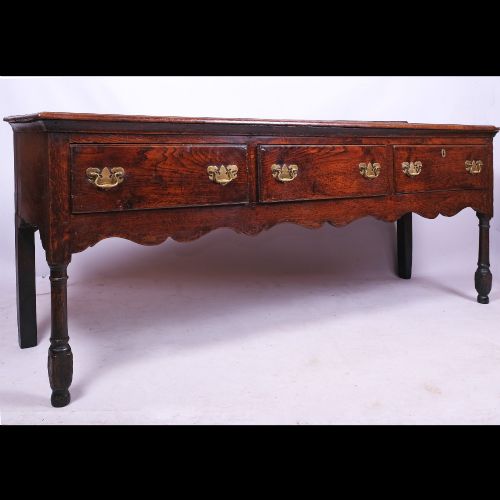
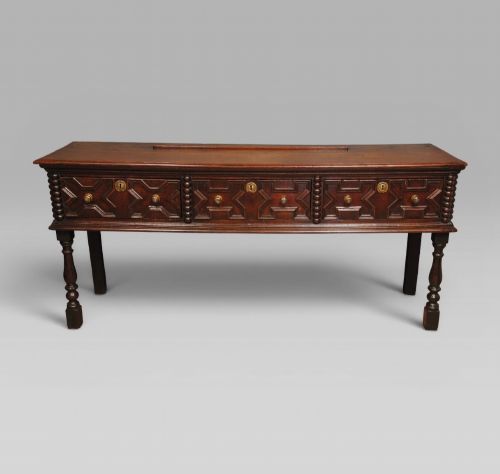
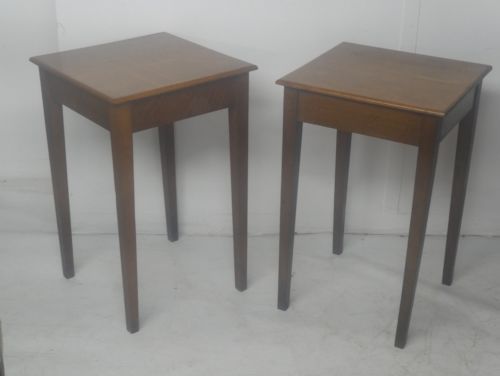
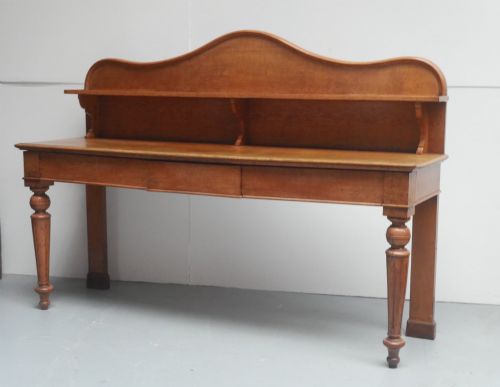
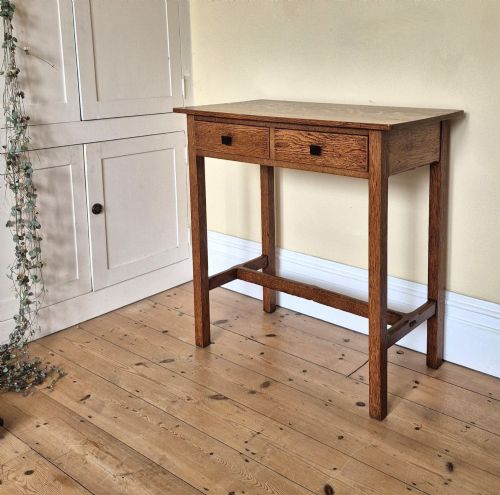
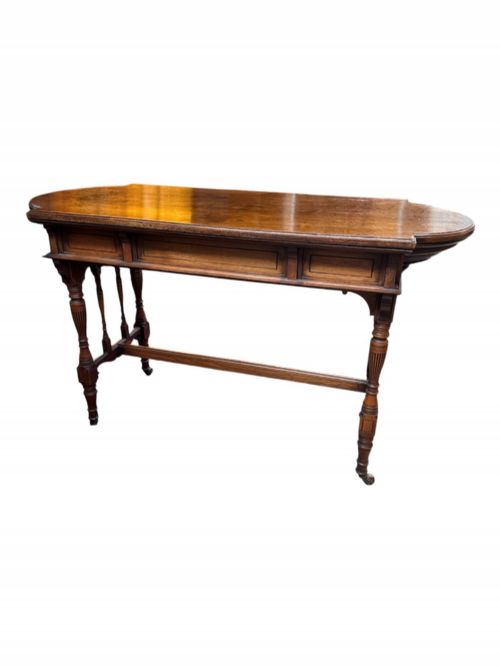
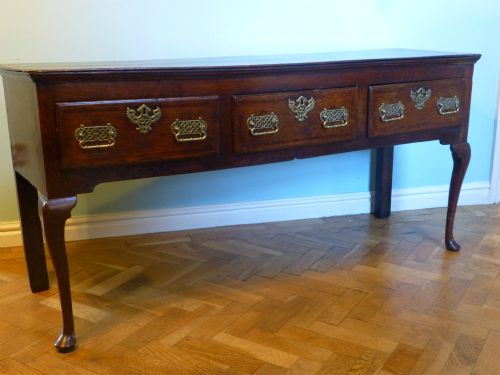
A brown oak hallway table encompasses various domestic forms utilised for entryways, primarily represented here by side tables, console tables, and narrow dresser bases. These items emerge from multiple eras, stretching from the seventeenth century through the Georgian and Victorian periods into the early twentieth century.
Buyers encountering this selection will find side tables and console tables designed with slim proportions suited for narrow corridors. The inventory spans regional English craftsmanship alongside continental and Scottish pieces, utilising the distinct dark and honey tones of mature oak.
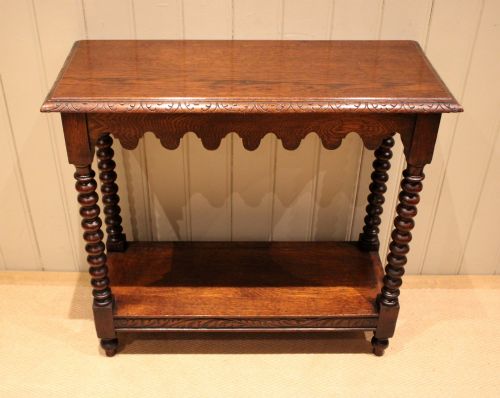
Form follows utility across these listings, ranging from simple turned-leg tables to elaborate carved examples with pot boards or drawers. The variety reflects changing domestic requirements for hallways and reception spaces over three centuries.
Materials and construction methods
Makers constructed these tables predominantly from solid oak, sometimes accented with brass hardware, marble tops, or fabric inserts. The timber displays natural figuring, grain variation, and rich patination developed through decades of exposure and use.
Joinery methods rely on traditional pegged mortise and tenon joints, hand-cut dovetails for drawers, and turned or carved supports. Carved details, block fronts, and gallery rails demonstrate the hand of the artisan across different historical revivals.
Several pieces include unusual details such as Green Man carvings and ships gallery frames designed to stop loose items sliding off at sea.
Distinctions in quality and execution
Quality rests upon the selection of the timber and the crispness of the hand-carved or turned elements. Superior examples display tightly figured oak boards and balanced proportions that suit restricted hallway spaces.
The integrity of the original construction and the preservation of surface patination separate standard regional pieces from finer workshops. Untouched secondary timbers and minimal structural intervention elevate a piece within its period.
Hubert Simpson of Kendal
The Brown Oak Hallway Table Glossary
- Dresser base
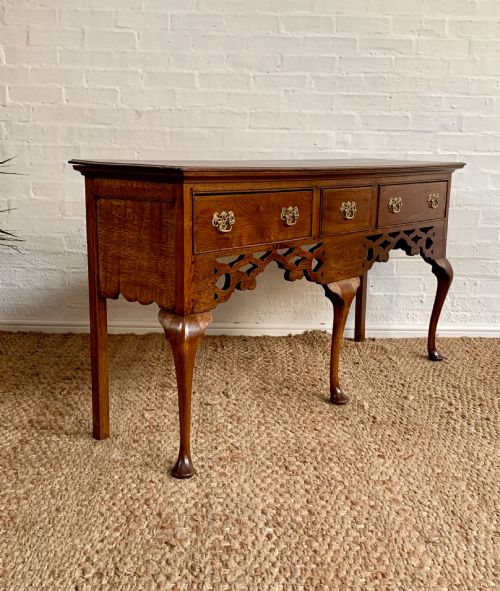
- A low wooden storage unit featuring drawers or cupboards beneath a flat top, frequently utilised as a serving table or hallway console.
- Console table
- A table designed to stand against a wall, sometimes supported by wall brackets or console legs, making it ideal for narrow entryways.
- Pot board
- An open lower shelf fitted beneath a dresser base or table, originally intended for storing ceramic pots and kitchenware.
- Bobbin turned
- A style of furniture leg or stretcher shaped on a lathe to resemble a series of wooden bobbins or reels strung together.
- Lowboy
- A small eighteenth-century English table with one or more rows of drawers supported by four tall legs.
Brown Oak Hallway Table: Frequently Asked Questions
How do I measure for a narrow hallway table?
Measure the available floor space along your wall, ensuring you leave adequate clearance for doors to open and people to pass by comfortably. Pay attention to the depth of the table top and the clearance needed for any lower shelves or drawers.
Take into account skirting boards and plug sockets when checking the footprint. A narrow console or side table with slim legs will maintain an open feel in a confined corridor.
Can these antique tables handle daily hallway use?
Solid oak furniture is exceptionally durable and built to withstand the demands of a busy entrance hall. The robust nature of hardwood timber resists the knocks and scrapes typical of high-traffic areas.
Regular dusting and occasional treatment with suitable wax will preserve the finish. The dense grain of mature oak absorbs everyday wear while developing an even richer character over time.
How do I identify a Georgian oak table?
Look for characteristic construction details such as hand-cut dovetails within the drawer construction and pegged joints on the frame. Georgian pieces often feature simple cabriole legs, straight tapered legs, or pad feet.
The timber on eighteenth-century examples typically exhibits a deep, warm patina acquired through long exposure to light and domestic use. Proportions during this period tend to prioritize clean lines and functional elegance.
What is a pot board base?
A pot board base includes an open timber shelf positioned low down between the legs of a table or dresser. This design feature provided functional storage space for heavy items in traditional domestic settings.
In a modern hallway, this lower shelf offers a practical spot to store baskets, shoes, or decorative objects. It also adds structural rigidity to the overall frame of the table.