





Long Oak Server Table
A long oak server table brings honest grain and generous proportion to a dining room, combining utility with presence.

Long Oak Server Table
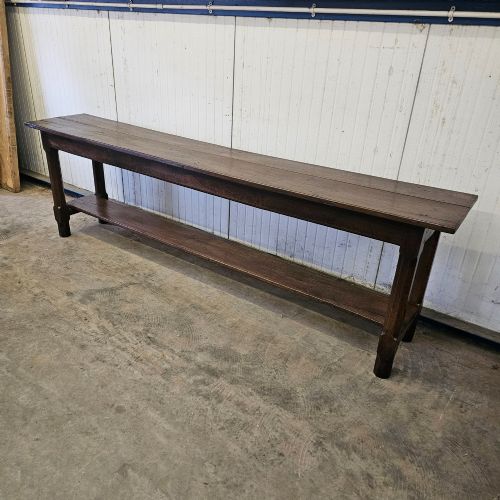
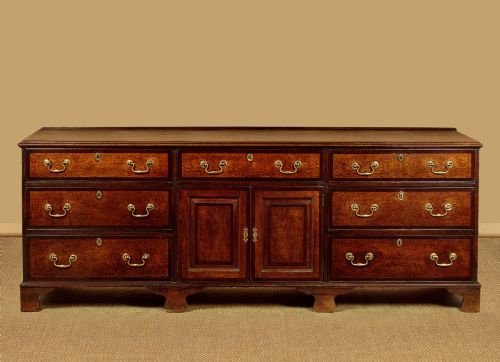
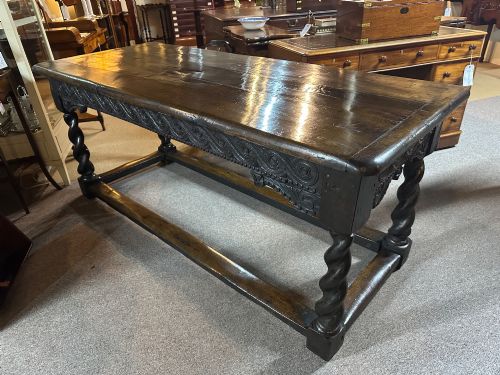
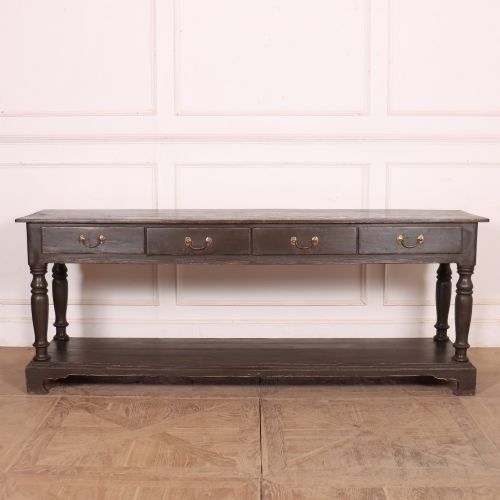
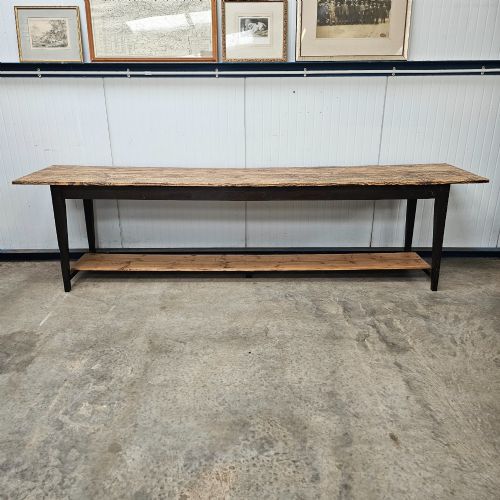
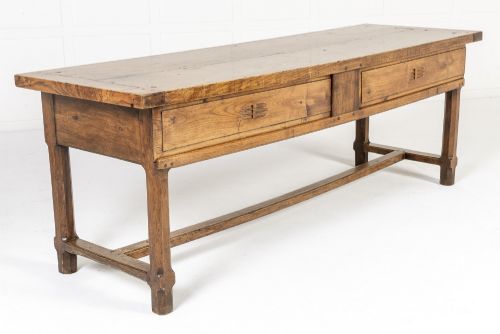
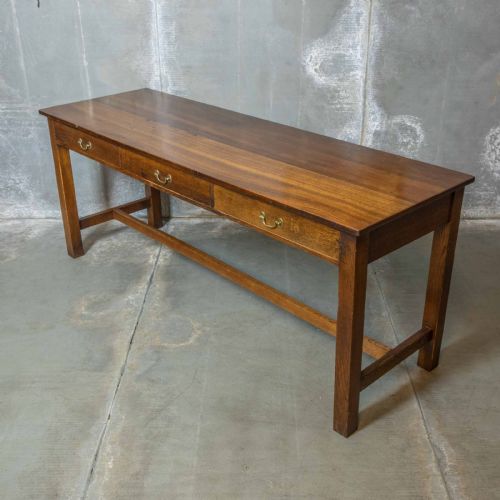
A long oak server table serves domestic spaces with length and surface area, drawing from 18th century, 19th century, and early 20th century periods. These pieces appear in forms such as serving tables, drapers tables, refectory tables, and harvest tables.
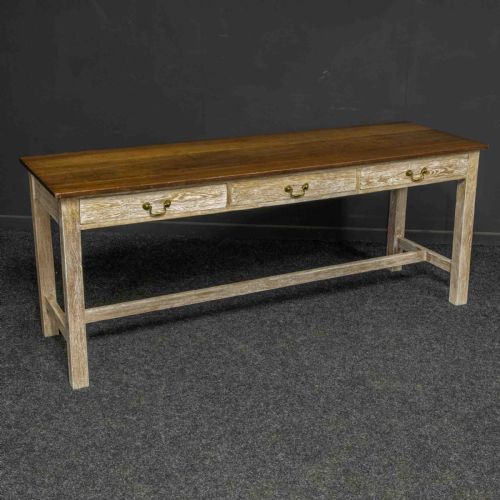
French Country, English Country House, and rustic farmhouse styles dominate the selections, alongside Gothic Revival influences. Buyers encounter variations ranging from bleached oak finishes to two tier formats and ships gallery designs.
Materials and construction
Makers relied primarily on solid oak and pine timbers, incorporating brass hardware where functional details demanded metalwork. Construction methods prioritised sturdy framing to support monumental proportions, spanning lengths up to four metres.
Surfaces exhibit natural timber grains, often stripped or bleached to reveal the underlying wood texture. Underframes incorporate architectural elements such as Gothic bracing and tier structures to ensure rigidity.
Long Oak Server Table Retail Price Guide 2026
Typical asking prices for long oak server table among the pieces listed under this phrase on Sellingantiques today, from the lower quarter to the upper quarter. They describe what is for sale here now, not the wider market.
Form variations include drapers tables, refectory tables, console tables, and ships gallery tables.
Assessing quality and character
Quality rests in the architectural integrity of the timber framing and the honesty of the surface finish. Superior examples display mature grain patterns and harmonious proportions without excessive restoration.
The distinction between standard utility pieces and finer examples lies in the subtlety of the underframe detailing and the preservation of original patination across the oak surface.
The Long Oak Server Table Glossary
- Drapers table
- A long utility table traditionally used in textile shops, characterised by generous length and often featuring lower tiers for storage. These tables provide deep surfaces suitable for modern serving and display.
- Refectory table
- A long, narrow dining table historically used in monasteries and large halls. They are built with robust underframes and stretchers to maintain stability across extended spans.
- Bleached oak
- Timber treated to lighten its natural tone, exposing the grain with a pale, matte finish. This treatment imparts a softer visual weight to substantial furniture.
- Ships gallery
- A raised rim or edging fitted to a tabletop to prevent items from sliding off during movement. This practical maritime feature appears on specialist tables from the early twentieth century.
Long Oak Server Table: Frequently Asked Questions
How do I style a long server table?
Position the table against a dining room wall or use it centrally as a serving station during gatherings. Its length accommodates heavy platters, lamps, and decorative ceramics with ease.
Keep surrounding seating simple to let the timber proportions define the room. The piece naturally anchors large wall spaces without requiring heavy accompanying furniture.
What is the difference between a refectory and a drapers table?
Refectory tables traditionally feature heavy stretcher bases designed for communal dining halls. Their narrow proportions and sturdy construction focus on seating large groups.
By contrast, drapers tables offer wider surfaces and often include lower shelves or multiple tiers. They originate from retail environments where merchants folded and displayed textiles.
Are these tables suitable for daily use?
Solid oak and heavy pine construction ensures these tables withstand daily domestic demands. The robust timbers resist regular wear and develop a richer character over time.
Routine maintenance involves simple dusting and occasional waxing to protect the dry timber surface. Avoid placing hot dishes directly onto untreated wood.
How do I date an antique oak table?
Dating relies on tool marks, joint construction, and the overall style of the underframe. Eighteenth-century examples display hand-cut joinery and deep timber patination, while twentieth-century pieces often show machine-finished uniformity.
Hardware details, such as brass fittings and auxiliary timber choices like pine, provide further clues to the manufacturing era. Comparing leg turnings and stretcher placement against known period styles helps confirm the date.