

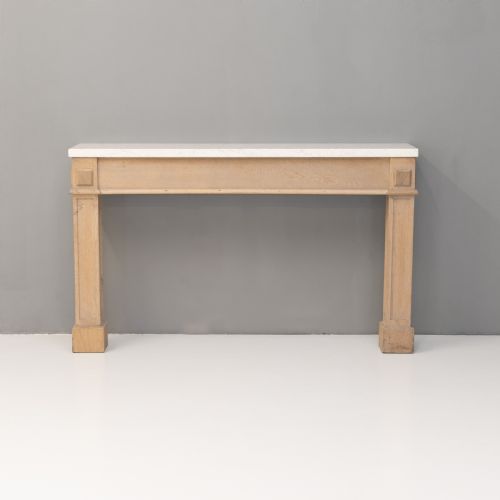


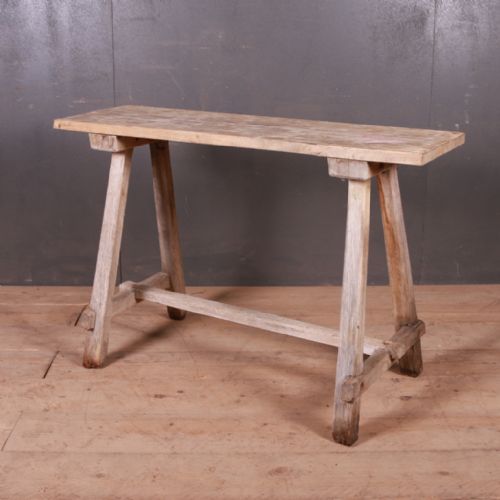


Narrow Oak Console Table
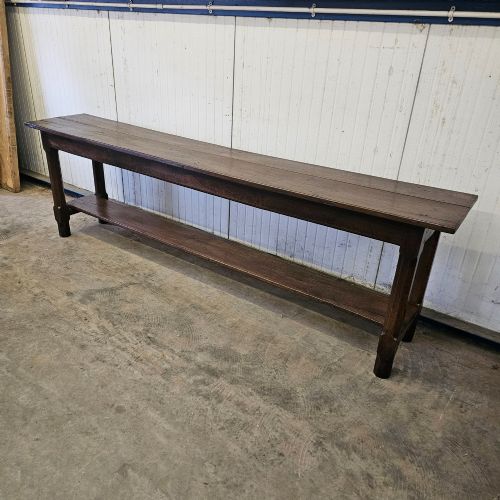
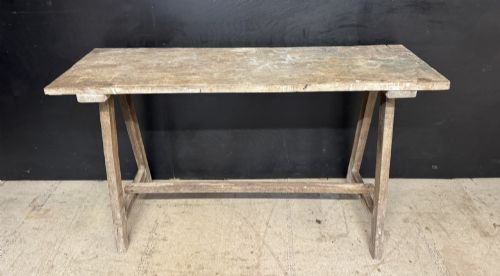
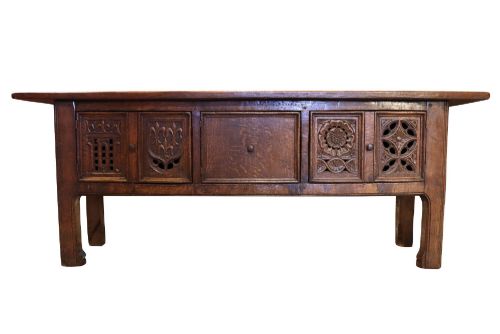
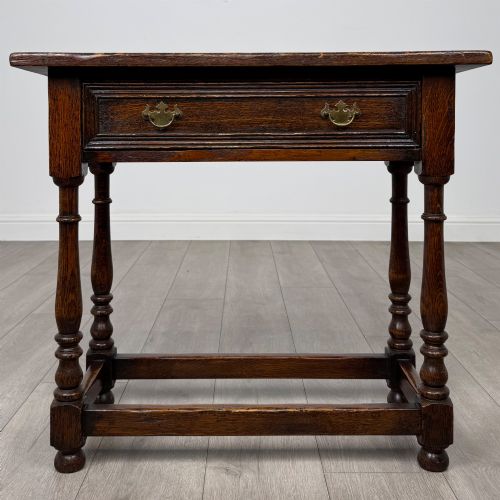
These narrow oak console table pieces bring compact utility and historic character to hallways and living spaces.

Narrow Oak Console Table
A narrow oak console table serves as a slim surface for compact hallways and tight living spaces, drawing on historic forms like dresser bases, side tables, and refectory boards. Buyers searching for a narrow oak console table will find examples ranging from late nineteenth century Gothic Revival designs to early twentieth century Edwardian pieces.
The selection includes variations with distinct regional origins, such as Scottish items alongside English and French provincial examples. Forms vary from simple side tables and trestle supports to gateleg dining tables and dropleaf spacesavers adapted for narrow proportions.
How they were made
Construction relies heavily on solid timber, with oak forming the primary structural material across the inventory. Selected pieces incorporate brass hardware and marble elements to complement the woodwork.
Surface treatments range from traditional dark finishes to bleached oak effects. Structural details include carved Gothic underframes, X-frame supports, and drop-leaf mechanisms designed to save space.
Narrow Oak Console Table Retail Price Guide 2026
Typical asking prices for narrow oak console table among the pieces listed under this phrase on Sellingantiques today, from the lower quarter to the upper quarter. They describe what is for sale here now, not the wider market.
Listings span the late nineteenth century through the nineteen-twenties, featuring oak alongside brass and marble elements.
What varies in quality
Quality differences rest on the integrity of the timber and the depth of period detail, distinguishing simple utilitarian items from pieces with refined Gothic or Neoclassical motifs. Finer examples display careful carving on underframes and balanced proportions suited to narrow footprints.
The distinction between standard side tables and superior historic console pieces lies in the articulation of the joints and the presence of period hardware like brass fittings. Variations in surface condition, from deep historic patina to deliberately bleached oak, influence the visual weight of each piece.
The Narrow Oak Console Table Glossary
- Console table
- A table designed to stand against a wall, typically featuring a narrow depth to suit hallways or reception rooms.
- Dresser base
- The lower section of a traditional kitchen or dining storage unit, often adapted as a sturdy side or console table.
- Gothic Revival
- A nineteenth-century style drawing on medieval architectural motifs, featuring pointed arches, tracery, and heavy carved underframes.
- Gateleg table
- A table with hinged drop leaves supported by legs that swing out like gates to hold the leaves in place.
- Trestle table
- A table consisting of two or more support frames connected by a longitudinal beam, offering stability for long and narrow surfaces.
Narrow Oak Console Table: Frequently Asked Questions
Where should I put a narrow oak console table?
These tables fit naturally in narrow hallways, entrance passages, or behind sofas where floor space is limited. Their shallow depth allows them to provide a surface for lamps or mail without obstructing movement.
In living areas, they serve as display surfaces for books and decorative objects while maintaining an open room layout.
How do I date a narrow oak console table?
Dating relies on construction methods, timber patination, and stylistic markers such as Gothic Revival carvings or Arts and Crafts simplicity. Pieces from the late nineteenth and early twentieth centuries show distinct joinery practices and hardware choices.
Comparing structural details against documented period styles helps establish the likely decade of manufacture.
What is the difference between a console and a side table?
Console tables are specifically designed to stand flat against a wall, often featuring decorative front legs and simpler rear supports. Side tables are typically freestanding items designed to be accessed from multiple angles.
In narrow proportions, both forms overlap in function as hallway or wall-adjacent surfaces.
How do I care for antique oak furniture?
Maintain oak surfaces by dusting with a dry cloth and avoiding placement near direct heat sources or strong sunlight. Periodic treatment with appropriate wax preserves the historic patina and protects the grain.
Avoid excessive moisture and use protective pads under any objects placed on the timber.