







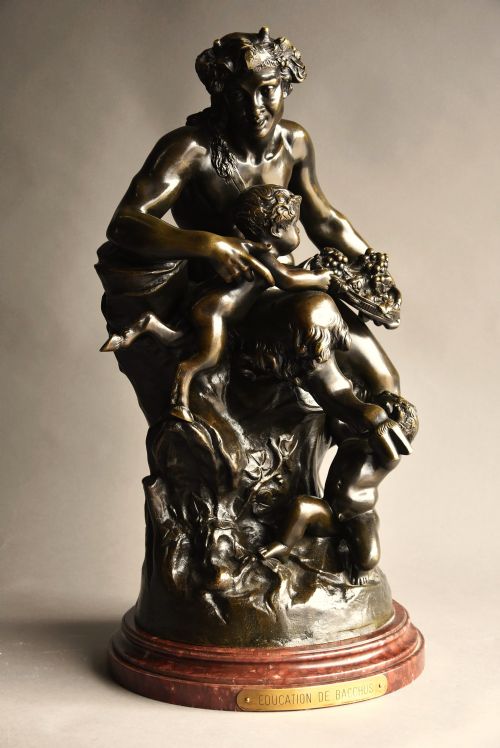
Dark Bronze Classical Statue
A dark bronze classical statue brings the weight of antiquity and nineteenth-century foundry skill directly into a room.
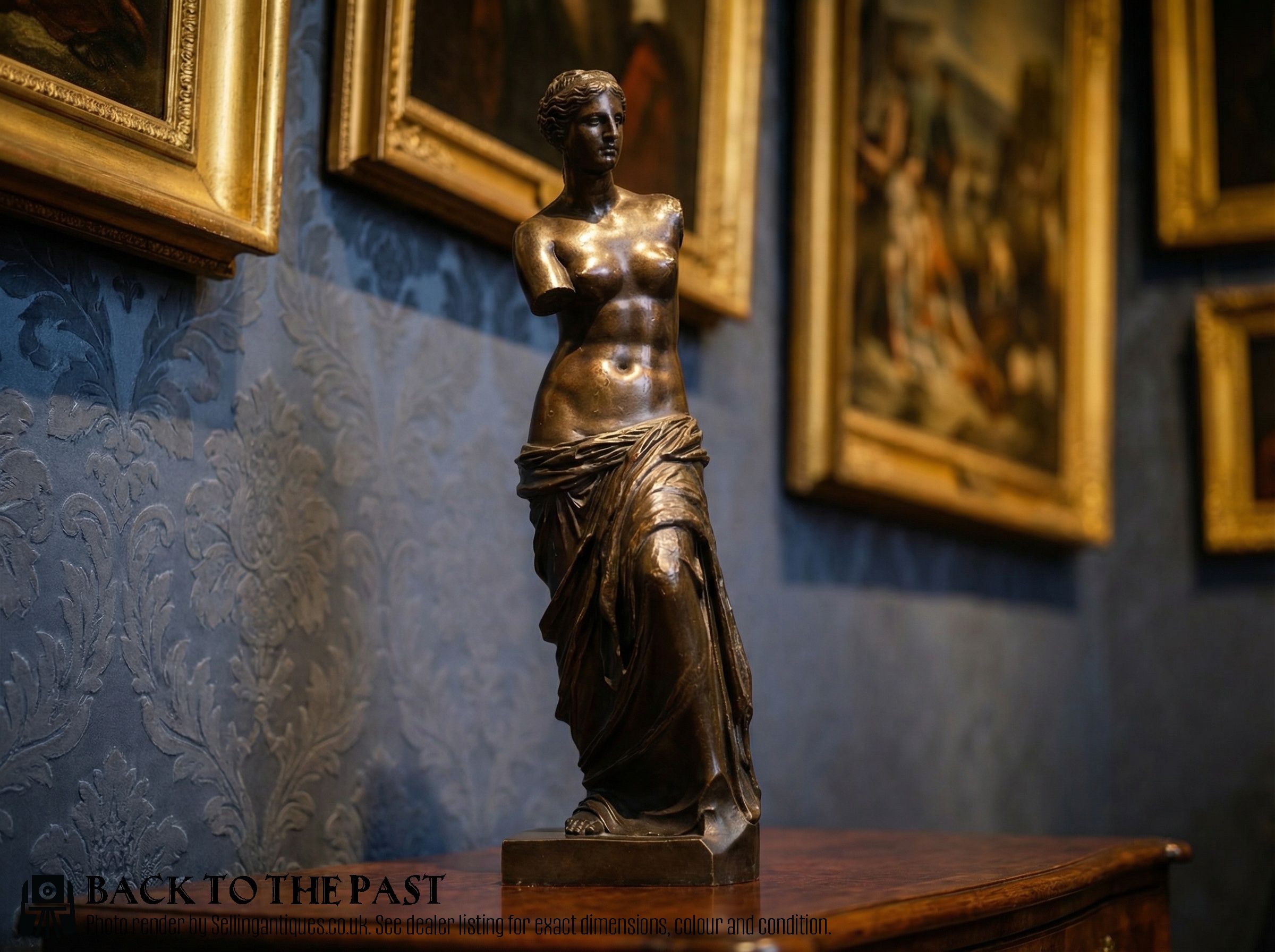
Dark Bronze Classical Statue
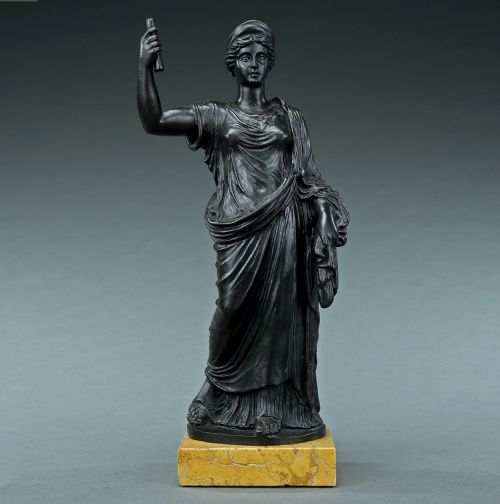
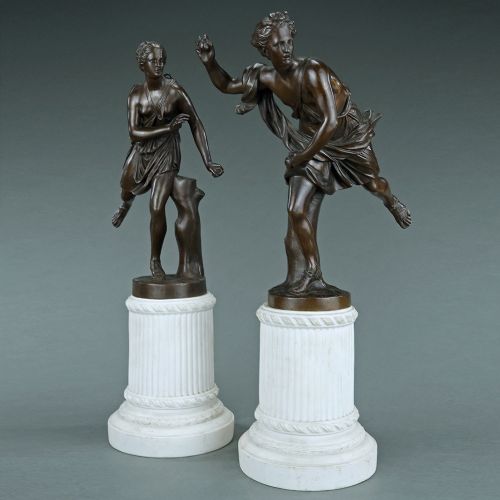
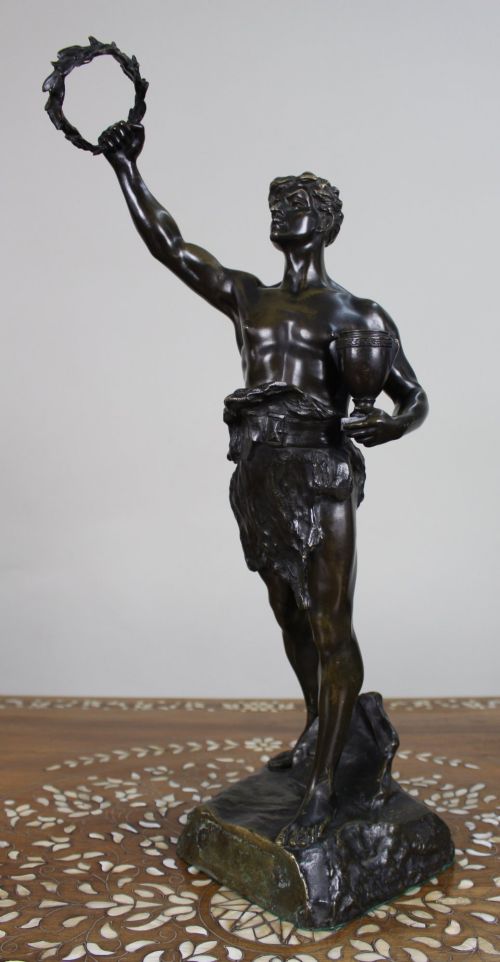
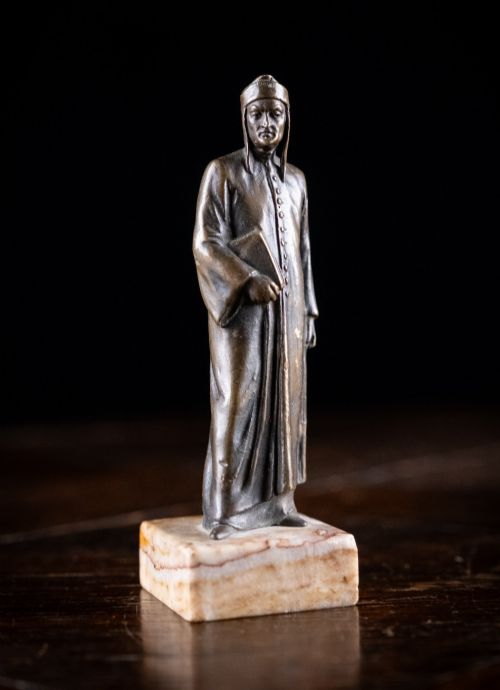
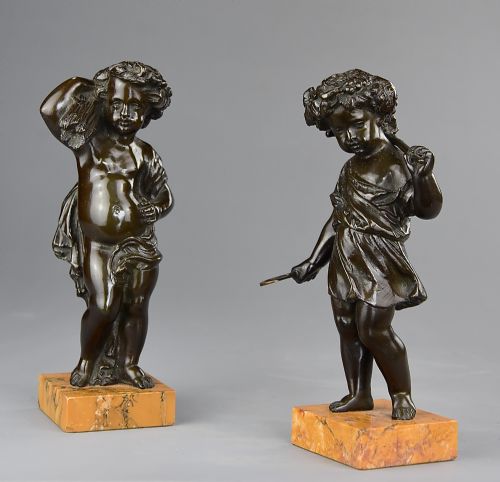
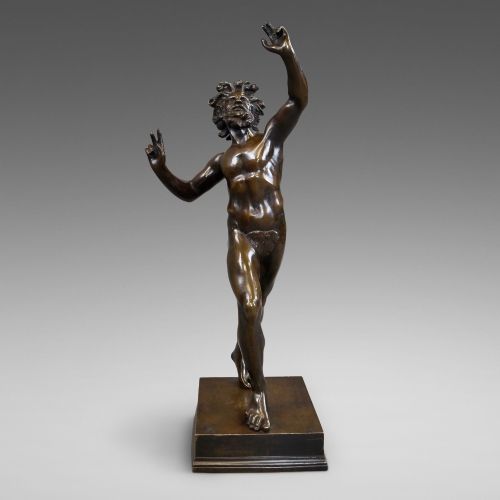
A dark bronze classical statue takes many forms, ranging from Grand Tour souvenirs of mythological figures like Narcissus and dancing fauns to large scale reductions of celebrated museum marbles. These objects emerge predominantly from nineteenth-century French and Italian workshops, capturing deities, literary figures, and heroic ancient narratives in solid metal.
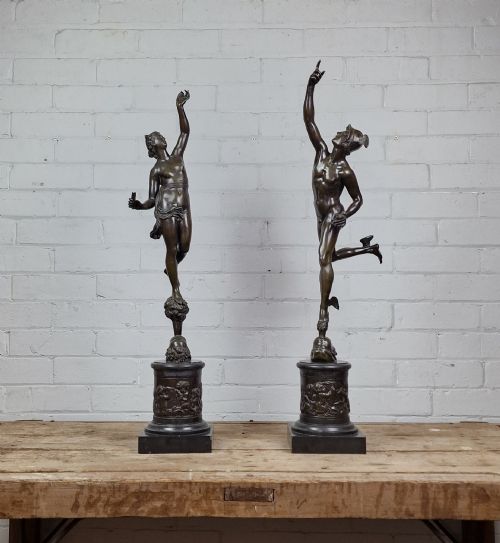
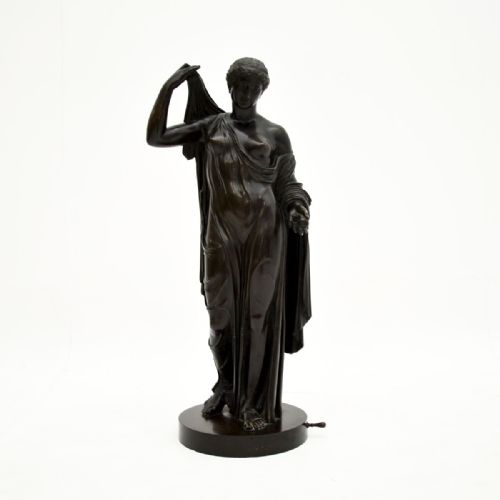
The prevalent iterations on this page include statuettes and larger sculptures cast after famous classical models such as the Venus de Milo, the Borghese Gladiator, and the Medici lions. Many rest directly upon integrated or separate bases made from fossil, grey, or Siena marble, anchoring the figural work in the neoclassical taste of the period.
How they were made
Foundries utilised the lost-wax casting method or sand casting to capture intricate details in bronze before applying chemical patination to achieve deep, dark brown or black surface tones. These patinated surfaces were often hand-finished with cold chiselling to sharpen hair, drapery folds, and musculature.
Sculptures frequently incorporate mounting hardware to secure the heavy metal figures onto shaped marble plinths, sometimes utilising mixed media elements such as painted plaster or gilt bronze highlights on cast metal bodies.
Listings feature materials spanning bronze, patinated bronze, painted plaster, marble, and gilt bronze across the nineteenth century.
What varies in quality
Quality rests upon the crispness of the chasing and the fidelity of the cast to the original antique model, where superior examples retain sharp facial expressions and deep relief in drapery. Weaker casts exhibit blurred edges and smoothed-out details resulting from worn production moulds.
The sophistication of the dark patina and the selection of the marble base dictate the upper tiers of production, distinguishing standard souvenir foundry work from masterworks bearing signatures of renowned founders or sculptors.
Ferdinand Barbedienne·Moreau Family·Émile Louis Picault·Mathurin Moreau·Hamo Thornycroft·G. Amodio Naples·C J R Colinet
The Dark Bronze Classical Statue Glossary
- Patina
- The surface coloration and sheen developed naturally with age or applied chemically by a foundry to achieve dark bronze tones. This chemical layer protects the underlying metal while defining the visual depth of the sculpture.
- Grand Tour
- A cultural journey undertaken by wealthy young Europeans in the eighteenth and nineteenth centuries to collect classical art and souvenir bronzes. These pocket-sized or cabinet-scale sculptures served as tangible proof of classical education.
- Chasing
- The manual post-casting process of refining a bronze sculpture using chisels, punches, and hammers. Skilled artisans used this technique to clear out trapped metal and sharpen surface textures.
- Lost-wax casting
- A traditional method of metal casting where a wax model is melted away from a ceramic mould to allow molten bronze to take its exact place. This technique permits the reproduction of highly complex undercuts and fine lines.
Dark Bronze Classical Statue: Frequently Asked Questions
What is a Grand Tour bronze?
A Grand Tour bronze is a nineteenth-century souvenir miniature cast in Italy or France for travellers visiting ancient ruins and museums. These pieces reproduced famous classical sculptures on a manageable scale for domestic display.
They served both as academic mementos and decorative ornaments for libraries and drawing rooms across Europe.
How do I identify a cast after the antique?
Casts after the antique reproduce renowned Hellenistic or Roman marble statues housed in European collections, such as the Borghese Gladiator or the Venus de Milo. Founders scaled these monuments down into portable bronze formats while retaining the classical poses.
Examining the subject against known museum pieces usually reveals the specific ancient source.
Why do some bronzes have marble bases?
Marble bases provided visual weight and structural stability to cabinet sculptures, mirroring the architectural pedestals of full-sized antiquities. Workshops utilised various stones including fossil marble and Siena marble to complement the dark patinated metal.
This combination was particularly favoured during the Victorian period for neoclassical display pieces.
How should I care for a dark bronze sculpture?
Dark bronze requires minimal intervention, needing only gentle dusting with a soft, dry cloth to prevent particulate buildup on the patinated surface. Avoid chemical cleaners or polishes which can strip away the historical chemical colouration.
Maintaining a stable indoor humidity helps protect both the metal and any associated stone plinths.