


Dark Bronze Candle Stands
Dark bronze candle stands bring weight and deep metallic lustre to a room, ranging from simple Regency candlesticks to elaborate French candelabra.
Dark Bronze Candle Stands
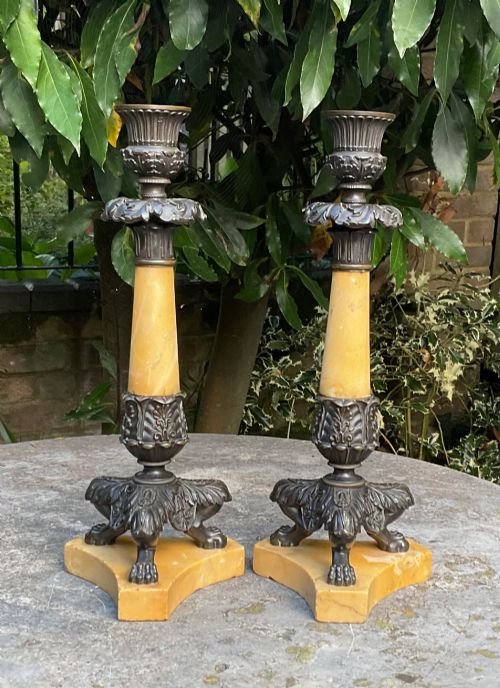
Dark bronze candle stands encompass a diverse range of lighting supports, from single candlesticks to multi-branch candelabra and tall torcheres. These objects appear in periods spanning the Regency era, the mid-nineteenth century, and into the early twentieth century.
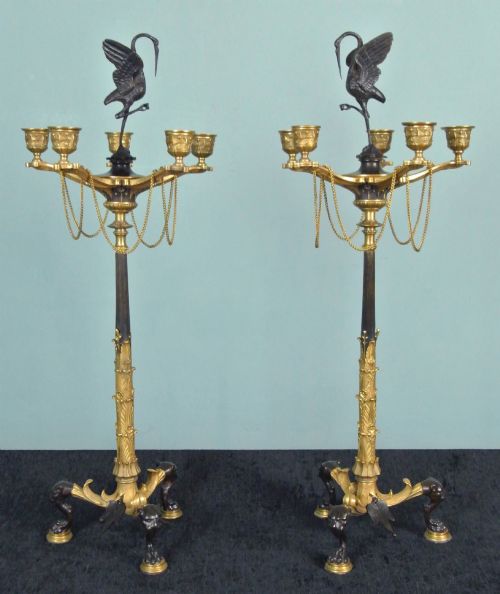
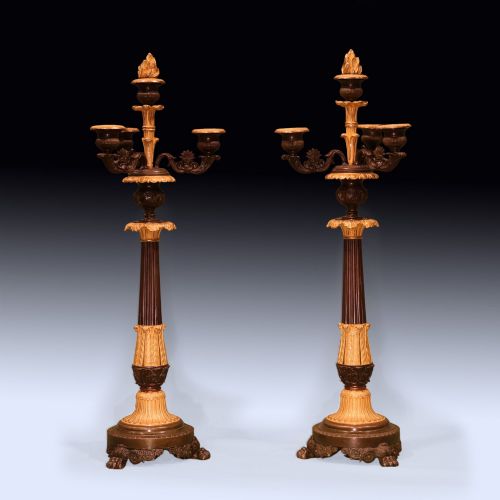
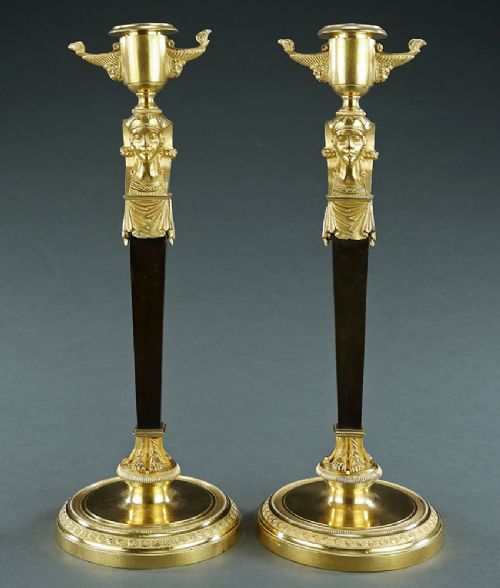
The inventory on this page is dominated by pairs, frequently combining dark patinated bronze with ormolu, gilt bronze, or marble bases. Forms range from classical columns and Athenienne shapes to figural designs depicting characters on stilts, soldiers, and putti.
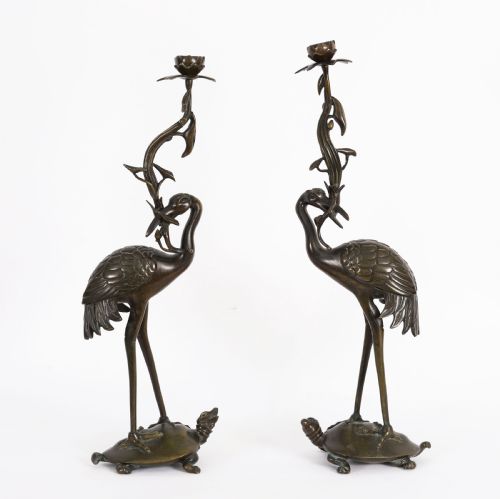
Origins stretch across English, French, and Japanese workshops, reflecting styles from French Empire and Renaissance Revival to Gothic and Art Deco. Buyers will frequently encounter cast metal pieces alongside patinated spelter and brass variants.
Quality differences
The integration of materials also defines the upper tier, where gilt bronze ormolu mounts fit flush against the dark bronze body rather than showing gaps. Weight, stability, and the richness of the underlying patina distinguish workshop output from mass-produced foundry work.
Materials listed range from traditional bronze, ormolu, and brass to patinated spelter, cast iron, marble, and mahogany.
Barbedienne·George Smith·Thomas Hope·Humphrey Hopper
The Dark Bronze Candle Stands Glossary
- Ormolu
- Gilded bronze applied as a decorative mount onto darker bronze bodies. This technique was widely utilised by French makers during the nineteenth century.
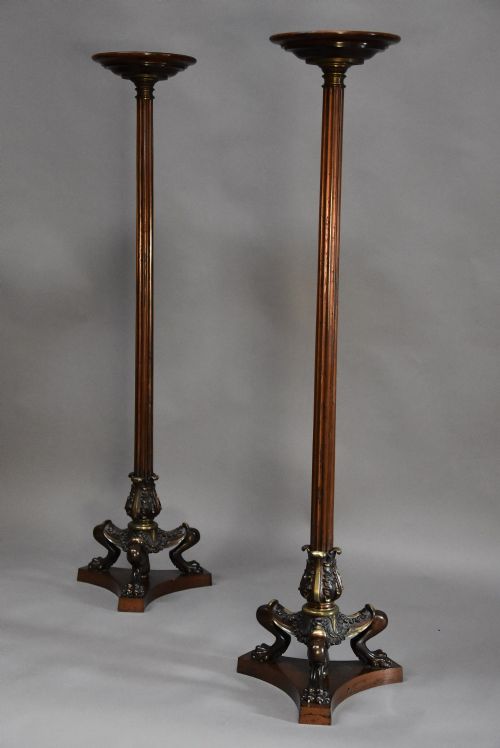
- Torchere
- A tall stand or pedestal designed to support a light source. Examples in the evidence take the form of tall bronze and mahogany columns.
- Pricket
- A sharp metal spike set in the centre of a drip pan to hold a candle. This form appears on Japanese and nineteenth-century brass examples.
- Spelter
- A zinc alloy used as a cheaper alternative to bronze. It frequently receives a dark bronze patina to imitate heavier cast metal.
- Retour d'Egypte
- A decorative style inspired by Napoleon's campaign in Egypt. It incorporates classical pharaonic motifs into nineteenth-century lighting.
Dark Bronze Candle Stands: Frequently Asked Questions
How do I clean dark bronze candle stands?
Dust the surface gently with a soft, dry cloth to remove accumulation without disturbing the patination. Avoid harsh modern chemical polishes which can strip away the dark finish and underlying gilding.
For stubborn grime, use a slightly damp cloth followed immediately by thorough drying. Preservation of the historic surface finish remains paramount for retaining character.
Were these stands used for dining tables?
Shorter pairs of candlesticks were frequently placed on dining tables, sideboards, or mantelpieces to provide evening illumination. Taller candelabra and torcheres served as floor-standing or pedestal lighting for larger reception rooms.
The weight of the bronze ensured stability whether placed on furniture or positioned directly on the floor.
How can I tell Regency from Victorian pieces?
Regency stands generally display strict adherence to classical antiquity, featuring clean architectural lines, Athenienne forms, and restrained ormolu mounts. Victorian examples often introduce more ornate revival styles, including Gothic, Renaissance, and figural narratives.
Material combinations also shift, with Victorian makers frequently employing spelter and cast iron alongside traditional bronze.