


Victorian Gilt Bronze Candelabra
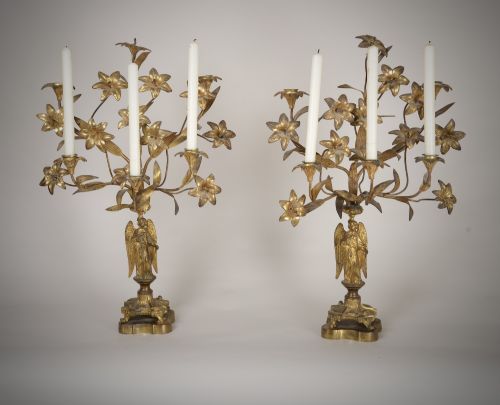
Victorian gilt bronze candelabra combine heavy metal casting with polished mercury gilding, bringing nineteenth-century candle illumination to a mantelpiece.
Victorian Gilt Bronze Candelabra
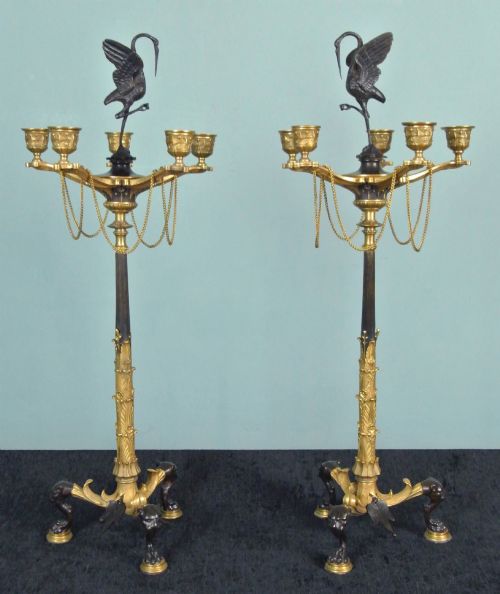
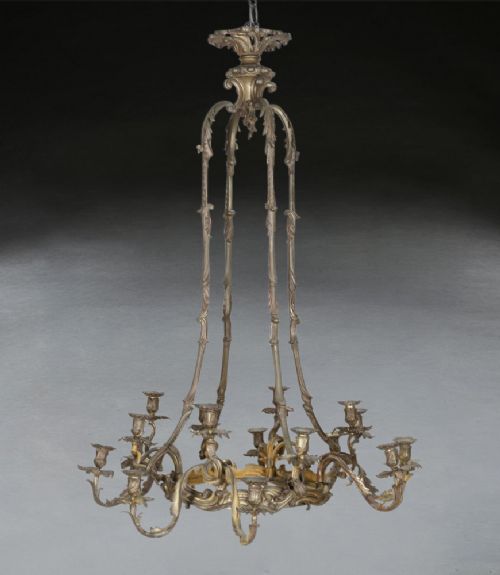
When you search for Victorian gilt bronze candelabra, you find multi-branch lighting stands designed for formal rooms. Most examples belong to the nineteenth century, often sharing influence with French styles like Rococo Revival, Second Empire, and Empire.
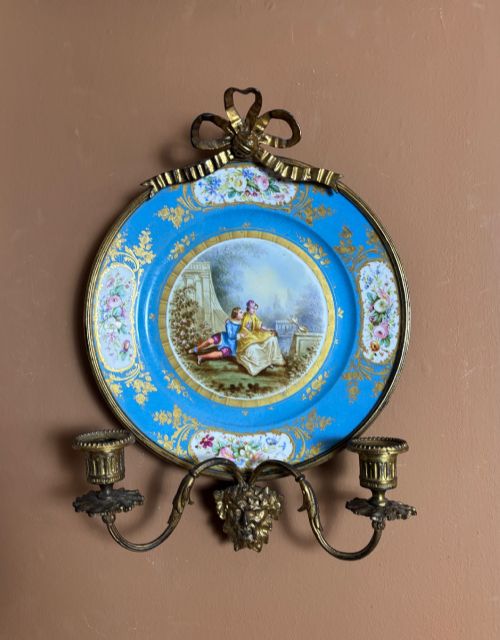
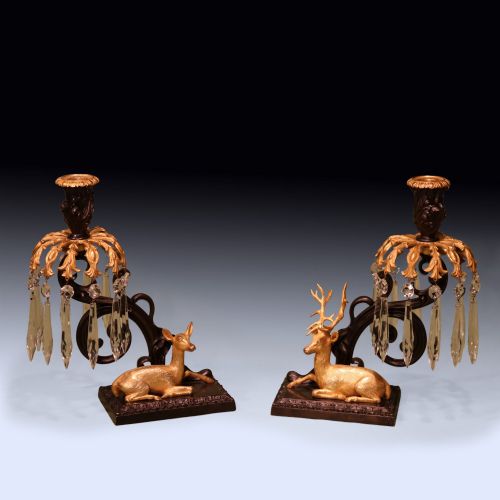
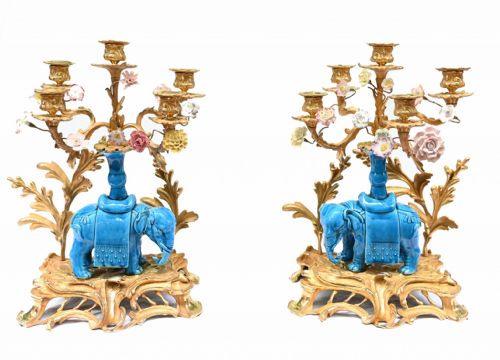
The objects take several forms beyond standard table candelabra, appearing as part of clock garnitures, wall sconces, or converted to table lamps. Many incorporate figures, animals, or architectural elements, reflecting diverse historical revivals from Gothic to Arabic designs.
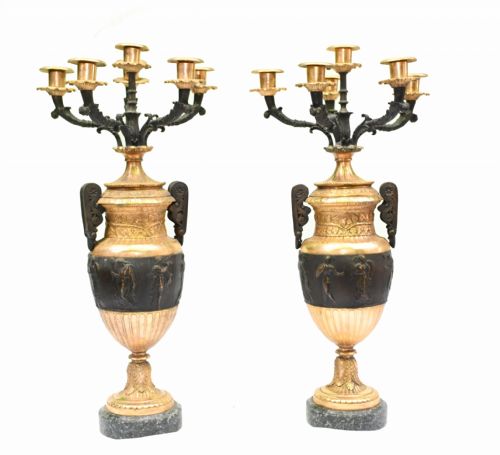
Pairs dominate the selection, created symmetrically to sit on either side of a mantel clock or centrepiece. Materials frequently pair gilt bronze or ormolu with contrasting elements like marble bases, porcelain inserts, or enamel work.
How they were made
The primary construction relies on bronze or brass cast in sections, then hand-chased to sharpen surface details. Makers applied mercury gilding, known as ormolu, to create a durable, golden finish that caught the candle flame.
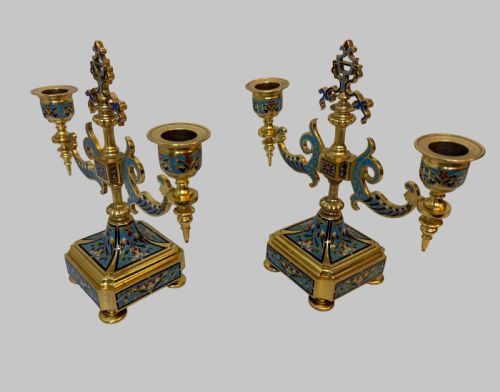
Many pieces combine cast bronze with contrasting materials, mounting metal branches onto marble plinths, or incorporating Sevres porcelain sections and champleve enamel panels into the main body.
Elephants, stags, and cherubs frequently support the candle branches in nineteenth-century designs.
What varies in quality
The assembly of multi-part objects reveals the maker's hand, where top-tier items fit marble, porcelain, and metal components flush without visible gaps or excessive fixing pins.
Barbedienne·Thomas Hope·Raingo Fres
The Victorian Gilt Bronze Candelabra Glossary
- Ormolu
- Gilt bronze created by applying a mercury and gold amalgam to a bronze base, then heating it to drive off the mercury. This technique produced a rich, matte golden surface characteristic of nineteenth-century decorative metalwork.
- Champleve
- An enamelling technique where troughs are dug into a metal surface and filled with coloured glass powder before firing. The resulting enamel sections sit flush with the surrounding metal framework.
- Clock garniture
- A set comprising a central mantel clock matched with a pair of side ornaments, usually candelabra or urns. These matched suites formed the decorative centrepiece of a nineteenth-century room.
- Patinated bronze
- Bronze treated with chemical solutions to darken the surface to a deep brown or green tone. This dark finish provided contrast against bright ormolu mountings.
Victorian Gilt Bronze Candelabra: Frequently Asked Questions
How do I clean gilt bronze?
Dust gently with a soft brush and avoid commercial metal cleaners that strip the original mercury gilding. Moisture should be kept away from any incorporated porcelain or marble elements.
Aggressive rubbing damages the delicate gold layer beneath, so gentle maintenance preserves the historical surface.
Were these electrified originally?
Nineteenth-century lighting relied entirely on wax candles or oil before later conversions to electricity. Many surviving examples retain their original candle sockets alongside later wiring.
Converters often threaded wires through the central column without altering the exterior branches, allowing reversible adaptation.
What is a clock garniture?
A clock garniture pairs a central mantel timepiece with two matching side pieces, such as candelabra or vases. These sets were designed to be displayed together on a fireplace mantel.
The matching metalwork and decorative motifs created a unified display across the entire mantelpiece.
How do I spot French influence?
French design heavily influenced nineteenth-century metalwork through revived styles like Rococo, Empire, and Second Empire. These pieces often feature asymmetrical scrolling, classical figures, or elaborate foliate mounts.
Many workshops in Paris supplied these luxury goods to the British market during the Victorian period.