
Cylinder Writing Desk
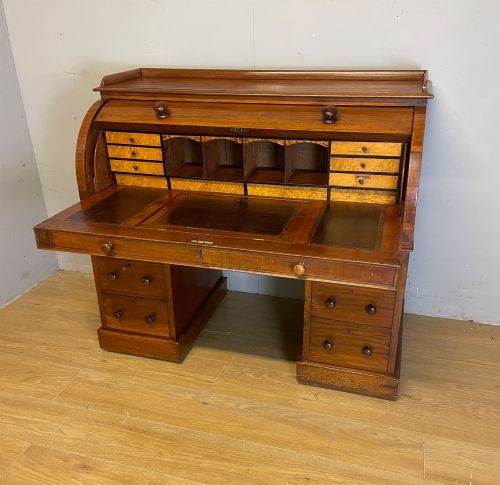
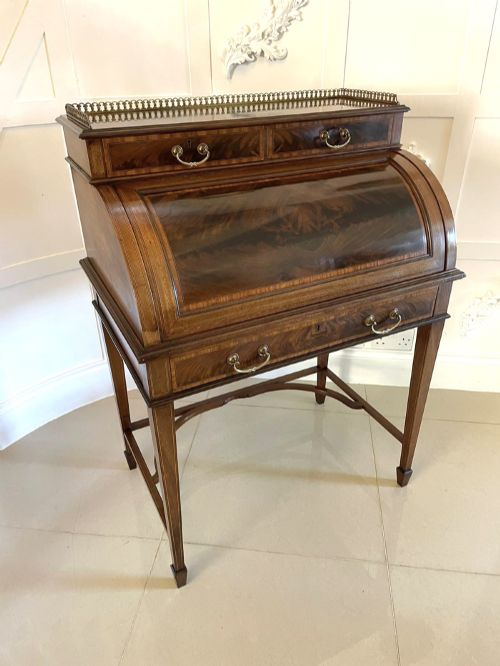
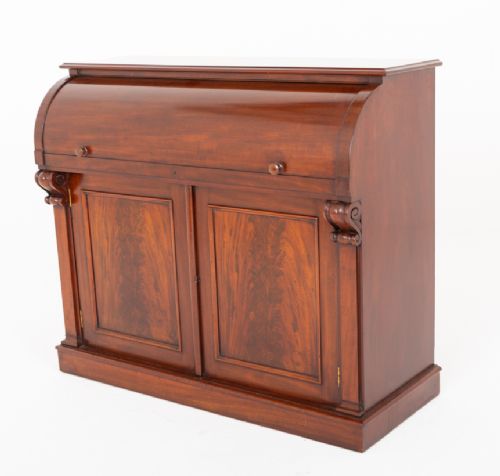
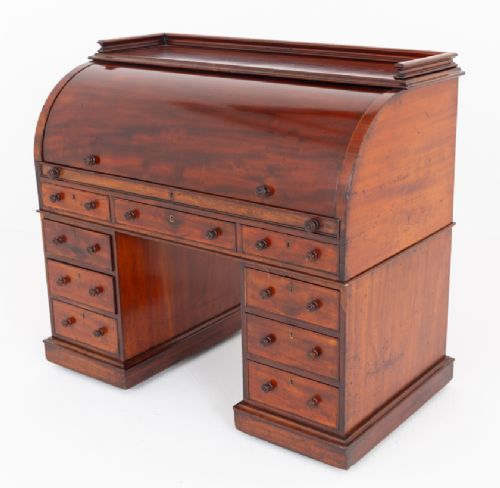
When you examine a cylinder writing desk, you meet a refined workstation where a curved wooden shutter conceals your papers.

Cylinder Writing Desk
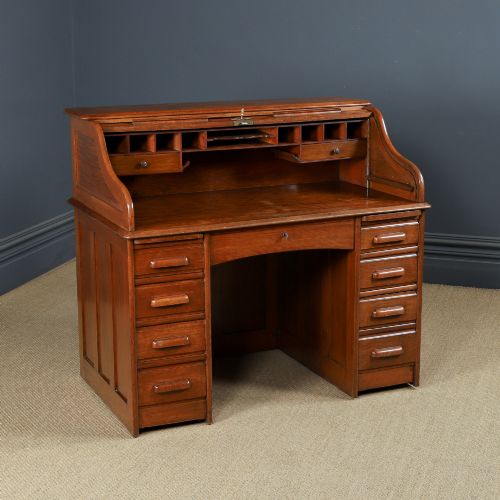
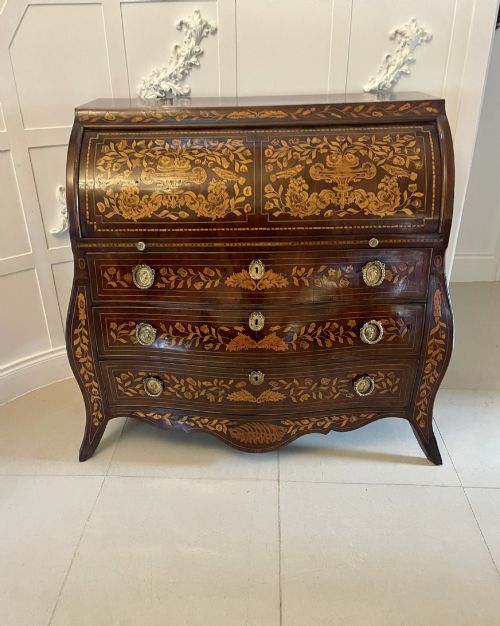
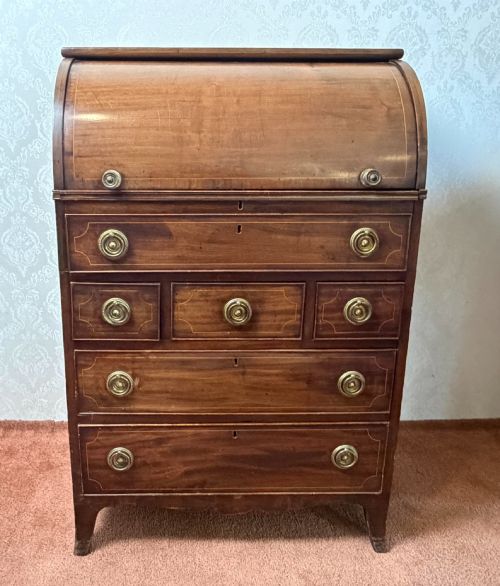
A cylinder writing desk uses a rotating curved panel of timber to close over the writing surface and pigeonholes, keeping correspondence private when not in use.
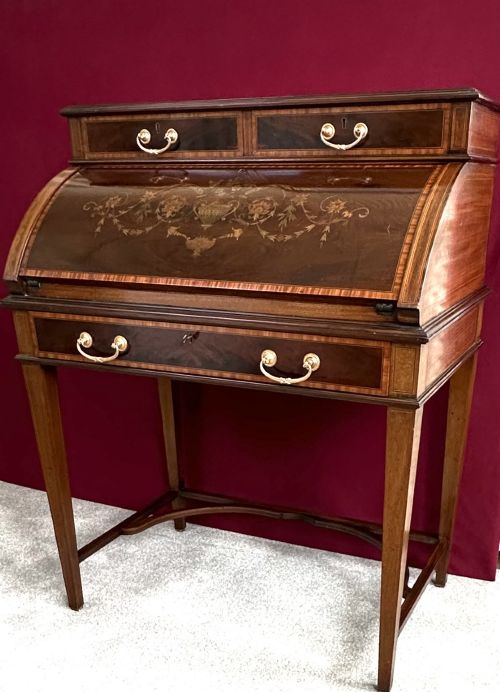
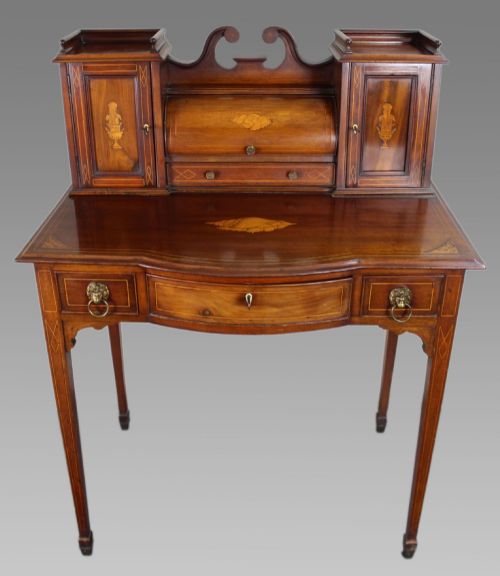
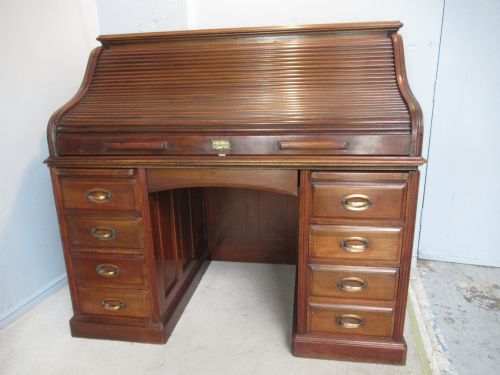
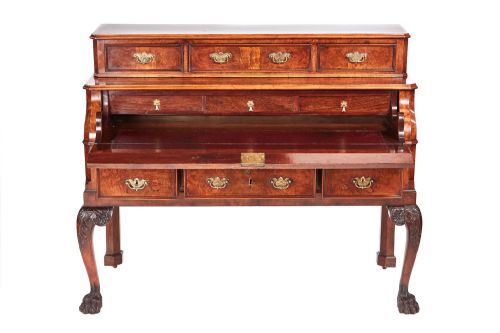
The pieces catalogued here span several eras from the eighteenth century through the Victorian and Edwardian periods, appearing in forms ranging from compact ladies writing tables to large pedestals.
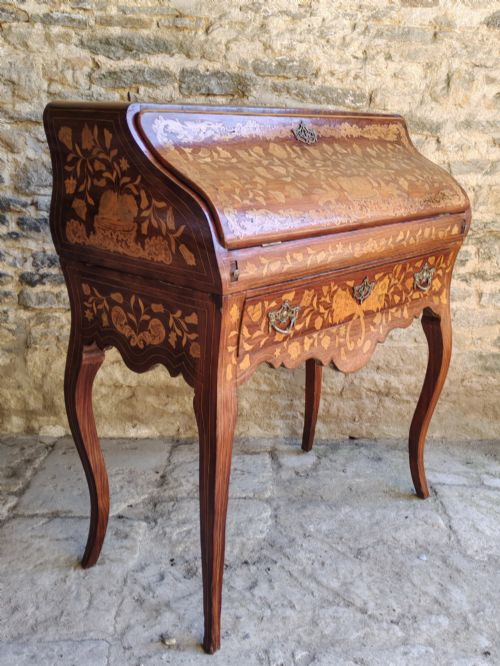
Mahogany dominates the listings, accompanied by walnut, satinwood, and rosewood, often enriched with marquetry or satinwood inlay.
Materials and construction methods
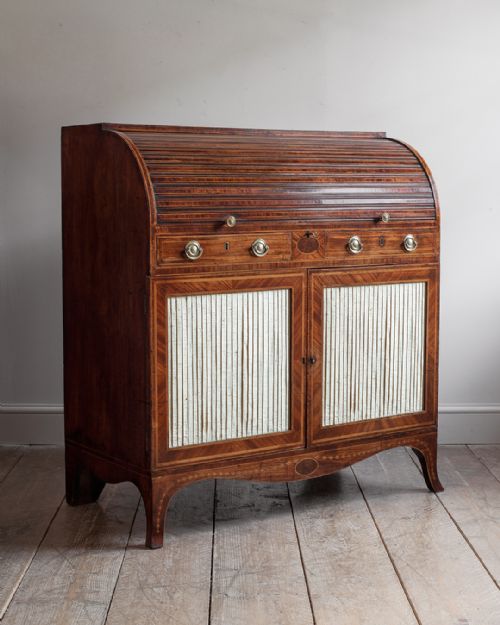
Cabinetmakers constructed the rolling cylinder from narrow slats of timber glued to a flexible canvas backing, allowing the shutter to glide smoothly within internal grooves.
Solid hardwoods such as mahogany and walnut provided the structural carcase, while decorative veneers like satinwood, burr walnut, and partridgewood created striking surface patterns.
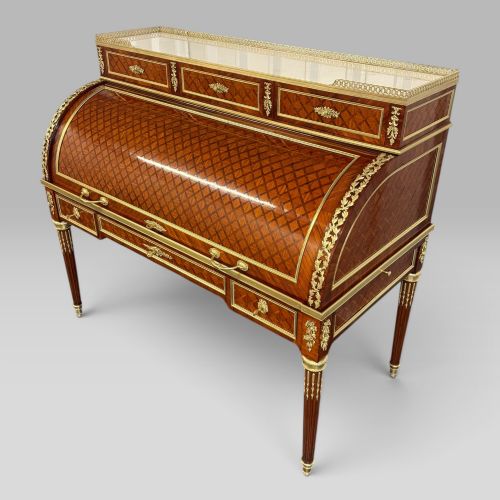
Details such as brass ring handles, leather writing inserts, and gilt ormolu mounts completed the construction of finer examples.
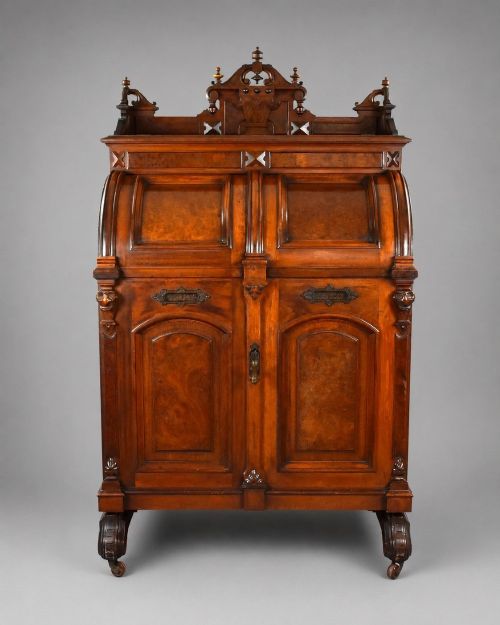
Some Victorian cylinder desks double as music cabinets with piano-top actions.
Assessing quality and craftsmanship
Quality shows in the precision of the cylinder mechanism and the smoothness of the pull-out writing slide, which often operates in tandem with the shutter.
Finer examples display intricate floral marquetry, matched flame mahogany veneers, and delicate inlay work that demands supreme cabinetmaking skill.
The choice of secondary timbers and the integrity of the internal pigeonholes and small drawers further distinguish workshop standards.
Maple & Co. London·Tudor & Burrey Shrewsbury·Edwards & Roberts·Ray & Miles of Liverpool
The Cylinder Writing Desk Glossary
- Cylinder
- A rounded, quarter-circle or half-circle wooden shutter that slides back to reveal the desk interior. This feature distinguishes these desks from standard flat-topped writing tables.
- Tambour
- A flexible sliding shutter formed from thin vertical strips of wood glued to canvas. It operates similarly to a cylinder but uses narrower slats.
- Marquetry
- Decorative patterns formed by fitting together small pieces of coloured wood veneer. Craftsmen utilised this technique to create floral and geometric designs on the writing surface and cylinder front.
- Ormolu
- Gilt bronze mounts applied to furniture for decoration. This material appears frequently on French revival pieces.
- Pedestal
- A support structure containing banks of small drawers. Desks featuring these often stand as large, twin-pedestal pieces.
Cylinder Writing Desk: Frequently Asked Questions
How does the cylinder mechanism work?
The curved wooden shutter moves along channeled grooves within the frame of the desk. Pulling the writing slide forward often retracts the cylinder automatically.
This clever linkage protected documents from dust and prying eyes while offering quick access to the workspace.
Were these desks used by men or women?
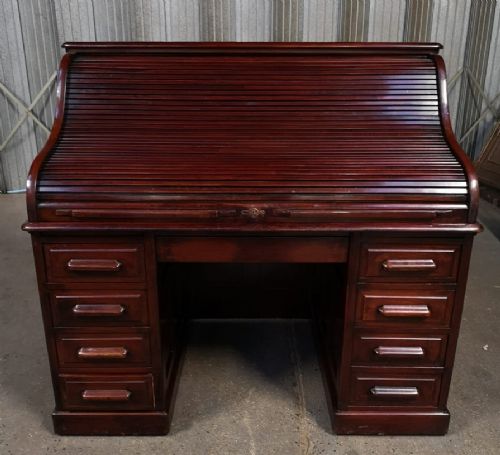
Examples vary significantly in scale and purpose. Larger pedestal versions served as executive or library desks for men.
Smaller ladies writing desks offered compact proportions suited for lighter correspondence in private drawing rooms.
How do I identify an Edwardian piece?
Edwardian items frequently display Sheraton revival influences with light satinwood inlay and mahogany frames. They date from around nineteen hundred to nineteen ten.
These models often present a lighter, more delicate stance compared to heavier Victorian counterparts.
What is the difference between a cylinder desk and a roll top?
A cylinder desk utilises a smooth, solid curved wooden panel made from fine veneers. A roll top typically employs a tambour shutter built from multiple narrow wooden slats.
Both styles provide a lockable enclosure for the writing surface.