

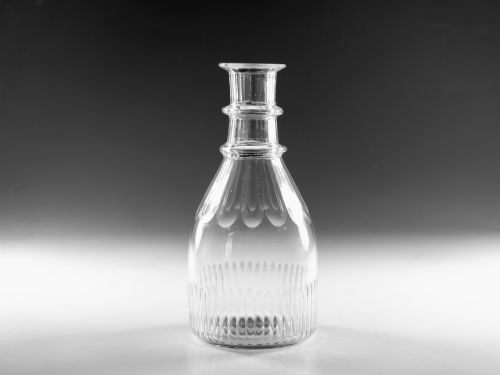
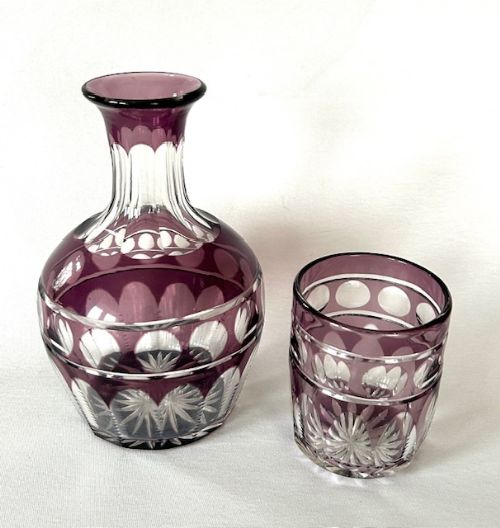


Cut Glass Water Carafe
These cut glass water carafe pieces bring heavy crystal, sterling silver mounts and deep wheel-cut facets straight to the dining table.
Cut Glass Water Carafe
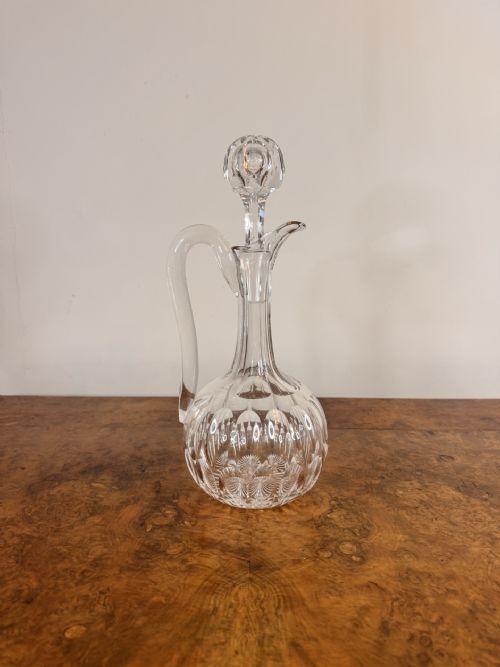
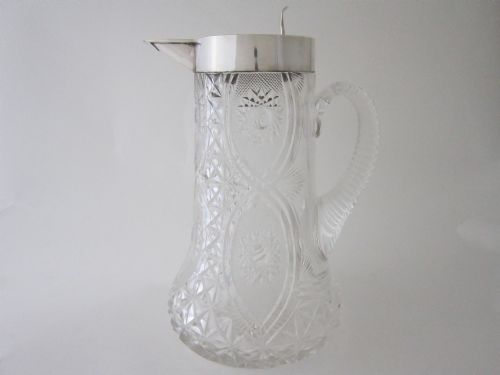
A cut glass water carafe takes many forms across the selection, appearing as ewers, lemonade jugs, claret jugs and standard water pitchers. Most examples hail from the Victorian, Edwardian and George V periods, showing substantial weight and clear glass bodies.
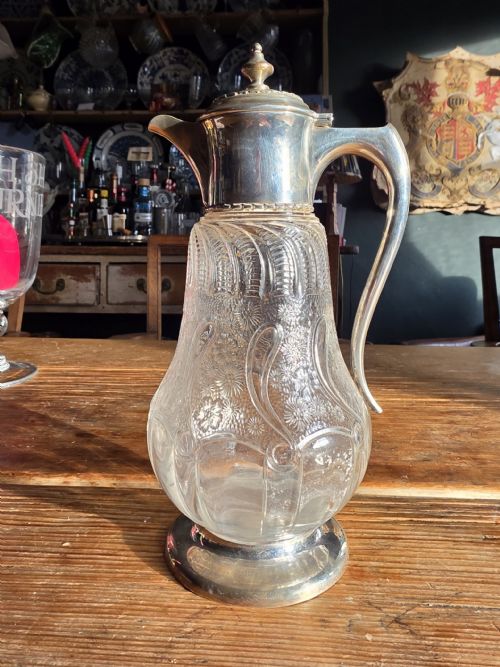
Makers often paired the heavy cut crystal with sterling silver collars, hinged lids, ice tubes or matching tumblers. These vessels served water, wine and lemonade at formal dining tables throughout the nineteenth and early twentieth centuries.
What varies in quality
Quality rests upon the depth and crispness of the wheel-cut facets, where sharper, cleaner edges catch the light far better than soft, rounded grinding. The weight and purity of the lead crystal body also dictate the standard, alongside the thickness of the glass.
Cut Glass Water Carafe Retail Price Guide 2026
Typical asking prices for cut glass water carafe among the pieces listed under this phrase on Sellingantiques today, from the lower quarter to the upper quarter. They describe what is for sale here now, not the wider market.
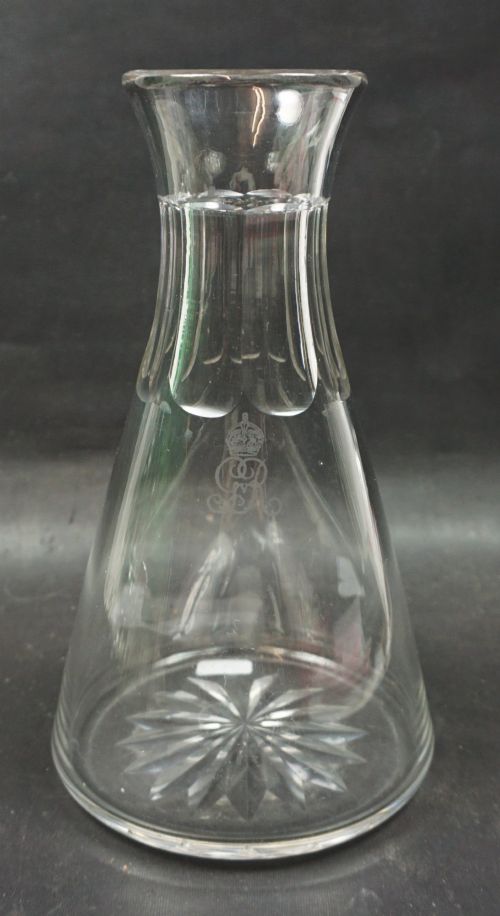
One exceptional royal carafe bears a pattern specifically monogrammed for King George V on the yacht Britannia.
William Comyns·Mappin & Webb·Richardsons·Tiffany
The Cut Glass Water Carafe Glossary
- Cut glass
- Glass decorated by grinding facets and patterns into the surface using rotating wheels. This technique creates sharp geometric edges that refract light.
- Lead crystal
- Glass containing a high proportion of lead oxide, which increases weight, brilliance and resonance. It is the preferred material for deep cutting.
- Sterling silver mount
- A collar, lip or handle made from solid silver applied to the top of the glass vessel. These often bear full hallmarks indicating the maker and year.
- Ice tube
- A metal cylinder suspended inside the jug to cool the contents without diluting them with melting ice. These were popular in large Victorian lemonade jugs.
- Ewer
- A large jug with a wide spout and loop handle, traditionally used for holding water at the table. Many Edwardian cut glass examples take this specific form.
Cut Glass Water Carafe: Frequently Asked Questions
How do I clean a cut glass water carafe?
Wash the vessel by hand in warm soapy water using a soft bottle brush to reach the base. Avoid sudden temperature changes to protect the heavy lead crystal.
Dry the glass immediately with a lint-free cloth to maintain the sparkle of the cut facets. Polish the sterling silver mounts separately with a soft cloth while avoiding contact with the glass.
Can I use a vintage carafe for everyday dining?
These robust lead crystal vessels are designed for functional use and handle water, wine or juice without issue. Their thick walls make them durable enough for regular serving.
Take care when placing them on hard surfaces due to the heavy weight of the lead crystal. Hand washing remains essential to preserve any silver mounts or delicate surface engravings.
How do I tell Victorian jugs from Edwardian ones?
Victorian examples often feature naturalistic hand-engraved motifs such as grapes, vines or flowers alongside heavy faceted bodies. They frequently date from the mid to late nineteenth century.
Edwardian and George V pieces tend to show crisp geometric hobnail cutting combined with substantial sterling silver collars and mounts. Maker marks and silver hallmarks help pin down the exact decade of manufacture.
What is the difference between a carafe and a jug?
A carafe traditionally describes a straight-sided or bulbous glass vessel designed for holding water or wine at the table. They often appear alongside matching tumblers.
A jug incorporates a distinct pouring lip and a handle, which includes specialised forms like claret jugs and lemonade ewers. Many listings use the terms interchangeably for similar handled vessels.