


Mid 19th Century Glassware
These mid 19th century glassware pieces offer substantial lead crystal and coloured vessels that bring genuine period weight to a table.
Mid 19th Century Glassware
When you search for mid 19th century glassware, you encounter practical table items and decorative vessels spanning the Victorian and Georgian eras. The selection on this page centres heavily on drinking vessels, decanters, and serving pieces produced around eighteen fifty to eighteen sixty.
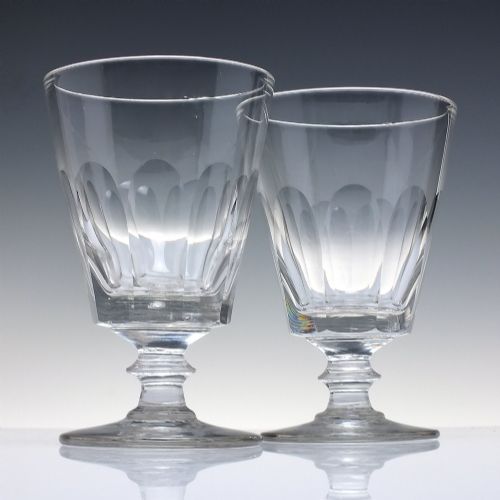
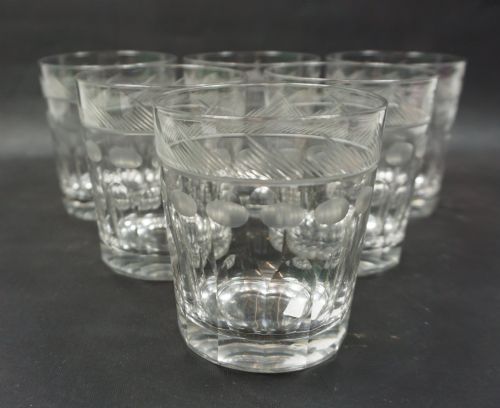
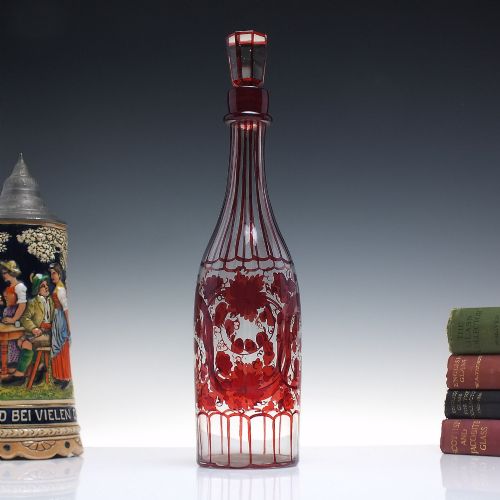
Most items you meet here take the form of wine glasses, whiskey tumblers, rummers, and decanters. Alongside these drinking vessels appear specialised forms including apothecary glass, ice plates, vases, and bonbon dishes in distinct regional styles.
Origins span English workshops and French production houses such as Baccarat. You find both pairs and matched sets, ranging from emerald and green wine glasses to opaline vases finished with gilt and enamel.
How they were made
Makers utilised lead crystal and lead glass to achieve substantial weight and clear resonance in decanters and tumblers. Free blown techniques created vessels like ice plates, while specialised glass formulations yielded rich amethyst, green, and cranberry hues.
Decoration relied on hand painting, gold leaf application, and white glass latticinio threads embedded within the metal. Enamel detailing further embellished pieces like opaline vases and serving bottles.
Mid 19th Century Glassware Retail Price Guide 2026
Typical asking prices for mid 19th century glassware among the pieces listed under this phrase on Sellingantiques today, from the lower quarter to the upper quarter. They describe what is for sale here now, not the wider market.
Some nineteenth century drinkers required rummers so heavy they doubled as acceptable gym equipment.
What varies in quality
The distinction between standard utility items and finer pieces lies in the precision of the free blown form and the depth of the metal. Clear lead crystal displays greater brilliance, whilst coloured glass variations depend on the richness of the amethyst, green, or cranberry tone.
Artisanal execution in surface enrichment separates basic items from superior examples. Hand painted details, gold leaf application, and intricate white glass latticinio show varying degrees of control and permanence.
Baccarat, France
The Mid 19th Century Glassware Glossary
- Lead crystal
- A type of glass containing lead oxide that increases weight, brilliance, and workability for cutting. This material allows for clearer resonance and sharper optical properties.
- Latticinio
- A decorative technique using fine white or coloured glass threads twisted within clear glass. It creates delicate network patterns inside the vessel wall.
- Rummer
- A large, heavy drinking glass popular in the eighteenth and nineteenth centuries, typically used for ale or wine. These vessels feature thick stems and capacious bowls.
- Opaline glass
- An opaque or translucent glass developed in France during the nineteenth century, often tinted in pastel shades. It frequently serves as a ground for gilt and enamel decoration.
- Free blown
- A forming method where molten glass is shaped on the end of a blowpipe using hand tools without a mould. This process results in subtle individual variations across matched sets.
Mid 19th Century Glassware: Frequently Asked Questions
How do I clean antique glassware?
Wash these pieces by hand in warm water using mild soap, avoiding sudden temperature changes that can stress old lead glass.
Dry them immediately with a soft linen cloth to prevent water spots on the surface.
Are these glasses safe for daily use?
Many mid nineteenth century drinking vessels remain structurally sound for occasional use at the table. Hand washing protects delicate hand painted details and gold leaf from wear.
Careful handling prevents chipping on thin rims found on wine glasses and rummers.
How do I distinguish green and amethyst glass periods?
Coloured glass from this era relies on metallic oxides added to the batch during melting. Examining the depth and tone of the green or amethyst helps place the piece within the Victorian period.
Associated forms and manufacturing techniques offer further context for dating.
Can I use apothecary glass for food?
Original apothecary glass served functional storage roles in medical or domestic settings rather than dining. These pieces suit display or dry storage rather than holding liquids for consumption.
Their thick, utilitarian walls carry distinct historical character separate from tableware.