
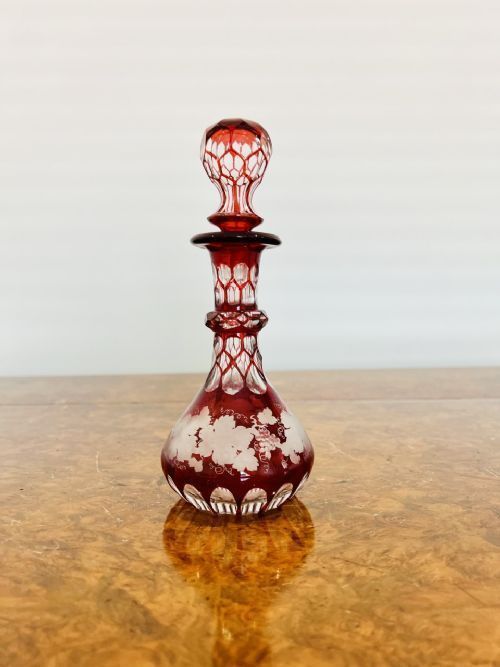




Red Glass Decanter
These red glass decanters bring striking Victorian colour and rich material depth to any table setting.
Identifying red glass decanters
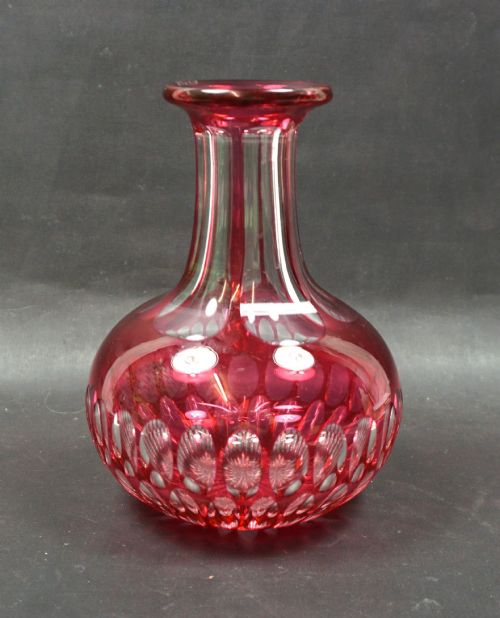
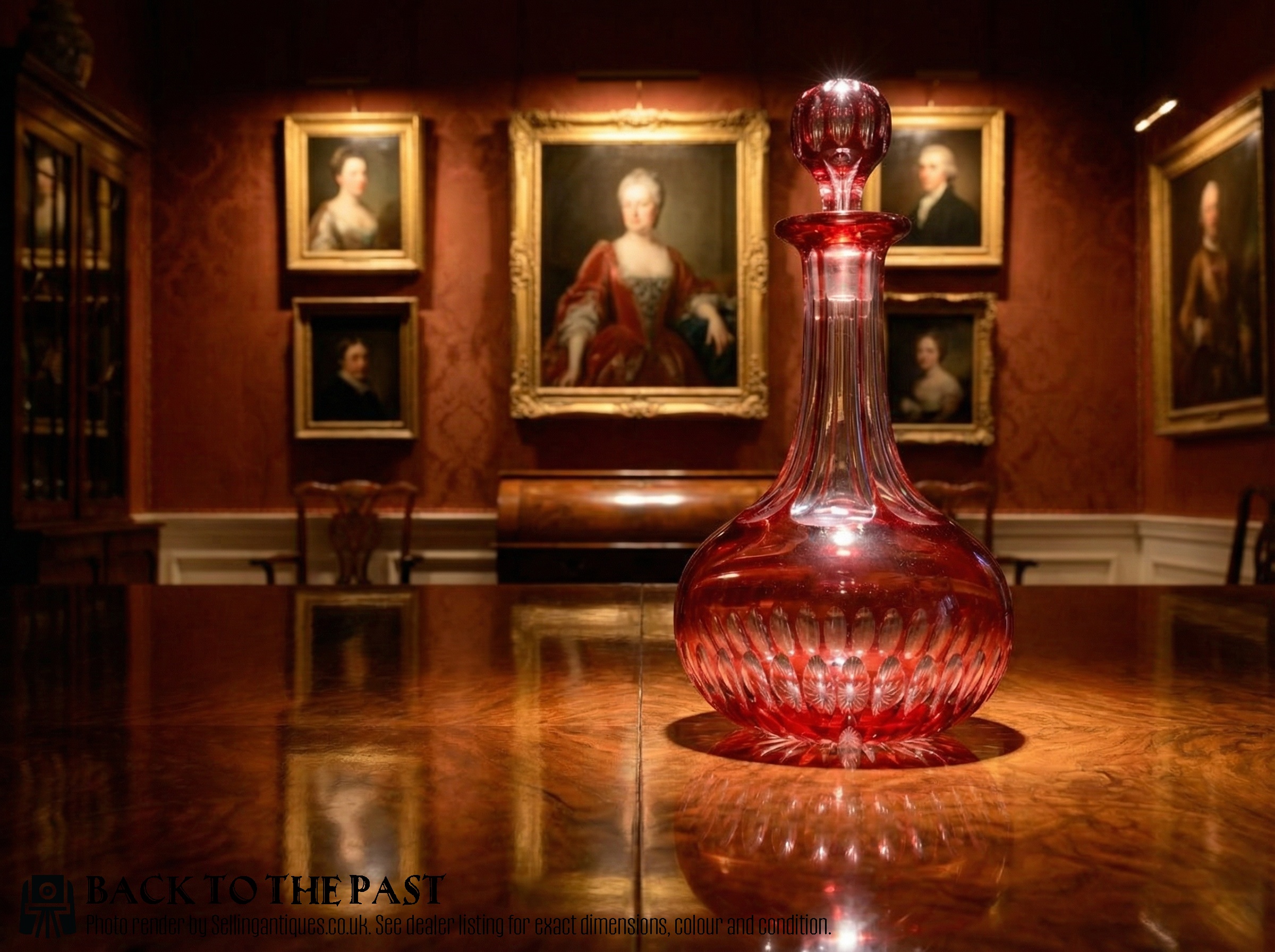
A red glass decanter is a traditional vessel designed for holding and serving wine or spirits, distinguished by its vivid ruby, cranberry, or red overlay colouring. The pieces gathered under the search phrase red glass decanter span the Victorian period and the nineteenth century, alongside later continental and Murano examples.
Collectors encounter single bottles, matched sets in stands, and pairs alongside glasses. English examples sit alongside Bohemian and Murano production, showing how different workshops handled coloured glass.
Victorian pieces dominate the selection, often featuring cut glass facets or hand-painted enamel decoration. These serving bottles reflect the lavish dining habits of the nineteenth century, when coloured glassware filled the dining room.
Materials and manufacture
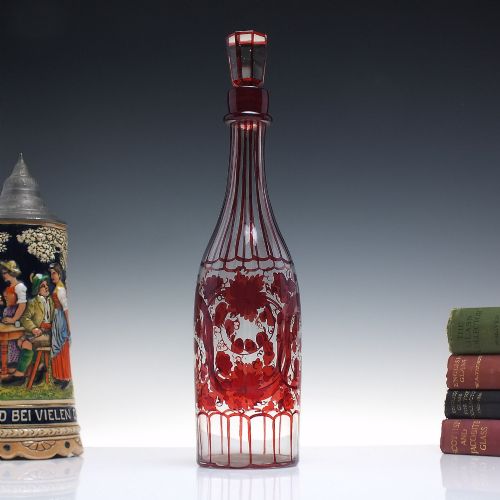
Maker's workshops built these vessels using lead crystal and glass, often employing overlay techniques where a layer of red glass is fused over a clear or contrasting body. Artisans then cut through the outer red layer to reveal the clear glass beneath, creating sharp geometric patterns.
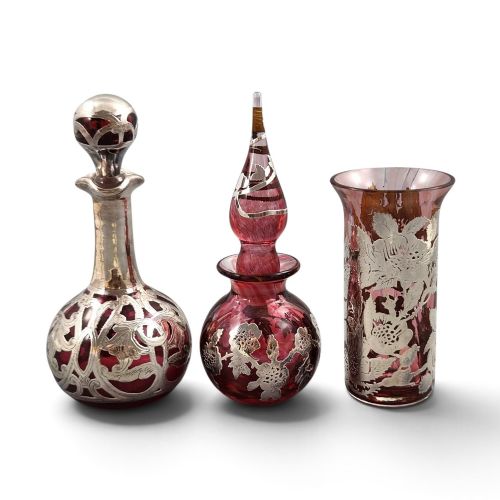
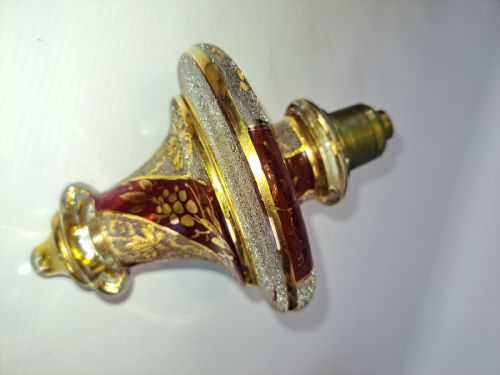
Decoration involved hand painting with enamel and intricate engraving depicting birds, vines, and floral motifs. Some nineteenth century pieces incorporate fitted silver collars, silvered pewter mounts, or silver plated tops.
Listings for red glass decanters feature Victorian and nineteenth century pieces alongside twentieth century Murano and Bohemian productions.
Assessing quality and execution
Quality in a red glass decanter rests upon the depth and saturation of the glass colour, the crispness of the wheel cutting, and the finesse of any engraved or painted detail. Superior examples display precise overlay work where the cut facets align cleanly across the body.
The weight of the lead crystal and the clarity of the underlying metal distinguish finer studio and factory production from simpler utilitarian wares. Fitted original stoppers that match the body in colour and cut add significantly to the integrity of the piece.
WMF·Stevens & Williams·Fredrick Carder
The Red Glass Decanter Glossary
- Cranberry Glass
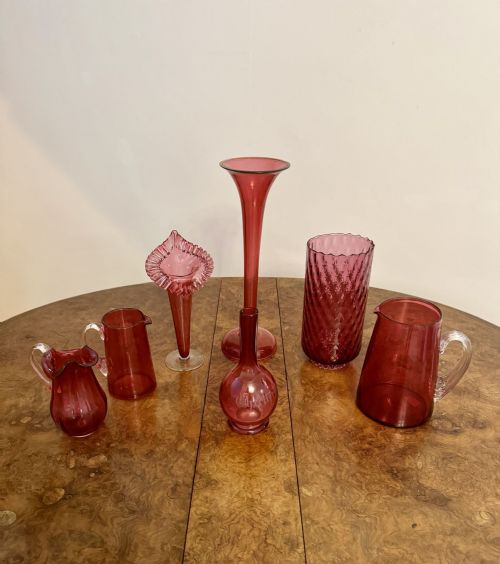
- A transparent pinkish red glass coloured with gold chloride during the melting process. This material became extremely popular during the Victorian era for tableware and decorative vessels.
- Overlay Glass
- A technique involving two or more distinct layers of glass fused together while hot. Artisans cut away portions of the outer layer to expose the contrasting colour underneath.
- Lead Crystal
- A heavy, highly refractive type of glass containing lead oxide. It offers superior clarity and rings when struck, making it ideal for deep cutting.
- Cut Glass
- Glassware decorated by grinding and polishing facets into the surface using rotating wheels. This process enhances the sparkle of the material under candlelight.
Frequently Asked Questions
How do I clean a vintage decanter?
Wash these vessels gently by hand using warm water and mild soap, avoiding harsh abrasives that might scratch the surface or damage enamel work.
Allow them to air dry completely upside down on a soft cloth before replacing the stopper.
Are these decanters safe for modern wine?
Most nineteenth century vessels were made for serving wine and remain suitable for occasional use.
Check the interior for any stubborn residue and ensure the vessel is clean before pouring beverages.
How do I date a Victorian decanter?
Examine the base for a polished pontil mark, which indicates the piece was blown by hand and finished individually.
Stylistic cues such as wheel-cut grape vines and heavy lead crystal bodies point towards nineteenth century production.
Why do some decanters have matching glasses?
Makers frequently produced matched suites of decanters and cordial glasses for formal entertaining and display on sideboards.
These sets allowed hosts to serve spirits in a uniform style during Victorian dinners.