

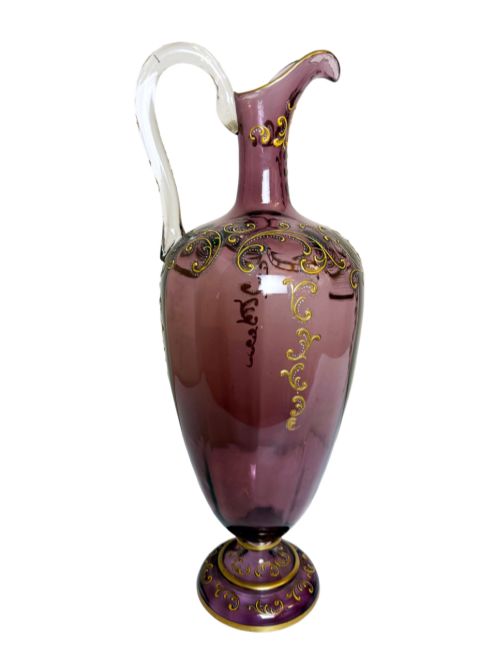
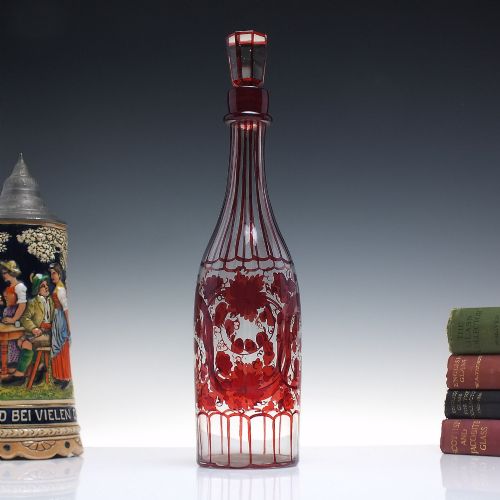


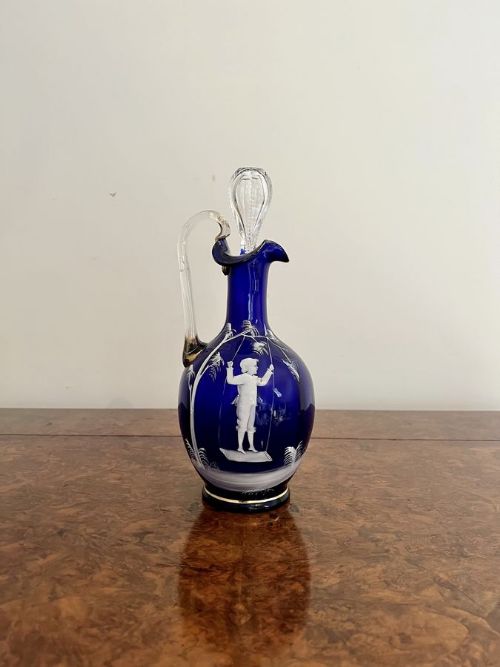


Painted Glass Carafes
These painted glass carafes bring colour and historic craftsmanship to the table, offering versatile service and decorative appeal for the modern interior.
Painted Glass Carafes
When you search for painted glass carafes, you are looking at historic vessels designed for serving water, wine, spirits and liqueurs. The selection spans distinct forms including decanters, pitchers, ewers, and water jugs from various periods.
You are most likely to meet Victorian pieces on this page, particularly green or blue glass ewers and decanters. These frequently feature enamel painting, hand-painted gilt applique, or specific figural motifs.
The origins stretch back through the nineteenth century into the Georgian era, encompassing English, Bohemian, and Dutch folk art traditions. Alongside standard decanters, you will find personal gin decanters and crystal pairs.
How they were made
The foundation of these pieces is blown glass, manipulated into forms like water jugs, mell decanters, and ewers. Makers utilised clear glass as well as coloured bodies such as cobalt, violet, white opaline, and green glass.
Decoration relied upon hand painting using enamel and gold leaf or standard gilding. Artists applied polychrome enamels and gilt applique directly to the glass surface, often depicting figures in white enamel or traditional folk art patterns.
Painted Glass Carafes Retail Price Guide 2026
Typical asking prices for painted glass carafes among the pieces listed under this phrase on Sellingantiques today, from the lower quarter to the upper quarter. They describe what is for sale here now, not the wider market.
The materials in these listings include blown glass, enamel, gold leaf, and opaline glass across Victorian and Georgian periods.
What varies in quality
The refinement of the hand-painted enamel and the precision of the gilt applique separate standard examples from superior pieces. Crisp, detailed brushwork on figural scenes or floral motifs indicates higher artisan skill.
The clarity and depth of the coloured glass, whether cobalt, opaline, or green, influence the overall presence of the vessel. Heavier blown glass forms with intact, unrubbed gilding command greater attention from collectors.
The Painted Glass Carafes Glossary
- Ewer
- A large jug with a wide spout and handle, traditionally used for holding water or wine at the table. These pieces often feature decorative enamel work.
- Mell decanter
- A specific historic decanter shape characterised by a rounded body and a tapering neck. They were commonly utilised for storing Irish whiskey in the Georgian period.
- Opaline glass
- An opaque or translucent glass developed in pale tints like white or blue. It provides a smooth, porcelain-like ground for enamel painting.
- Gilt applique
- Applied decorative ornamentation finished in gold leaf or gilding. This technique highlights the contours and surface patterns of Victorian glassware.
- Polychrome enamel
- Glass or ceramic decoration utilising multiple colours fused to the surface by heat. Dutch folk art pieces frequently employ this technique on personal gin decanters.
Painted Glass Carafes: Frequently Asked Questions
What were painted glass carafes used for?
These vessels served practical purposes at the dining table and sideboard for holding water, wine, spirits, and liqueurs.
They allowed hosts to pour drinks with a degree of ceremony, combining utility with colourful decorative display.
How do I care for antique glass carafes?
Wash them gently by hand using lukewarm water and mild soap, avoiding abrasive sponges that might damage the enamel or gilding.
Store them safely away from direct sunlight and extreme temperature shifts to protect the historic glass and painted details.
How can I tell Victorian pieces apart from Georgian ones?
Victorian examples often feature vibrant coloured glass, such as green or violet, paired with enamel painting or gilt applique.
Georgian items tend to display distinct regional forms, such as Bristol blue glass, with simpler or more restrained decorative motifs.
What is Mary Gregory glass?
Mary Gregory glass is a term used for glassware decorated with white enamel silhouettes of children playing in outdoor settings.
These pieces typically appear on coloured glass backgrounds like blue or green from the nineteenth century.