






Vintage Glass Decanter Pair
A vintage glass decanter pair brings symmetry to a sideboard, offering matching vessels for spirits, wine or scent.
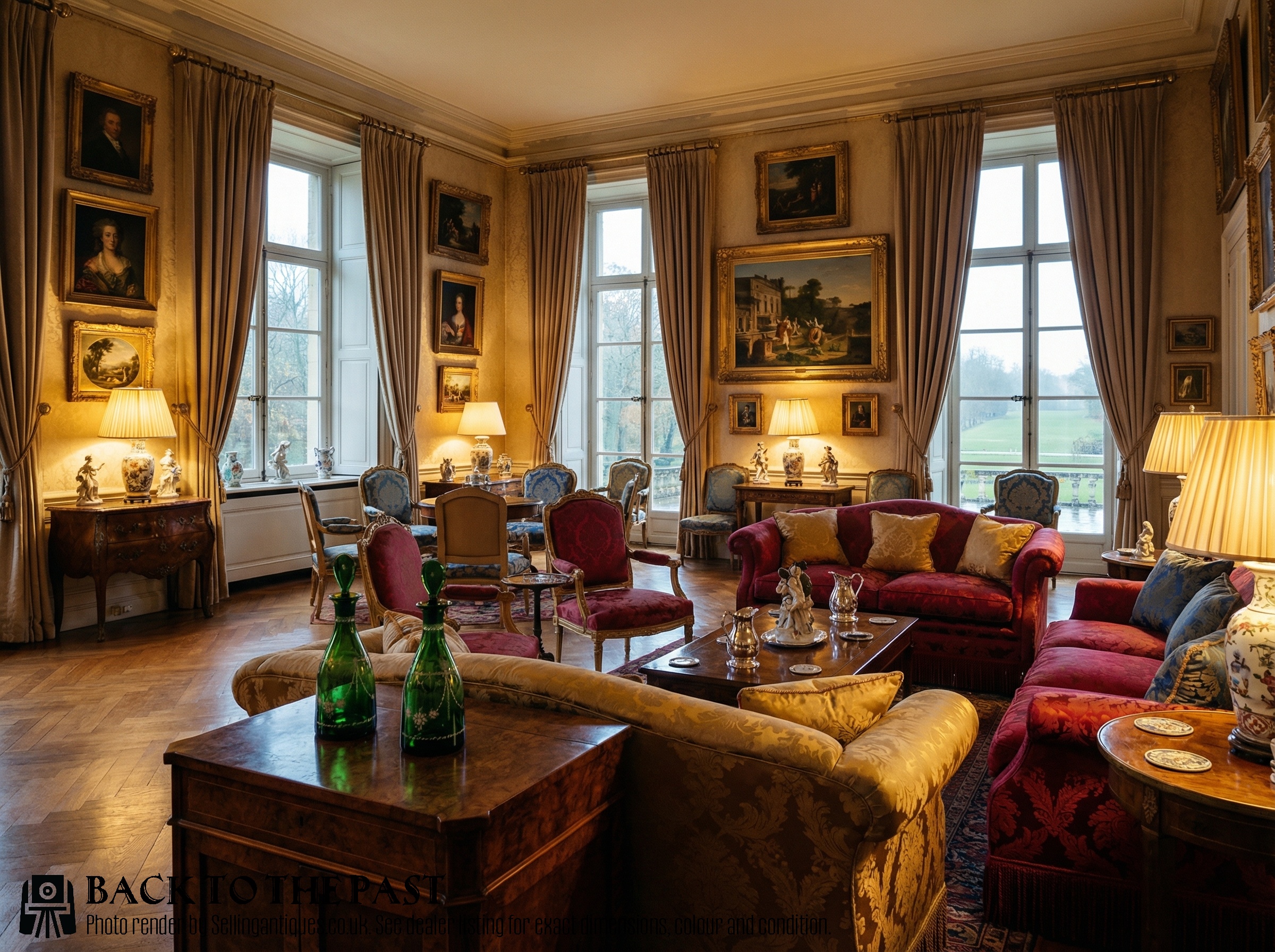
Vintage Glass Decanter Pair
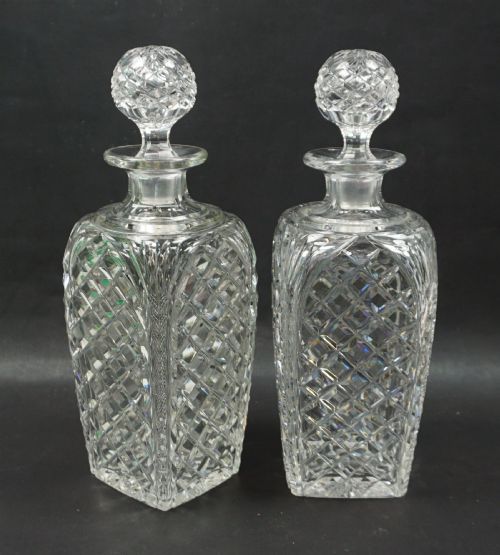
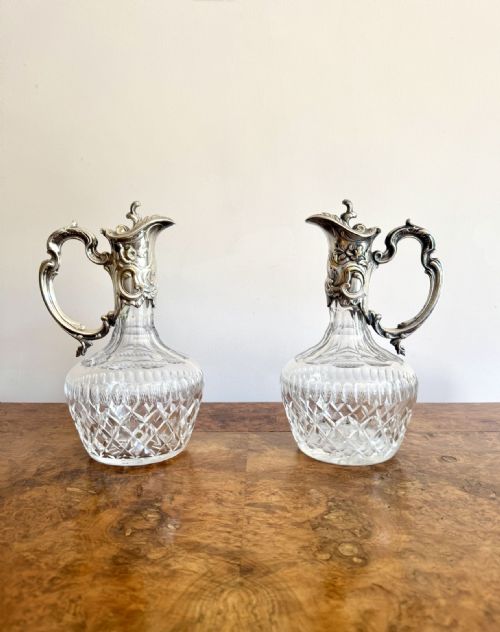
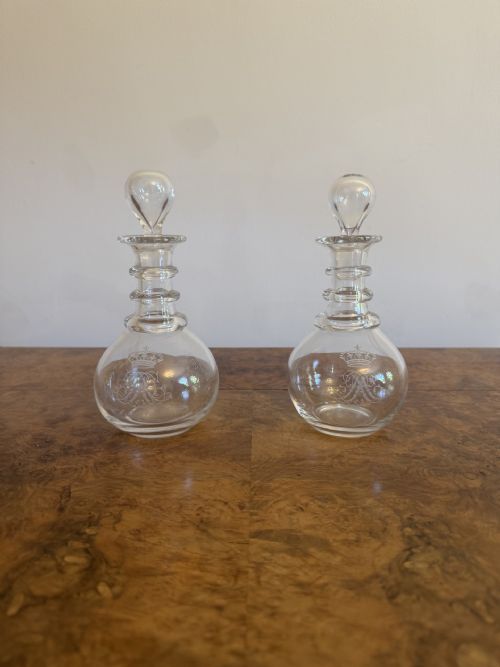
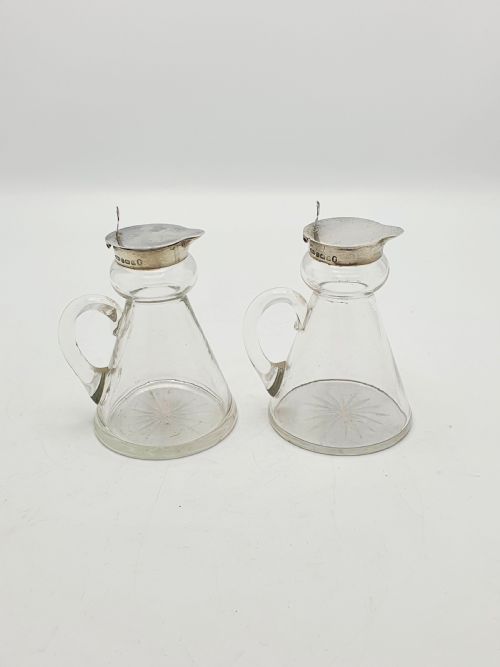
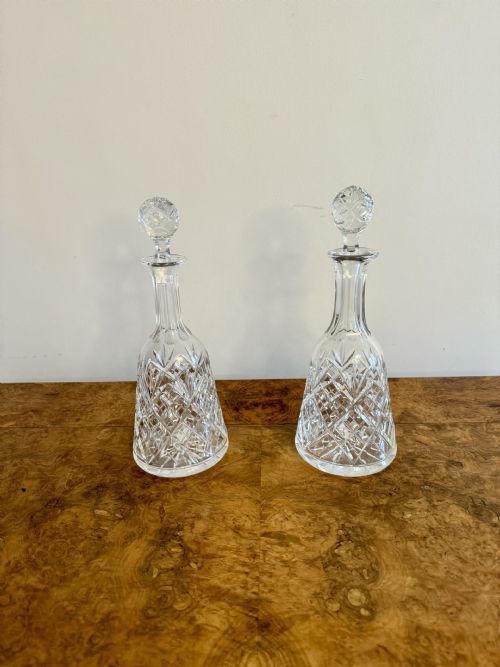
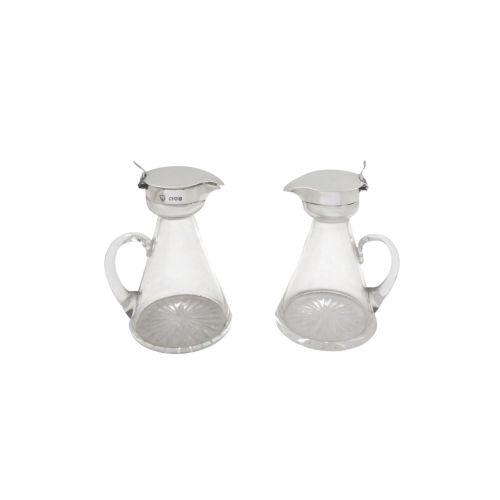
A vintage glass decanter pair comprises matched twin vessels designed for serving wine, spirits or liqueurs, alongside related forms such as claret jugs, whiskey noggins and perfume bottles. These matching sets appear predominantly in Edwardian and Victorian styles, spanning the nineteenth and early twentieth centuries.
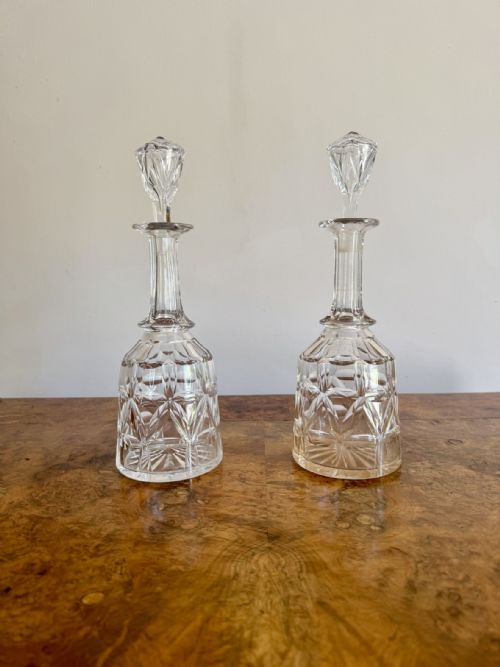
Buyers encounter distinct regional and period characteristics, including English square section tapered decanters, bell shaped Edwardian vessels, and shaft and globe Victorian spirit decanters. Coloured glass versions in green, ruby and cranberry overlay sit alongside clear crystal and cut glass examples.
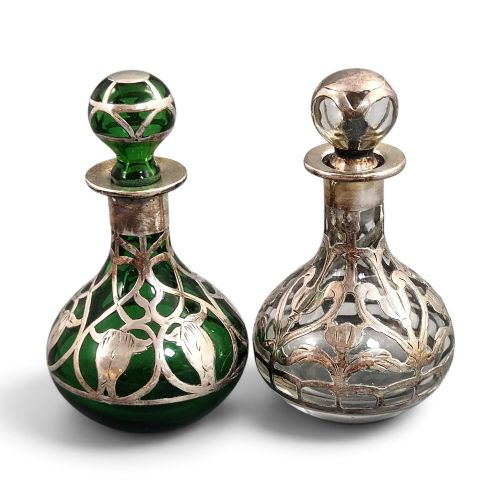
Beyond traditional drinks service, the selection encompasses smaller scent and perfume bottles with sterling silver collars, oil and vinegar cruet bottles, and pewter mounted Austrian jugs. Each pair demonstrates the unified design intent typical of matched drinks and dressing table accessories from these eras.
Materials and construction
Vessels are formed from clear glass, lead crystal or coloured glass, shaped through blowing techniques including optical blowing. Surface decoration is achieved through wheel cutting, engraving of birds and foliage, or gilt decoration.
Metal mounts incorporate sterling silver, silver plate, and pewter. These metal elements appear as collars, pouring lips, stoppers and pierced overlays, fastened securely to the glass bodies.
Form variations range from miniature whiskey noggins to large cranberry overlay wine decanters.
Standards of execution
Quality rests on the crispness of glass cutting and the clarity of the crystal. Superior examples display deep, sharp facets and well balanced proportions between the body, shoulder and neck.
The weight and finish of the metal mounts contribute significantly to the standard of a set. Substantial sterling silver collars or articulated silver plated mechanisms elevate the manufacture of the glass below.
Gorham·James Powell·Hukin and Heath·Rene Lalique·Mappin and Webb
The Vintage Glass Decanter Pair Glossary
- Whiskey noggin
- A small single serving spirit decanter, typically fitted with a sterling silver rim and a handle. These small jugs often include a matching silver stirrup cup acting as a stopper.
- Claret jug
- A tall pouring vessel specifically designed for serving red wine at the table. They frequently combine cut glass bodies with hinged silver plated or sterling silver mounts and handles.
- Prussian decanter
- A form characterised by a short neck and a broad, tapering body designed to sit securely on shipboard surfaces. Three concentric glass rings usually encircle the neck.
- Overlay glass
- A technique involving a layer of coloured glass fused over a clear glass body. Artisans then cut through the outer coloured layer to reveal the contrasting clear glass underneath.
- Shaft and globe
- A decanter silhouette defined by a long slender neck rising from a rounded globular body. This profile provides stability and a generous volume for spirits.
Vintage Glass Decanter Pair: Frequently Asked Questions
How do I clean inside old decanters?
Cleaning internal residue requires warm water, mild detergent and specialised cleaning beads rather than harsh abrasives. Gentle swirling preserves the original clarity of the glass.
Allowing the vessels to dry completely upside down prevents moisture spots from forming on the interior surfaces.
Are original stoppers always included?
Many surviving sets retain their matching original stoppers, which are ground to fit the specific neck of each individual bottle. Gradual dispersion over time means replacement stoppers do occur.
Checking that the stopper matches the cut pattern and tint of the glass helps confirm its original pairing.
Can these decanters hold wine today?
Using vintage vessels for contemporary dining remains entirely practical provided the interior is thoroughly cleaned. Lead crystal and thick glass safely contain wine and spirits for modern service.
Avoiding prolonged storage of liquids in silver mounted vessels prevents tarnish accumulation on the metal components.
How do I date a glass decanter?
Dating relies on stylistic markers such as the depth of the cut glass facets, the shape of the neck rings, and the presence of pontil marks on the base. Victorian and Edwardian examples often display distinct silhouettes.
Hallmarks stamped on associated silver collars or mounts provide precise year markers for the metalwork components.