

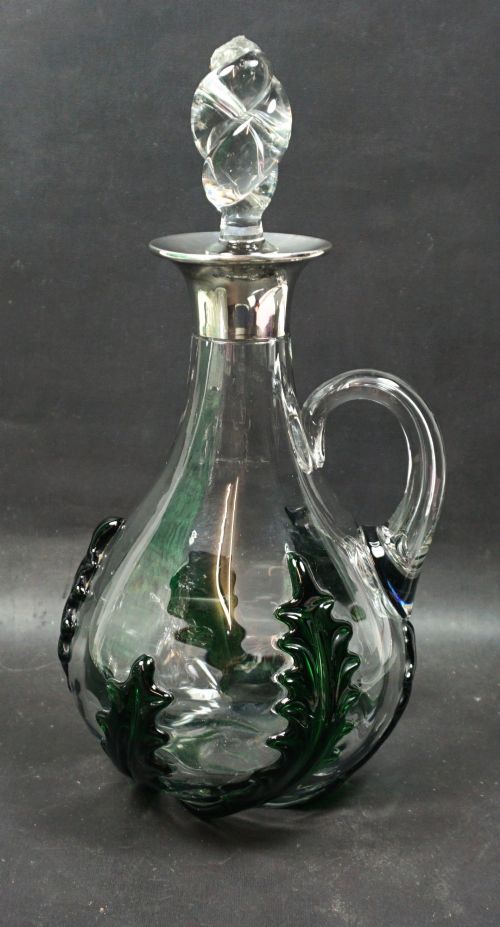


Green Glass Carafes
These green glass carafes bring rich colour and tactile warmth to a table, combining practical service with striking Victorian and twentieth-century design.
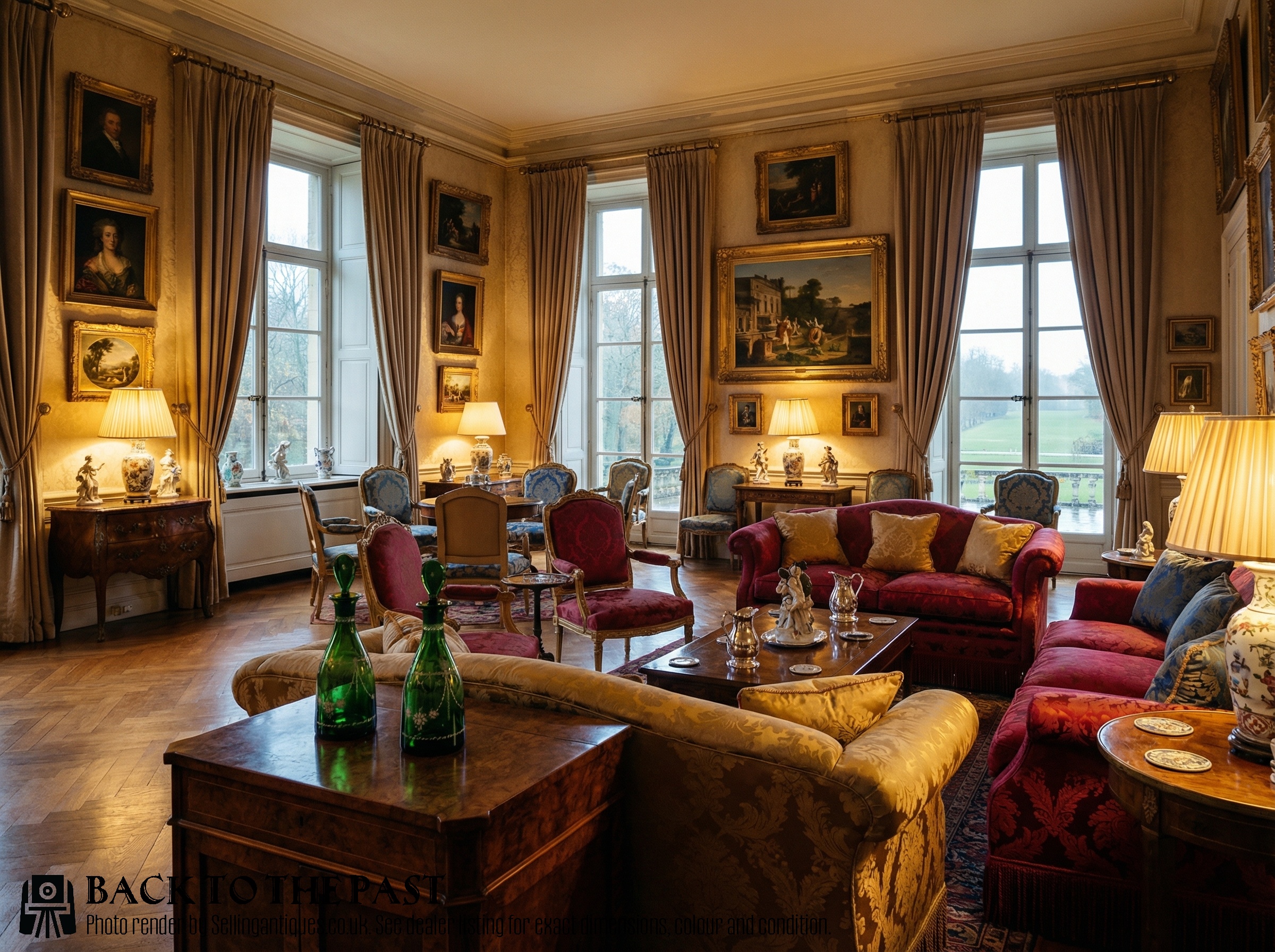
Green Glass Carafes
When you search for green glass carafes, you encounter a selection of vessels designed for serving wine, spirits and water across the nineteenth and twentieth centuries. These pieces encompass Victorian wine jugs, ships decanters, claret jugs and Art Nouveau ewers.
The selections span distinct periods from around eighteen hundred through the Art Deco era of nineteen thirty. You will find English, Bohemian and Austrian examples, reflecting diverse European manufacturing traditions in shades ranging from dark green to teal.
Vessels in this category include matched pairs, single spirit decanters and complete sets with stoppers. Forms vary from heavy ships decanters with broad bases to slender ewers mounted in silver or pewter.
How they were made
The primary material is hand-blown glass, often shaped into deep green or teal hues, sometimes utilising clear glass overlaid with green layers. Overlay techniques create striking contrasts when cut back to reveal the transparent body beneath.
Many examples incorporate metal mounts in sterling silver, silver plate, brass, and pewter. These functional and decorative additions include collars, handles, hinged lids and pouring spouts fixed securely to the glass necks.
Green Glass Carafes Retail Price Guide 2026
Typical asking prices for green glass carafes among the pieces listed under this phrase on Sellingantiques today, from the lower quarter to the upper quarter. They describe what is for sale here now, not the wider market.
Listings feature pieces spanning the Victorian period through to nineteen thirty, incorporating glass, enamel, sterling silver, silver plate, brass, pewter and overlay techniques.
What varies in quality
Quality rests in the harmony between the glass body and its metal or enamel ornamentation. Heavy, well-balanced vessels with crisply fitted stoppers demonstrate superior manufacturing standards.
Artistic execution distinguishes standard production from exceptional work, particularly in hand-painted enamel decoration or finely cast Art Nouveau pewter mounts. The clarity of the glass and the precision of overlay cutting define the upper tier of the range.
The Green Glass Carafes Glossary
- Overlay glass
- A technique where a layer of coloured glass is fused over a base of clear or contrasting glass. Artisans then cut through the outer layer to expose the underlying colour.
- Ships decanter
- A form of decanter designed with a wide, heavy base to prevent tipping aboard a vessel at sea. Its stable silhouette remains practical on solid ground.
- Mary Gregory glass
- glassware decorated with white or tinted enamel figures, often depicting children in woodland settings. The style gained popularity during the Victorian period.
- Ewer
- A large jug with a wide spout and a curved handle, historically used for pouring water. In decorative glass, it serves a similar aesthetic function to a claret jug.
Green Glass Carafes: Frequently Asked Questions
Are these carafes safe for serving wine?
Most antique glass vessels remain suitable for serving wine and other beverages. Ensure the interior is thoroughly cleaned and free of any persistent residue before use.
Check that any silver or pewter mounts are securely fastened and clean. Acidic liquids should not be stored in metal-mounted vessels for extended periods.
How do I date a green glass decanter?
Examine the base for a pontil mark, which indicates the piece was hand-blown and snapped off the blowpipe. Smooth, polished bases often point toward later twentieth-century manufacturing methods.
Style, metal hallmarks and stopper shapes offer further clues to the period of origin. Victorian pieces frequently display heavy enamel work or ornate silver mounts.
What is the difference between a decanter and a carafe?
Decanters generally feature fitted stoppers designed to seal the contents for storage and presentation. They are frequently used for serving spirits and fortified wines.
Carafes typically have open necks and are intended for immediate service at the table, particularly for water or table wine. The listings here include both forms under the broader category.