

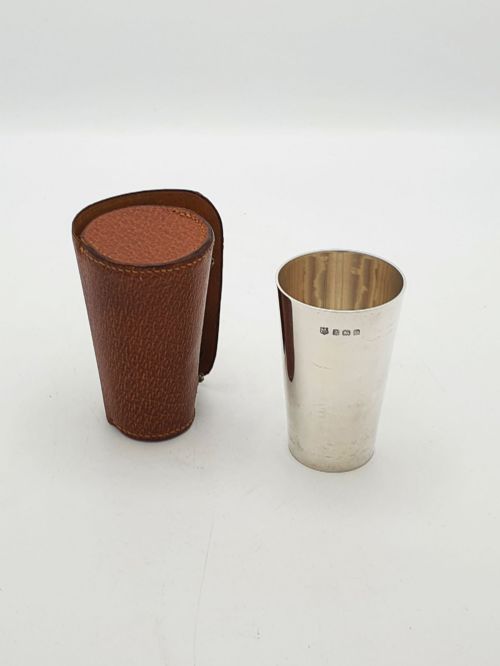
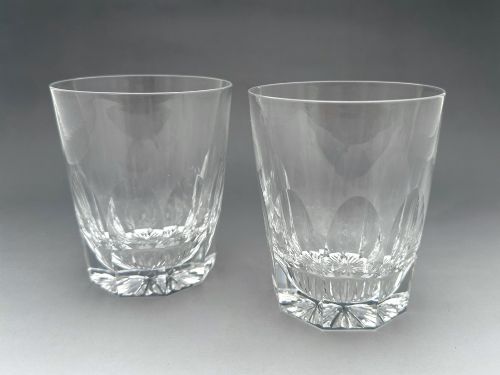
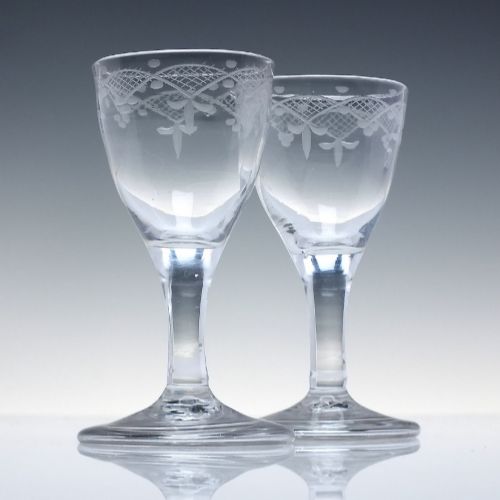
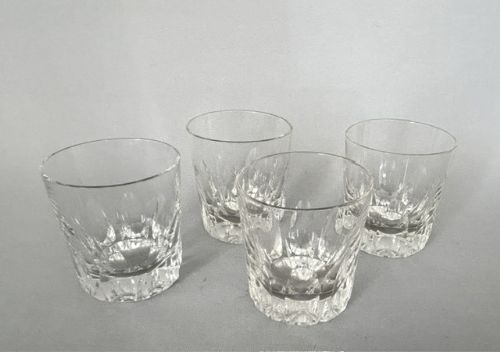
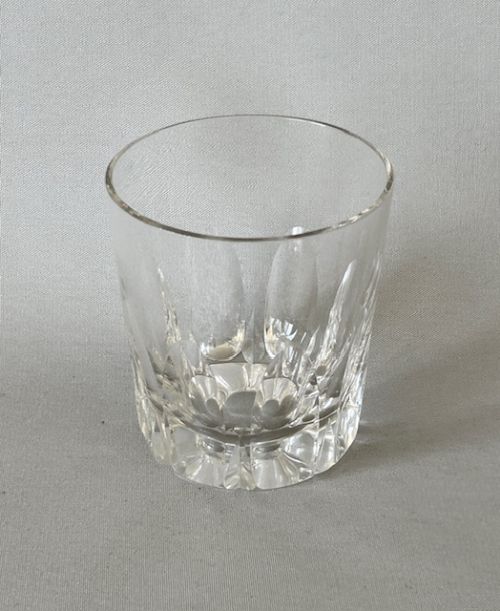


Antique Whisky Tumbler
An antique whisky tumbler brings weight and history to the table, offering a direct tactile connection to past centuries of drinking customs.
Antique Whisky Tumbler
The antique whisky tumbler category encompasses robust drinking glasses designed for spirits, appearing across Georgian, Victorian, and early twentieth-century periods. These vessels range from modest dram glasses with folded feet to substantial cut crystal drinking glasses.
Buyers most frequently encounter nineteenth-century English examples, particularly Victorian cut glass tumblers and sets originating from the late eighteen-hundreds or early nineteen-hundreds. Formats vary from single spirit beakers to complete matched pairs and larger sets of six.
Origins span English production centres alongside Bohemian works, incorporating styles from Regency blaze-cut pieces to Edwardian novelties and Art Deco enamel designs.
How they were made
Maker workshops utilised lead crystal, heavy lead glass, and clear glass shaped through blowing and moulded techniques. Molten material was gathered, blown, and finished with thick bases designed to provide stability.
Surface decoration relied on wheel-cutting to create crisp facets, alongside delicate hand engraving and hand enamelling seen on Bohemian lead crystal sets.
Antique Whisky Tumbler Retail Price Guide 2026
Typical asking prices for whisky tumbler among the pieces listed under this phrase on Sellingantiques today, from the lower quarter to the upper quarter. They describe what is for sale here now, not the wider market.
Listings span Georgian, Victorian, Edwardian, and Art Deco eras, constructed from lead crystal, clear glass, and enamel.
What varies in quality
The distinction between ordinary and superior pieces rests on the clarity of the metal and the depth of the wheel-cut facets. Heavier lead crystal exhibits superior brilliance and light refraction compared to lighter, plain glass alternatives.
Execution of engraved or enamelled motifs separates standard production from finer workmanship, alongside the preservation of crisp rim edges and stable, flat bases.
The Antique Whisky Tumbler Glossary
- Lead crystal
- A high-clarity glass containing metal oxide that increases weight and refractive index. This material allows for deep, sharp cutting that catches candlelight.
- Blaze cut
- A decorative cutting style featuring broad, flat facets that reflect light dramatically. It is commonly found on Regency and Georgian drinking vessels.
- Spirit beaker
- A straight-sided drinking vessel intended for spirits without a stem or handle. These pieces often feature heavy, thick bases for stability.
- Folded foot
- A rim formed at the base of a glass where the hot metal is doubled back on itself for strength. This technique appears on mid-eighteenth-century dram glasses.
Antique Whisky Tumbler: Frequently Asked Questions
How do I date an old whisky tumbler?
Dating relies on observing manufacturing characteristics such as pontil marks, glass weight, and the style of cutting or engraving. Georgian and Regency pieces often show rough pontil scars and simpler wheel work, while Victorian and Edwardian examples tend to feature heavier press-moulded or deeply faceted crystal.
Comparing the rim wear and surface patina to known examples from specific eras helps confirm the period of manufacture.
Were these glasses used only for whisky?
These robust vessels served multiple drinking purposes in domestic settings, including drams of neat spirit, water, or mixed cordials. Their heavy bases prevented tipping on dining tables and tavern counters alike.
Over time, changing fashions in tableware shifted their primary association firmly towards whisky service.
Can I use antique tumblers daily?
Daily use is entirely possible provided appropriate care is taken with heavy lead crystal and fragile historical glass. Hand washing in tepid water preserves the surface brilliance and prevents thermal shock.
Avoiding harsh detergents and modern dishwashers ensures the longevity of delicate wheel engravings and hand-enamelled details.
What is the difference between glass and crystal?
Crystal contains mineral additives like lead oxide that increase the overall weight, density, and optical dispersion of the material. This composition permits artisans to cut deeper, sharper geometric patterns that sparkle brightly under illumination.
Standard glass lacks these heavy additives, resulting in a lighter feel and less pronounced light refraction.