



Etched Glass Wine Carafe
An etched glass wine carafe brings texture and nineteenth-century elegance to the dining table.
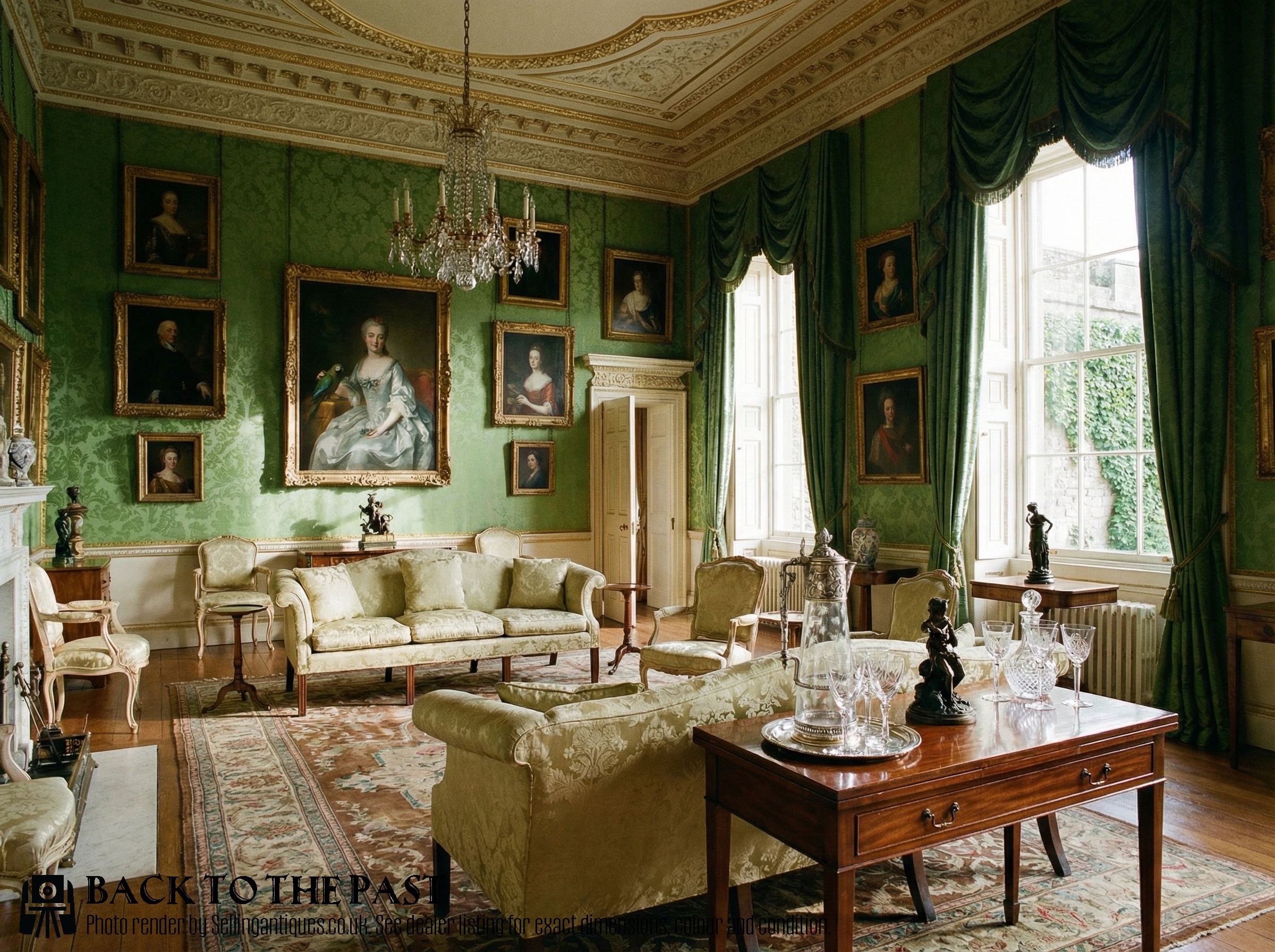
Etched Glass Wine Carafe
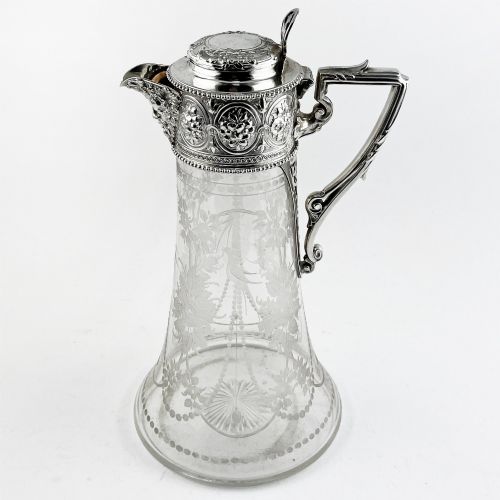
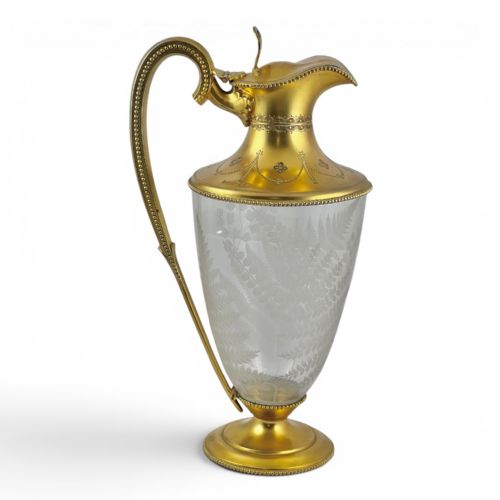
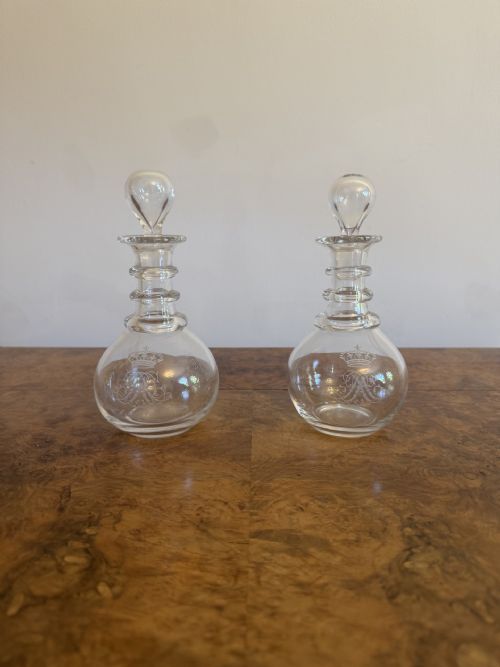
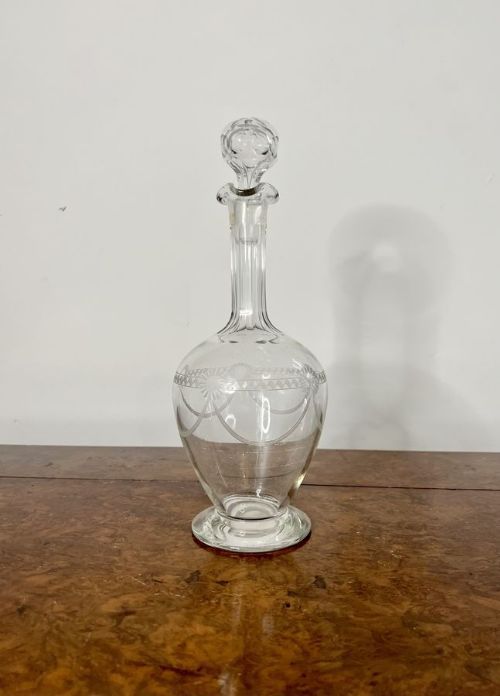
An etched glass wine carafe serves as a decorative vessel for holding and pouring wine, encompassing related forms such as claret jugs, decanters, and ewers. When searching this phrase, a buyer encounters pieces primarily from the Victorian and Edwardian periods, alongside occasional mid-twentieth-century examples.
The objects take various shapes, from tall cut glass decanters to handled ewers fitted with silver plate, sterling silver, or wrought iron mounts. Most specimens demonstrate nineteenth-century British, French, German, or Bohemian origins, frequently featuring botanical or figurative ornamentation.
Materials and manufacture
Metalwork components, including collars, handles, hinged lids, and bacchus masks, are shaped separately and secured to the glass body. Overlay techniques appear on certain pieces, fusing contrasting layers of coloured glass before surface carving.
Listings feature Victorian, Edwardian, and mid-twentieth-century eras, utilising materials such as lead crystal, silver plate, and coloured overlay glass.
Judging quality and craftsmanship
Quality rests in the crispness of the glass cutting and the depth and detail of the acid-etching or engraving. Fine examples display sharply defined botanical motifs, such as grapes and vines, rather than shallow or blurred surface marks.
The integration between the glass body and the metal mount dictates the overall standard of the piece. Superior items feature securely fitted collars, balanced proportions, and substantial metalwork without loose mounts or clumsy joins.
Asprey and Co. Ltd·Elkington·Orfèvrerie Produx Saint Hilaire
The Etched Glass Wine Carafe Glossary
- Claret jug
- A specialised pouring vessel designed specifically for serving red wine at the table. These pieces typically feature a hinged metal lid and a handle.
- Silver plate
- A manufacturing technique where a thin layer of silver coats a base metal such as copper or brass. This material frequently forms the mounts, handles, and collars of nineteenth-century vessels.
- Lead crystal
- A high-clarity glass containing metallic oxides that increase weight and brilliance. This material allows for deep, sharp facet cutting.
- Acid-etching
- A decorative method utilising acid to eat into exposed glass surfaces. This technique produces frosted designs that contrast with clear glass.
- Bacchus mask
- A decorative sculptural face representing the classical god of wine. These motifs often ornament the spouts or handles of nineteenth-century jugs.
Etched Glass Wine Carafe: Frequently Asked Questions
What is the difference between a decanter and a claret jug?
A decanter usually possesses a stopper and a static body designed for resting on a sideboard. A claret jug incorporates a handle and a hinged metal lid to facilitate pouring at the table.
Both forms appear frequently among nineteenth-century glass vessels, though jugs prioritize pouring functionality over long-term storage.
How do I date a Victorian piece?
Dating relies on stylistic markers, metal hallmarks, and manufacturing techniques recorded in the piece. Victorian examples span from the mid-nineteenth century onward, often exhibiting characteristic floral engraving or rococo revival mounts.
Assay office marks on silver components provide precise year markers when present on the metal collar or lid.
Can I use these vessels for serving wine today?
These pieces function adequately for serving wine provided the interior remains clean and free from persistent staining. Hand washing preserves both the glass clarity and the historic metal mounts.
Harsh detergents and dishwashers risk damaging nineteenth-century silver plate and delicate etched surfaces.
What does overlay glass mean?
Overlay glass consists of a base glass body encased in a second layer of a different colour. Artisans carve through the outer layer to expose the contrasting colour underneath, creating multi-toned patterns.
This technique appears in nineteenth-century Bohemian production, particularly on green or ruby vessels.