
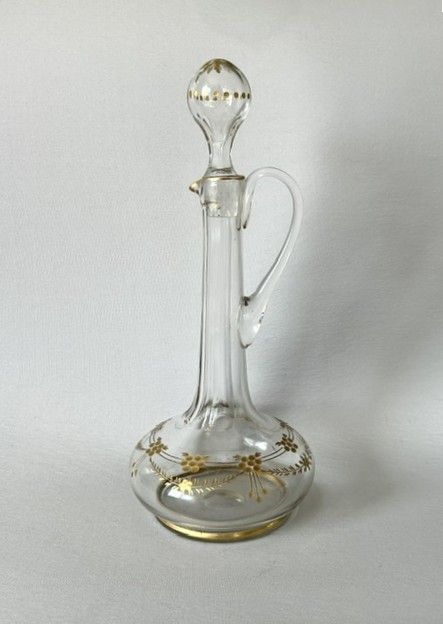




19th Century Wine Decanter
A 19th century wine decanter brings practical elegance to the table, holding vintage port or claret in heavy cut crystal or rich coloured glass.
19th Century Wine Decanter
A 19th century wine decanter spans distinct periods from Regency geometric sharpness to ornate Victorian floral engraving and flamboyant Bohemian colour overlays. Buyers searching for a 19th century wine decanter will encounter robust lead crystal ship's vessels designed to stay steady at sea alongside slender, tall-necked carafes intended for formal dining rooms.
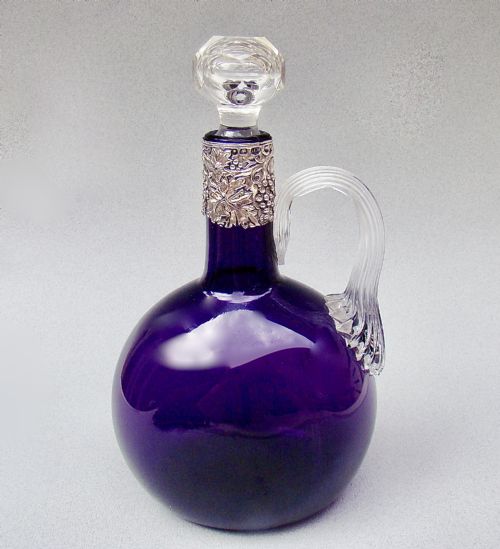
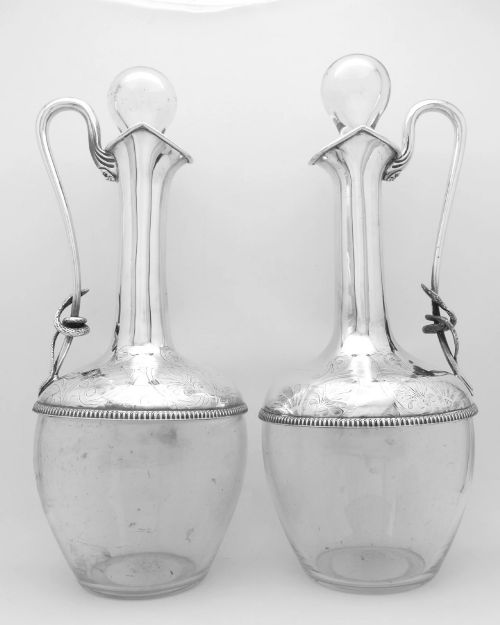
The common form met on this page is the Victorian cut glass decanter, often paired with silver-plated or solid silver mounts and pouring lips. These vessels demonstrate the evolution of domestic dining habits throughout the hundred-year span, shifting from simple Georgian pouring bottles to elaborate claret jugs with serpent handles and hinged lids.
Materials and construction
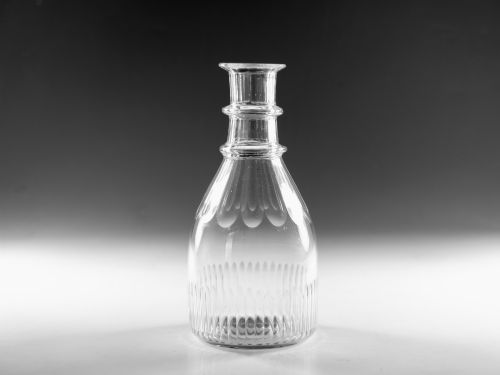
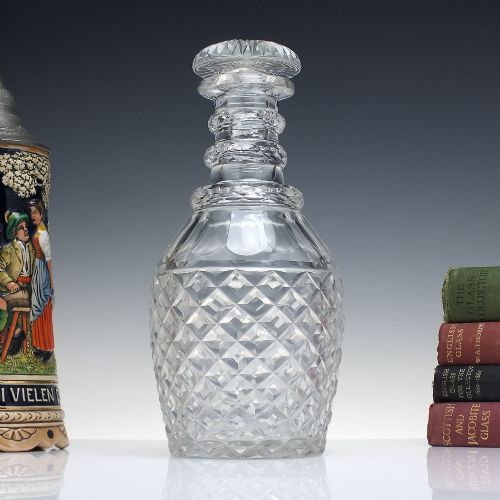
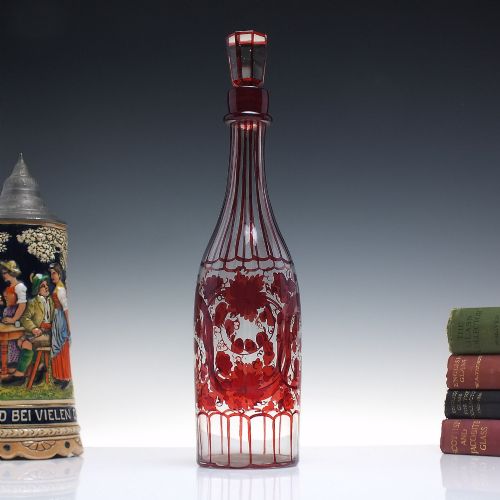
Makers utilised heavy lead crystal and clear glass, blowing the vessels into moulds or free-hand before applying deep wheel-cut flutes, pillars, and diamond patterns. Many coloured examples employ flashed glass, where a thin layer of amethyst, ruby, green, or blue glass is overlaid onto clear crystal and cut through to reveal the transparent metal beneath.
Silver plate and solid silver mounts provide secure necks and hinged lids for claret jugs, whilst enamel and gilding decorate the exterior surfaces of Bohemian and English serving bottles. Pontil marks on the undersides confirm hand-blown origins before bases were smoothed and polished flat.
Some Victorian wine jugs wear silver serpent handles, wrapping cold metal tails around thirsty crystal throats.
Judging quality and execution
Quality rests in the depth and crispness of the glass cutting, the weight of the lead crystal, and the integration of metal mounts. Superior pieces display sharp, clean facets that refract light brilliantly, whereas lesser examples show softer, shallower grinding.
The proportion of the neck to the body and the clarity of coloured glass layers distinguish master output from standard domestic ware. Original stoppers that match the body in glass colour, cut pattern, and wear elevate the integrity of the piece.
Henry Matthews·James Powell·Elkington
The 19th Century Wine Decanter Glossary
- Mell decanter
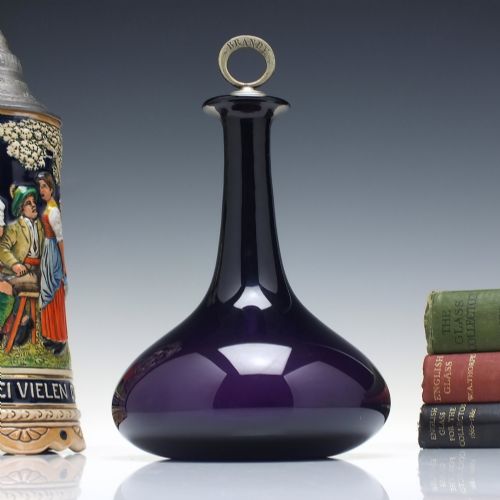
- A serving bottle characterised by a tapering, pear-shaped body and a broad base designed for stability. These often appear in rich amethyst or Bristol blue glass.
- Ship's decanter
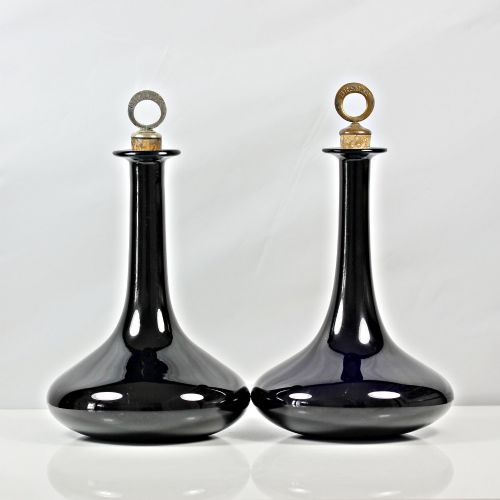
- A vessel with a wide, low-slung conical body that prevents tipping on rolling tables. The wide base maximises surface area for breathing.
- Claret jug
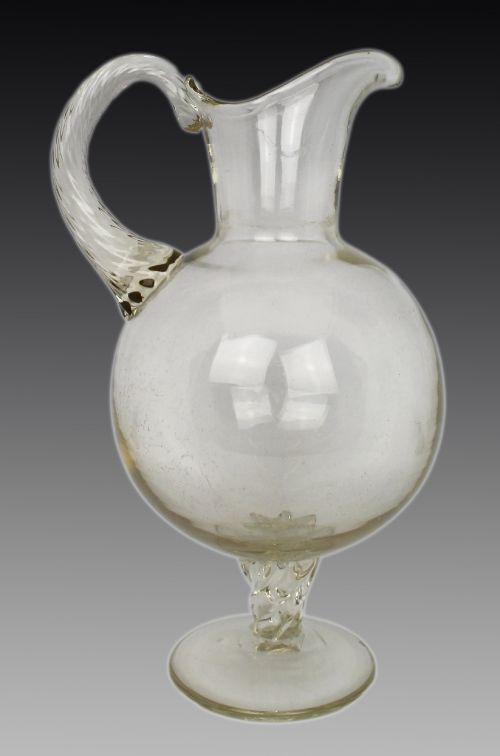
- A pouring vessel with a handle and a hinged metal spout, typically utilised for serving red wine during the Victorian era. They frequently incorporate silver-plated mounts.
- Latticinio
- A glassblowing technique featuring fine opaque white threads twisted within clear glass. This method appears on mid-century decorative jugs.
- Pontil mark
- A rough scar left on the base of a hand-blown glass object where the pontil rod was snapped away. Ground and polished bases indicate finer production.
19th Century Wine Decanter: Frequently Asked Questions
How do I date a decanter?
Dating relies on the shape of the body, the style of the stopper, and the manufacturing technique visible on the base. Regency pieces tend to show heavy pillar cutting, whilst Victorian examples often feature star-cut bases and applied metal mounts.
Changes in glass chemistry and pontil mark finishing also help narrow down the decade of production. Examining the wear patterns on the base provides further clues to its age.
What is a ship's decanter?
A ship's decanter is a specialised glass vessel featuring a wide, heavy base that flares outwards towards the bottom. This low centre of gravity kept the wine secure against rolling motion on naval and merchant vessels.
Despite their nautical origin, they became popular in land-based dining rooms for their practical stability.
Are coloured glass decanters authentic?
Coloured glass decanters in amethyst, green, ruby, and Bristol blue are entirely authentic to the period. Makers achieved these shades by adding metallic oxides to the molten glass batch during production.
Overlaid techniques, where coloured glass is cased over clear crystal, represent high-end manufacturing from English and Bohemian glasshouses.
Can I use antique decanters for wine?
Antique decanters remain functional for serving wine, provided the interior is clean and free from old staining. Lead crystal decanters should not store wine for long periods, but they work well for breathing wine before a meal.
Gentle washing with warm water and specialised cleaning beads preserves the fragile interior surfaces without scratching.