

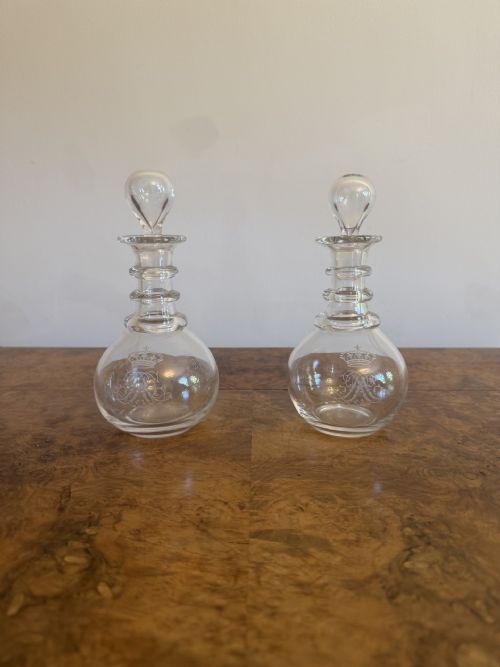


Clear Glass Table Carafe
These clear glass table carafe pieces bring clean nineteenth-century and twentieth-century service to the dining board with lead crystal, cut glass, and mounted silver.
Clear Glass Table Carafe
When you search for a clear glass table carafe, you find vessels designed to hold wine, water, oil, or vinegar at the dining table. The pieces on this page span Victorian, Edwardian, and Art Deco periods, alongside French provincial and nineteenth-century examples.
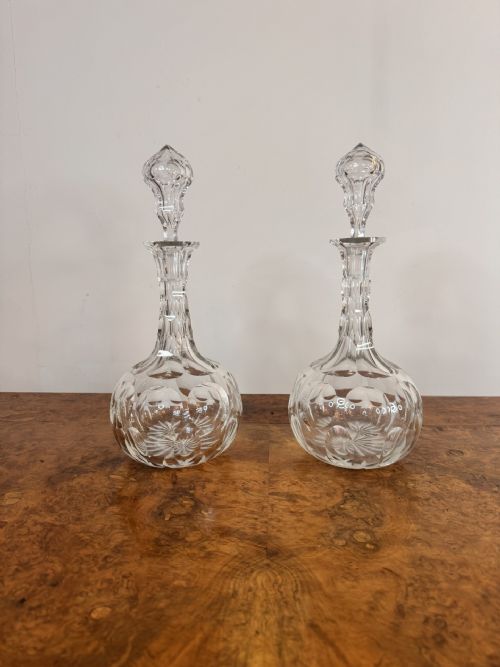
You meet decanters, claret jugs, water jugs, and cruet bottles across these listings. Many appear in matched pairs from the Edwardian era, whilst others stand alone as tall nineteenth-century pitchers or French cider vessels.
The dominant forms rely on transparent bodies that reveal the colour of the liquid held within. Makers often added mounts of sterling silver, pewter, or gold leaf to enhance the simple glass forms.
How they were made
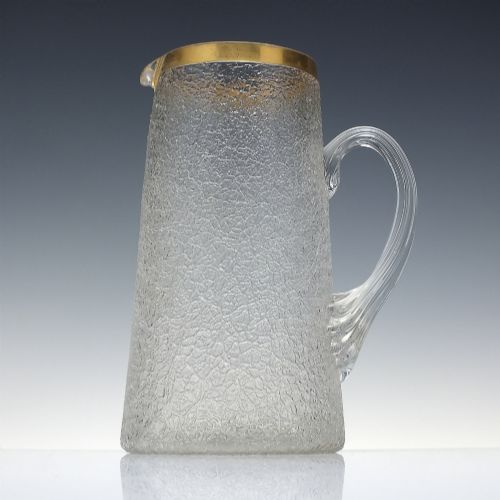
Makers utilised clear glass and lead crystal, shaping bodies through blowing and moulding before applying deep wheel cuts. Over-shot glass techniques created textured surfaces on nineteenth-century water jugs.
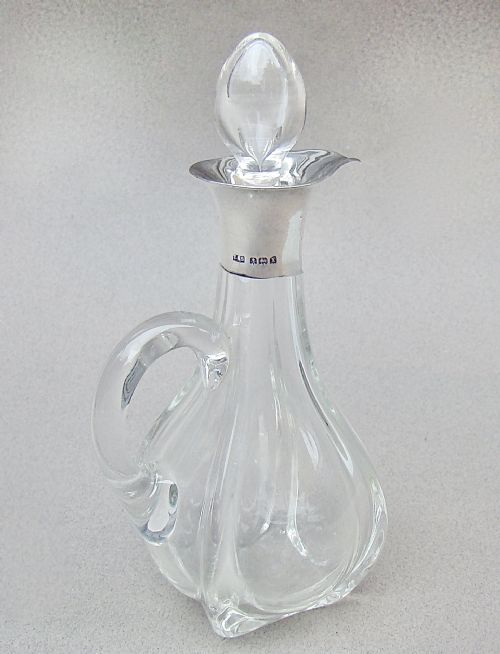
Metal mounts in sterling silver and pewter were fitted securely around necks and handles, sometimes featuring hallmarks from workshops such as Levi & Salaman in Birmingham. Gold leaf rims added delicate metallic borders to over-shot glass vessels.
Clear Glass Table Carafe Retail Price Guide 2026
Typical asking prices for clear glass table carafe among the pieces listed under this phrase on Sellingantiques today, from the lower quarter to the upper quarter. They describe what is for sale here now, not the wider market.
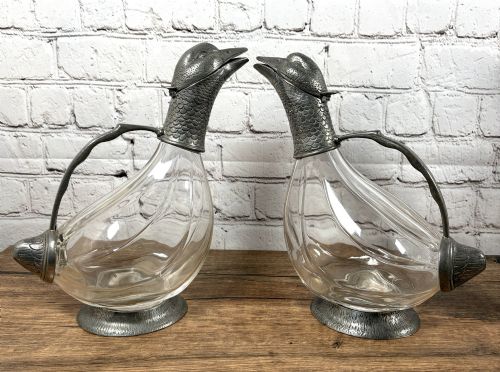
Zoomorphic French pewter claret jugs bring peculiar animal spirits to the dining table, pouring wine straight from stylized metal jaws.
What varies in quality
Quality rests upon the crispness of the glass cutting and the weight of the metal mounts. Heavy lead crystal provides a solid feel and clearer refraction than lighter, standard glass.
The integration between silver or pewter mounts and the glass body dictates the finesse of the piece. Well-balanced handles and secure collars distinguish finer Edwardian and Victorian examples from simpler utility vessels.
Levi & Salaman
The Clear Glass Table Carafe Glossary
- Cut glass
- Glass decorated by grinding facets or patterns into the surface with rotating wheels. This technique increases the sparkle of the material.
- Lead crystal
- Glass containing metal oxides that increase weight, brilliance, and clarity. It allows for deeper and sharper cutting.
- Claret jug
- A pouring vessel specifically intended for serving red wine at the table. These often feature hinged metal mounts and handles.
- Cruet bottle
- A small container utilised for holding table condiments such as oil or vinegar. They frequently appear with silver collars and stoppers.
- Overshot glass
- Glass featuring a fine, textured web of threads trailed across the surface. This creates a frosted or veil-like appearance.
Clear Glass Table Carafe: Frequently Asked Questions
What is a clear glass table carafe used for?
These vessels serve liquids such as wine, water, cider, oil, or vinegar at meals. Their clear bodies allow diners to inspect the colour and clarity of the contents.
Many examples include stoppers or mounted lids to keep contents fresh between pours. They function as both practical tableware and decorative sideboard items.
How do I date a clear glass table carafe?
Dating relies on stylistic clues, glass thickness, cutting patterns, and metal mounts. Edwardian and Victorian pieces often show distinct geometric or floral cuts.
Silver mounts frequently carry hallmarks with date letters and maker marks. These stamped details provide precise years of production.
Are these carafes dishwasher safe?
Historic glass and delicate metal mounts require careful hand washing. Sudden temperature changes can crack antique lead crystal or overshot glass.
Silver and pewter components tarnish in harsh automatic detergents. Gentle cleaning preserves both the metal surfaces and the clarity of the glass.
What is the difference between a decanter and a claret jug?
Decanters generally feature fitted glass stoppers and solid bases for holding spirits or wine. Claret jugs incorporate hinged metal lids and handles designed for pouring.
Claret jugs frequently combine glass bodies with silver-plated or pewter mounts. Decanters rely more often on all-glass construction with ground glass stoppers.