




Engraved Crystal Wine Decanter
An engraved crystal wine decanter brings weight and historic character to the dining table, offering a fine vessel for pouring vintage ports and clarets.
Engraved Crystal Wine Decanter
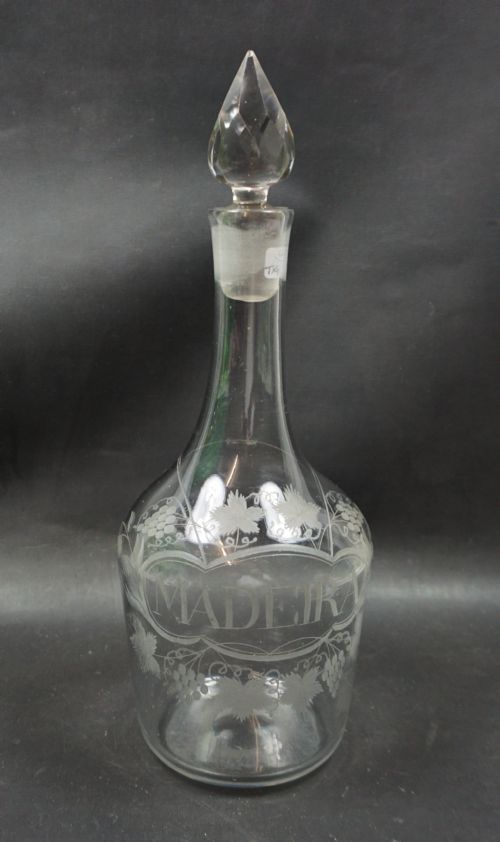
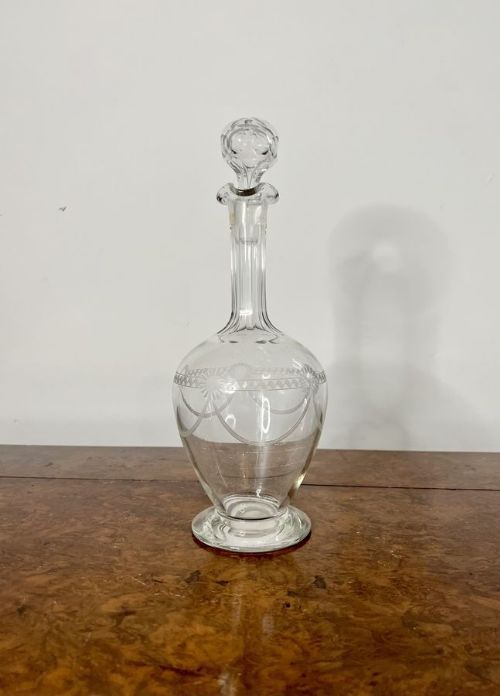
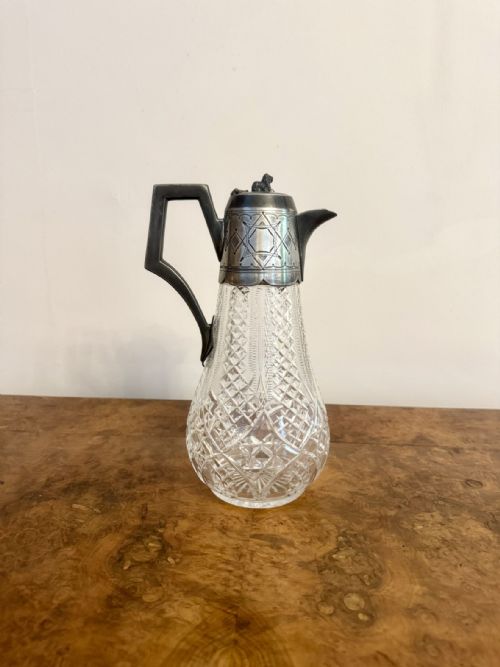
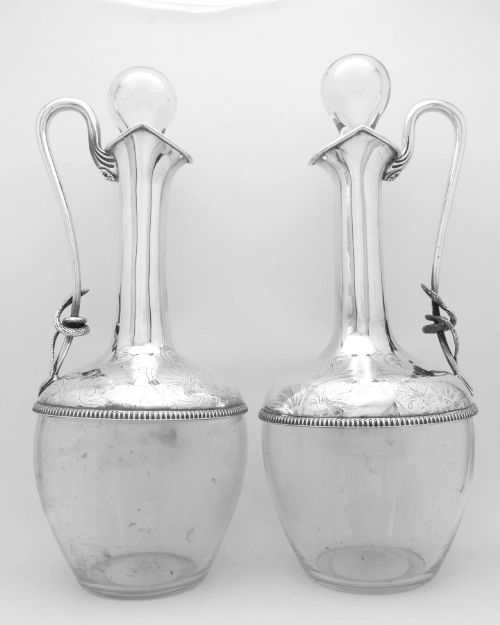
An engraved crystal wine decanter is a traditional serving vessel shaped from clear or coloured lead glass and embellished with wheel-cut or intaglio decoration. These pieces range from Georgian shoulder decanters to Victorian claret jugs and ewers mounted in silver plate and sterling silver.
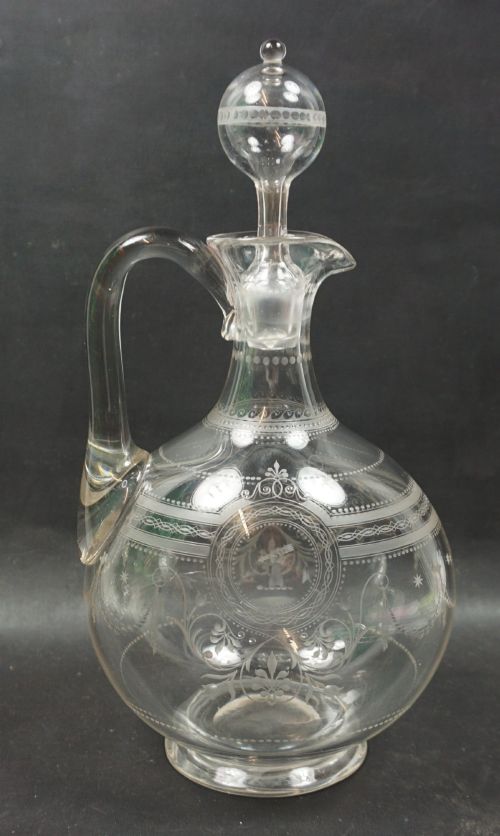
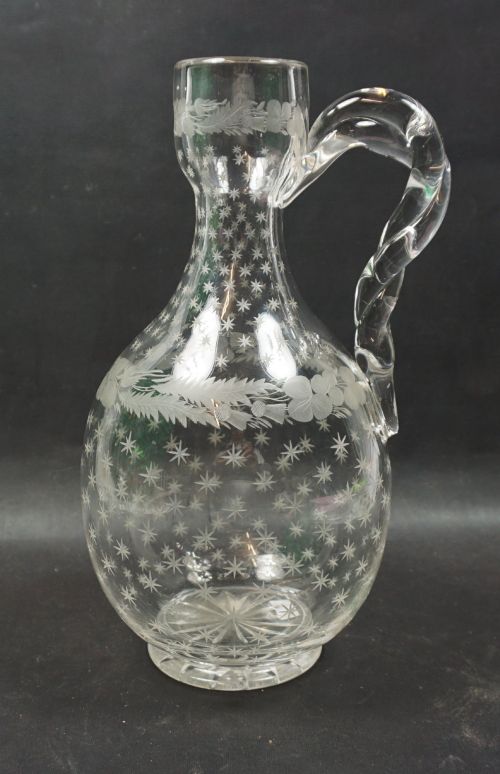
The versions most commonly met on this page date from the Victorian and Edwardian eras, often featuring botanical motifs, heraldic crests, or fruiting vines. Makers such as William Comyns and Asprey provide examples mounted in precious metals, alongside unmarked English glass from the nineteenth century.
Materials and Technique
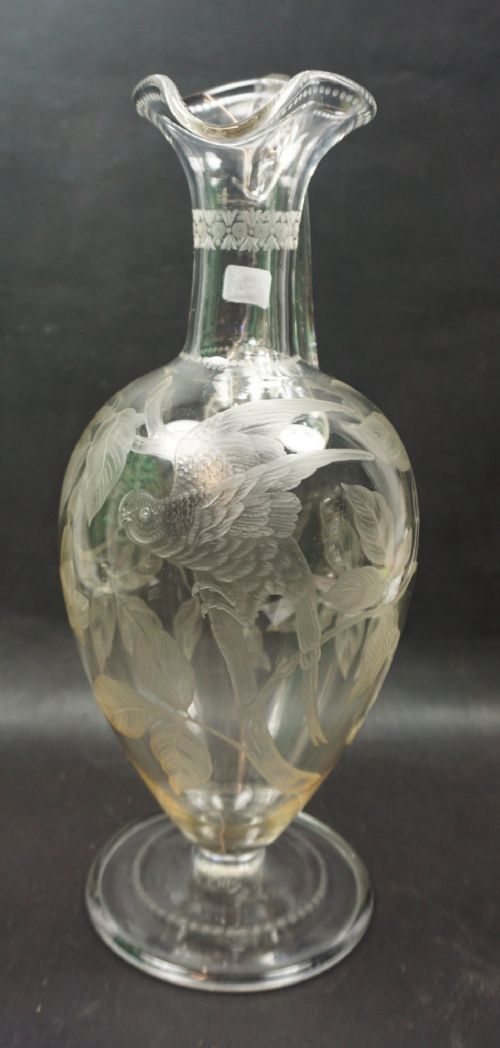
These vessels utilise lead crystal and clear glass blown into moulds or free-blown before undergoing extensive hand-cutting. Artisans then apply wheel engraving to incise detailed patterns such as parrots, floral emblems, and labels directly into the exterior surface.
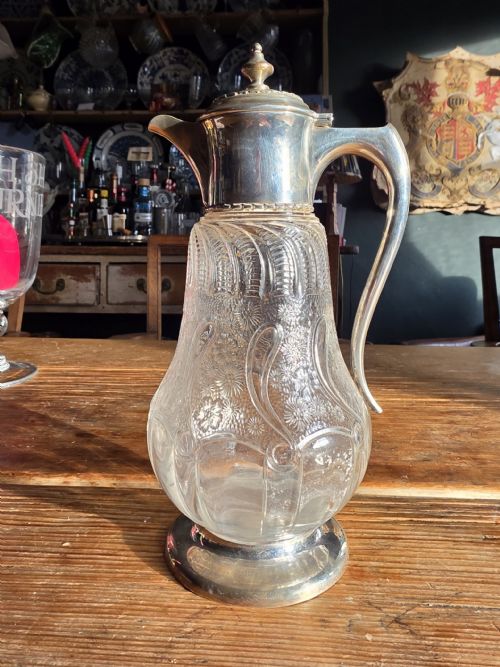
Many items incorporate mounts formed from silver plate, sterling silver, or pewter, often shaped into serpent handles or Bacchus masks. These metal elements are secured to the glass neck and rim to support hinged lids and pouring spouts.
Engraved Crystal Wine Decanter Retail Price Guide 2026
Typical asking prices for engraved crystal wine decanter among the pieces listed under this phrase on Sellingantiques today, from the lower quarter to the upper quarter. They describe what is for sale here now, not the wider market.
Listings on this site span from Georgian shoulder decanters through Victorian silver-mounted claret jugs to Edwardian intaglio glass services.
Distinctions in Standard
The standard of an engraved crystal wine decanter depends heavily on the depth and precision of the wheel engraving. Crisp, deeply incised motifs show greater artistic control than shallow, acid-etched imitations.
The weight of the lead crystal and the quality of the silver or silver-plate mounts dictate the overall substance of the piece. Substantial metalwork by known makers adds considerable weight and architectural presence to the vessel.
William Comyns·Asprey and Co. Ltd·Webb Corbett
The Engraved Crystal Wine Decanter Glossary
- Claret jug
- A specialised pouring vessel designed for red wine, typically featuring a handle and a hinged metal lid.
- Intaglio
- A design carved into the surface of the glass so that the pattern sits below the outer plane.
- Silver plate
- A layer of silver fused to a base metal foundation, frequently utilised for nineteenth-century mounts and handles.
- Shaft and globe
- A specific decanter silhouette defined by a long narrow neck expanding into a rounded bulbous base.
- Rock crystal
- A high-purity clear quartz or heavy lead glass shaped with deep, highly polished cuts.
Engraved Crystal Wine Decanter: Frequently Asked Questions
How do I clean an old decanter?
Fill the vessel with warm water and specialised cleaning beads, then swirl gently to lift residue without scratching the interior walls. Avoid sudden temperature changes to prevent thermal shock to brittle historic glass.
Allow the decanter to dry completely upside down on a specialised drying stand before replacing the stopper.
Can I use these for modern wine?
These vessels are well suited for decanting mature red wines and ports, allowing sediment to settle before pouring. Ensure the interior is clean and free of old residues prior to filling.
Hand wash the piece immediately after use to protect both the crystal and any historic silver mounts.
How do I date an antique decanter?
Examine the base for a pontil mark, which indicates a piece was hand-blown and snapped off the iron rod during manufacture. Sharp cut facets, specific bottle shapes, and hallmarks on silver mounts provide further chronological clues.
Compare the engraving style and motifs against documented periods like the Victorian or Edwardian eras to narrow down the decade of production.