




Cut Glass Tableware
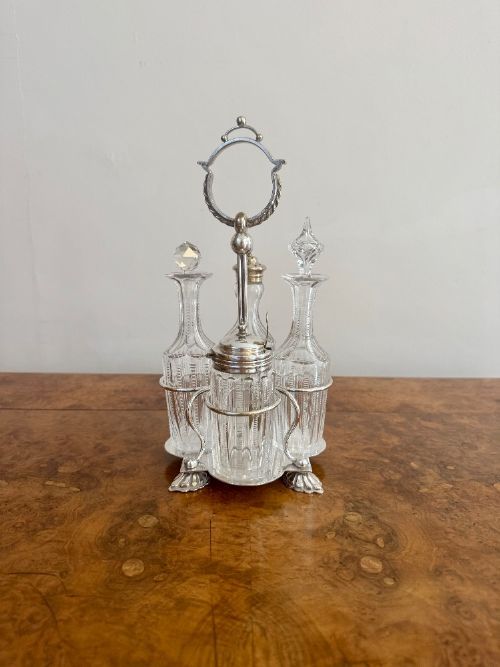
These cut glass tableware items combine sparkling crystal with precious mountings, offering a tactile method of serving at the dining table.
Cut Glass Tableware
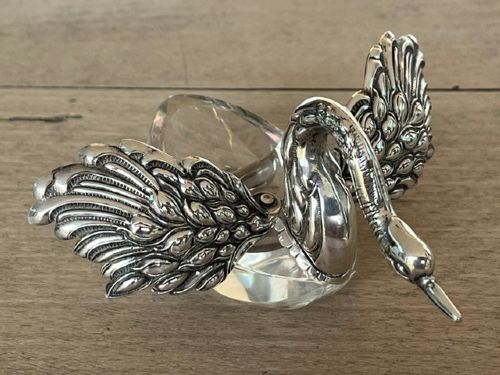
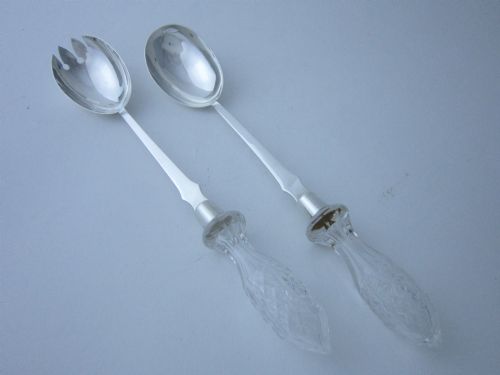
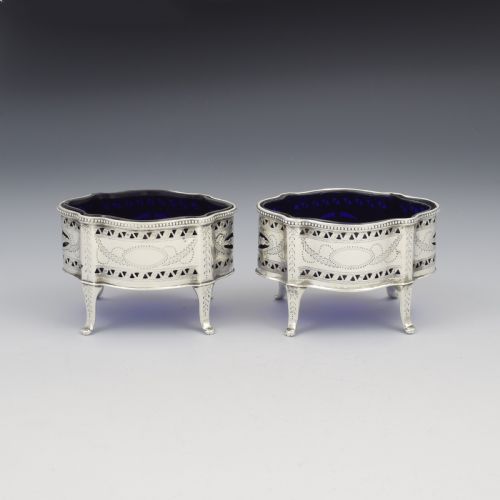
Cut glass tableware comprises functional vessels and dining accessories spanning the Georgian, Victorian, and Edwardian eras. Buyers encounter items ranging from cruet sets and biscuit barrels to decanters, salt cellars, and fruit bowls.
The material combinations unite heavy-cut glass and crystal with sterling silver and silver-plated mounts. Many pieces date from the nineteenth and early twentieth centuries, reflecting formal dining traditions.
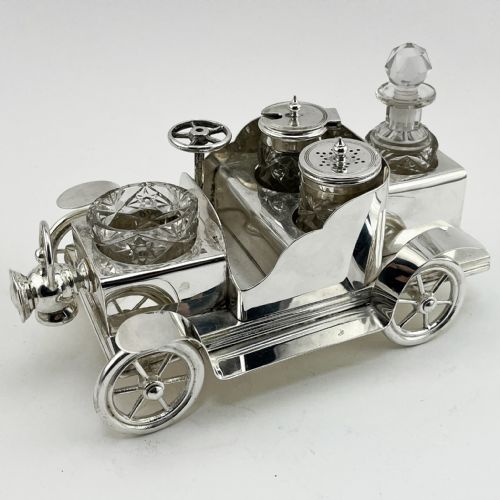
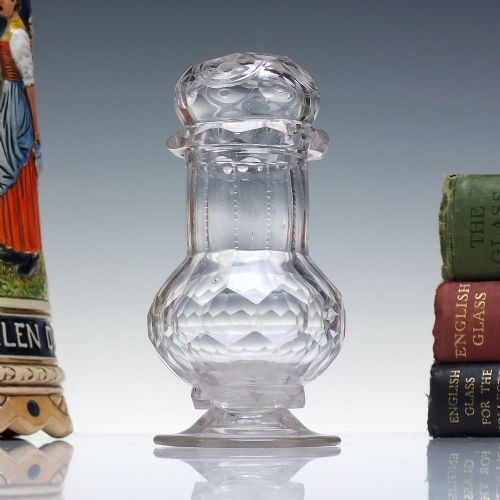
Vessels like celery vases, sugar sifters, and claret jugs demonstrate the practical role these objects played in daily household service. The selections also include novelty pieces and fitted condiment holders.
Materials and Technique
The manufacture relies on lead crystal and heavy glass blanks shaped by hand-blowing and deep wheel-cutting. Artisans incised geometric, floral, and fluted patterns into the surface to catch the light.
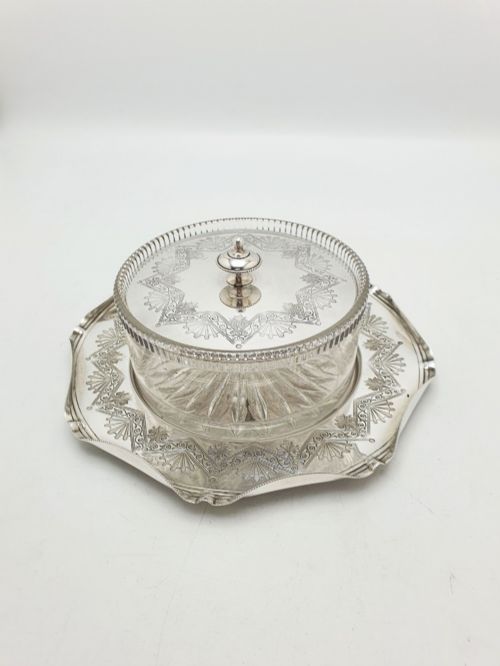
Metal components utilise sterling silver and silver plate, often cast, pierced, or engraved to complement the glass liners and bottles. Mounts and finials secure the glass bodies using collars and hinged attachments.
Listings feature items spanning the eighteenth, nineteenth, and early twentieth centuries, incorporating lead crystal, sterling silver, and silver plate.
Gradations of Excellence
Quality rests upon the clarity of the crystal and the crispness of the cutting, where deeper facets produce sharper light refraction. Superior pieces maintain unblemished rims and heavy, balanced proportions.
The metalwork further distinguishes the tier, showing in the weight of the sterling silver or the retention of silver plating on mounts and stands. Makers employing detailed engraving or fitted original cases elevate the piece.
Elkington & Co·Walker & Hall·Asprey & Co
The Cut Glass Tableware Glossary
- Cruet set
- A matched collection of condiment bottles mounted in a metal stand. These sets typically hold oil, vinegar, pepper, and mustard.
- Biscuit barrel
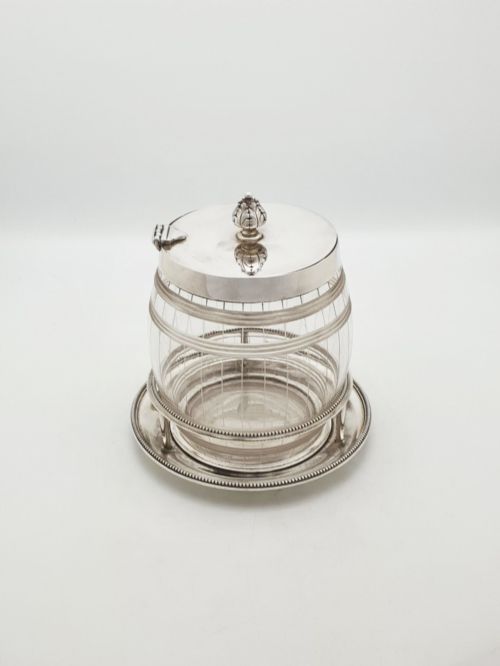
- A covered container designed for storing dry biscuits on the sideboard. They frequently feature silver-plated handles and hinged lids.
- Comport
- A decorative pedestal bowl used for serving fruit or sweets. They elevate the contents above the surface of the dining table.
- Claret jug
- A pourer specifically shaped for serving red wine. They combine cut glass bodies with hinged silver spouts and handles.
- Salt cellar
- A small open vessel for individual portions of salt. Georgian and Victorian examples often include fitted saucers or spoons.
Cut Glass Tableware: Frequently Asked Questions
How do I clean cut glass?
Wash the glass in warm soapy water using a soft cloth, avoiding abrasive pads that scratch the surface.
Dry the pieces thoroughly with a lint-free cloth to maintain the sparkle of the cut facets.
Were these items used daily?
Many of these objects served formal dining tables during the Victorian and Edwardian periods for condiments and beverages.
Wealthy households utilised matching cruet sets and biscuit barrels for everyday entertaining and ceremonial meals.
How do I date these items?
Examine the hallmarks on the silver mounts to identify the specific assay office and year of manufacture.
Stylistic cues such as the depth of the glass cutting and the shape of the metal stands also indicate the period.
Can I use them for dining?
Most pieces remain fully functional for serving dry foods, condiments, and bottled beverages at the modern table.
Take care with antique silver plate by avoiding prolonged exposure to acidic foods and harsh detergents.