




Cut Glass Powder Bowl
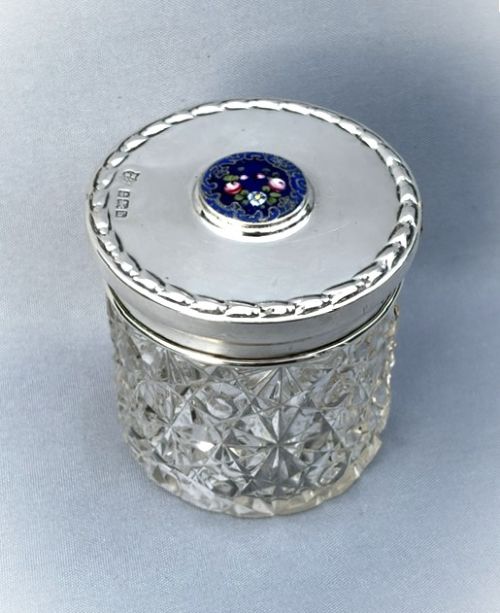
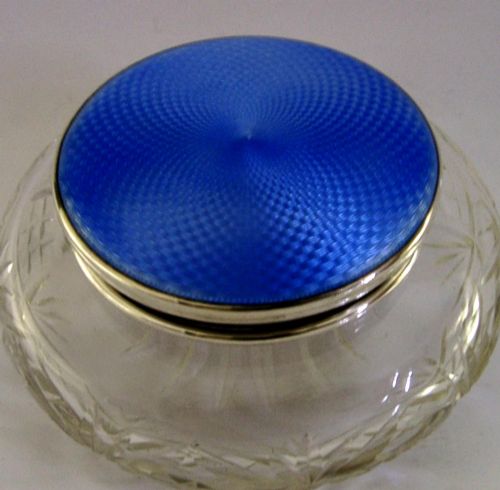
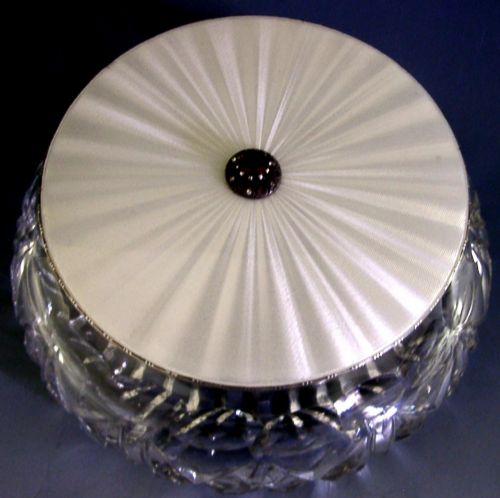
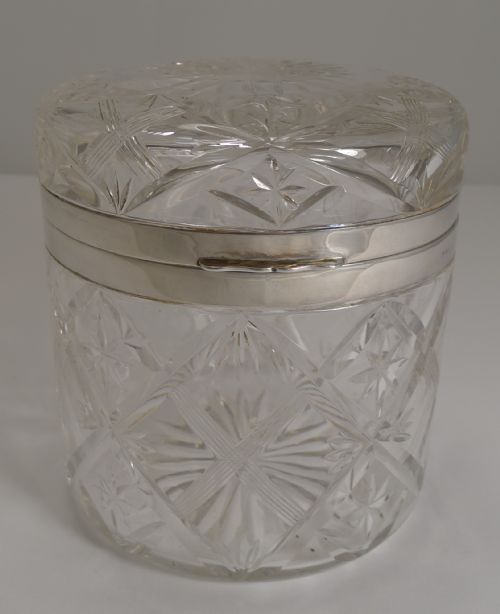
These cut glass powder bowl examples combine heavy crystal bases with sterling silver, enamel, and tortoiseshell lids for the dressing table.
Cut Glass Powder Bowl
A cut glass powder bowl sits on dressing tables as a lidded container for loose powder, dressings, and trinkets. These pieces appear in forms ranging from compact trinket pots to large lidded bowls.
The pieces on this page span the Edwardian era through the 1920s, Art Deco period, and into the mid-century. Edwardian examples share space with 1930s geometric designs and 1960s jars.
Originating as dressing table accessories and vanity jars, they combine heavy glass or crystal bases with fitted metal covers. Buyers encounter cranberry glass alongside clear cut crystal and blue glass bodies.
How they were made
Craftsmen shaped heavy glass and cut crystal through wheel-cutting and moulding to create faceted patterns on the bowl bodies. These thick glass bases provide stability and catch the light on a vanity surface.
Lids combine sterling silver or silver plate with applied vitreous enamel or polished tortoiseshell inserts. Metal components often bear hallmarks indicating assay offices such as Birmingham and specific production years.
A solitary cranberry glass jar survives from nineteen hundred and five, ready to hold rouge rather than tea.
What varies in quality
Quality rests in the depth and crispness of the glass cutting, alongside the weight and clarity of the crystal base. Thicker crystal with sharply defined facets separates standard vanity jars from finer production.
The finish of the lid material dictates the tier of the piece. Intact guilloche enamel without chips, tightly fitted tortoiseshell, and substantial sterling silver mounts distinguish superior examples.
The Cut Glass Powder Bowl Glossary
- Cut crystal
- Glass with a high lead content that is deeply cut with geometric or floral motifs. This material offers greater weight and brilliance than standard pressed glass.
- Guilloche enamel
- Enamel decorated with intricate engine-turned machine patterns beneath a translucent coloured layer. It appears frequently on the silver lids of 1930s pieces.
- Sterling silver
- An alloy consisting of ninety-two point five percent silver by mass, used for the rims and lids. British pieces typically feature hallmark stamps denoting the assay office and date.
- Tortoiseshell
- The mottled brown keratin shell of marine turtles used as a decorative veneer on vanity jar lids. Antique examples often feature inlaid piqué silver work.
- Vanity jar
- A lidded container designed to hold cosmetics, pins, or powder on a dressing table. These items share categories with dressing table accessories and trinket boxes.
Cut Glass Powder Bowl: Frequently Asked Questions
What were cut glass powder bowls used for?
These vessels held loose face powder on dressing tables before the advent of modern cosmetic packaging. Women used them alongside puffs to apply powder during daily toilette routines.
Over time, their usage expanded to store small trinkets, hairpins, and dressing table accessories. Today, collectors use them on vanity surfaces for similar small storage.
How do I date a powder bowl?
Dating relies heavily on hallmarks stamped onto the silver mounts and lids. Assay office marks and date letters reveal the exact year of manufacture for pieces carrying British silver.
Stylistic cues also help determine age, such as floral Edwardian motifs versus geometric Art Deco enamel patterns. Mid-century examples show distinct modernist styling compared to earlier Edwardian jars.
Are the lids always made of silver?
Lids utilise sterling silver or silver plate, frequently combined with decorative inserts. Enamel and tortoiseshell appear commonly as panels set into the metal frameworks.
Some variations feature glass tops matching the base, though metal mounts dominate the surviving pieces from this era. Hallmarks on the metal components confirm the material standard used.
How should I clean a silver and glass bowl?
Glass bases wash safely in warm soapy water using a soft cloth to protect the cut facets. Care must be taken to avoid submerging tortoiseshell or certain glued enamel lids.
Silver mounts require targeted polishing with a non-abrasive cloth, keeping polish away from the enamel or glass surfaces. Gentle maintenance preserves the original hallmarks and delicate finishes.