


Cut Crystal Vanity Box
A cut crystal vanity box holds the small essentials of the dressing table, prized for its refractive weight and metal mounts.
Cut Crystal Vanity Box
When you search for a cut crystal vanity box, you encounter a variety of dressing table containers including trinket boxes, vanity jars, and perfume caskets from periods such as the Georgian, Victorian, Edwardian, and Art Deco eras.
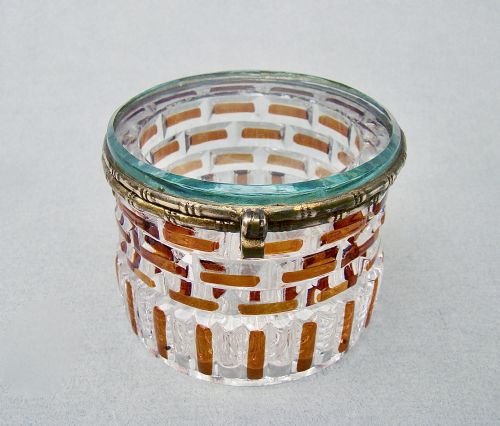
The pieces you meet most often on this page combine heavy cut glass or crystal bodies with fitted metal lids, spanning French Belle Epoque, Neoclassical Revival, and Mid-Century Modern styles.
Originating from English, French, and German workshops, these items served to organise jewellery, powder, and personal tokens on 19th and 20th-century dressing tables.
How they were made
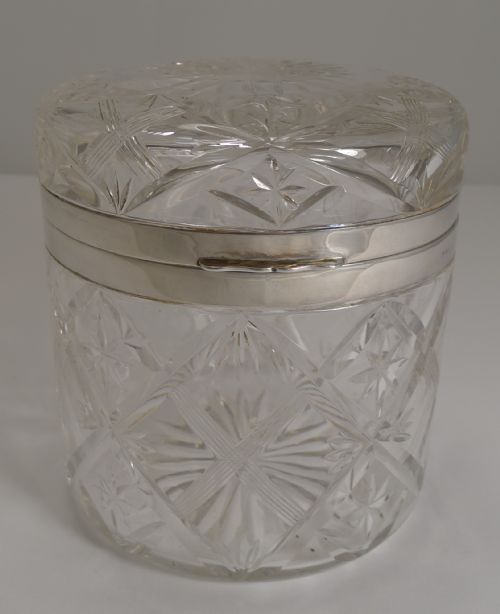
The bodies utilise heavy-walled glass or crystal that is deeply wheel-cut or press-moulded to create geometric and floral facets that catch the light.
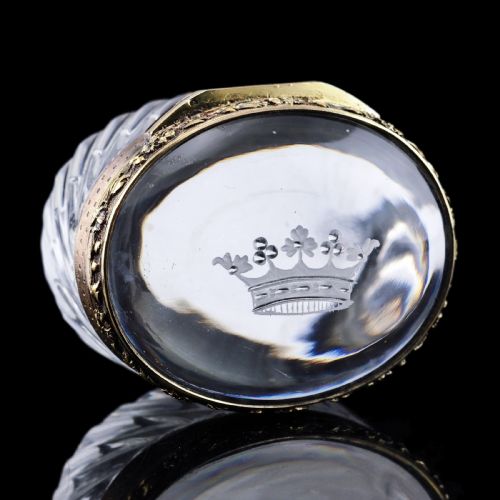
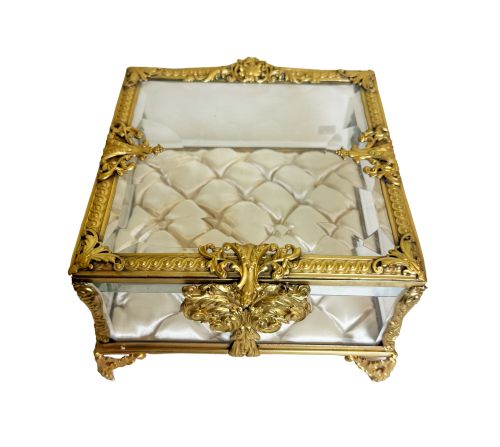
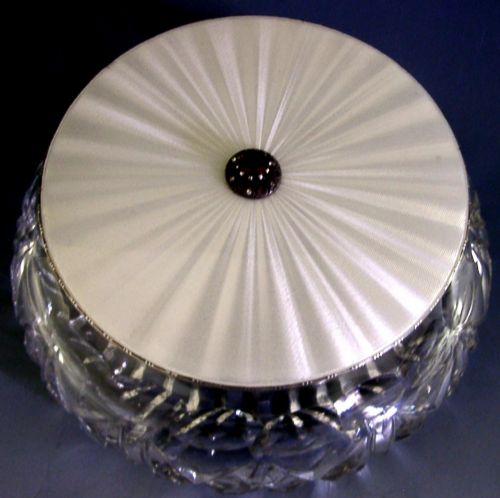
Mounts, frames, and lids employ sterling silver, silver gilt, brass, gilt bronze, or ormolu, frequently hinged and secured to the glass rim.
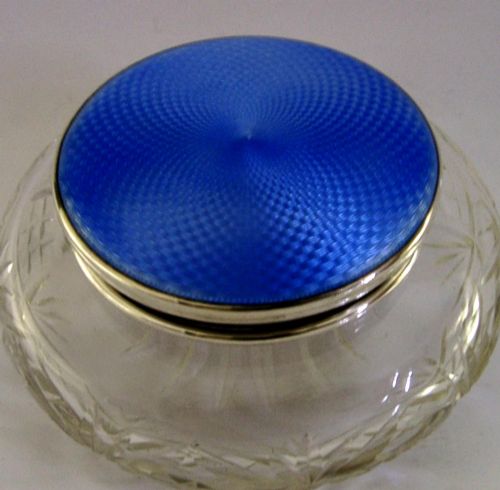
Select examples incorporate secondary decorative elements such as blue enamel, tortoiseshell panels, or cast coronet and crest motifs.
Materials recorded across the inventory include tortoiseshell, blue enamel, gilt bronze, and sterling silver.
What varies in quality
Quality rests in the crispness and depth of the glass cutting, alongside the weight and substantial thickness of the crystal body.
The standard of the metalwork defines the tier, visible in the precision of cast ormolu frames, gilt bronze mounts, and hallmarked sterling silver lids.
Integration between the glass vessel and its metal mount marks superior execution, where hinges align smoothly and closures remain flush.
Posen of Frankfurt and Berlin·Jonathan Douglas·Asprey·Hoffman
The Cut Crystal Vanity Box Glossary
- Cut crystal
- Glass containing lead oxide that increases refractive brilliance and allows for deep, sharp wheel-cutting. This material forms the heavy, faceted body of most vanity containers.
- Ormolu
- Finely chopped gold applied to a bronze base through a mercury amalgamation process, or later gilt bronze. It provides a rich, golden mounting for French crystal boxes.
- Sterling silver
- An alloy containing 92.5 percent silver by mass, standard for British hallmarked vanity box lids and mounts. It offers a bright, polished finish that tarnishes slowly over time.
- Silver gilt
- Silver objects coated with a thin layer of gold on the surface. This technique gives the metal a warm, golden appearance while retaining a silver core.
- Trinket box
- A small container designed to hold rings, pins, and personal ornaments. These vessels appear frequently on dressing tables alongside larger vanity jars.
Cut Crystal Vanity Box: Frequently Asked Questions
What fits inside a vanity box?
These containers were originally built to hold small personal items such as rings, brooches, hairpins, and powder puffs.
Today they function equally well on a modern dressing table for storing similar small valuables and keepsakes.
How do I date a silver mounted box?
British pieces often carry hallmarks that indicate the exact assay office and year of manufacture through designated date letters.
Foreign or unmarked examples are dated by the prevailing style of the cut crystal body and the form of the metal mount.
Are French and English boxes different?
French examples frequently feature ornate gilt bronze, ormolu, or amber-tinted glass associated with the Belle Epoque and Charles X periods.
English pieces more commonly pair heavy cut crystal with hallmarked sterling silver lids from the Edwardian and Victorian eras.
How should I clean the crystal?
Wash the glass body gently in warm soapy water using a soft cloth, avoiding harsh abrasives that could scratch the surface.
Keep moisture away from any metal mounts, enamel panels, or tortoiseshell insets to protect the hinges and adhesives.