




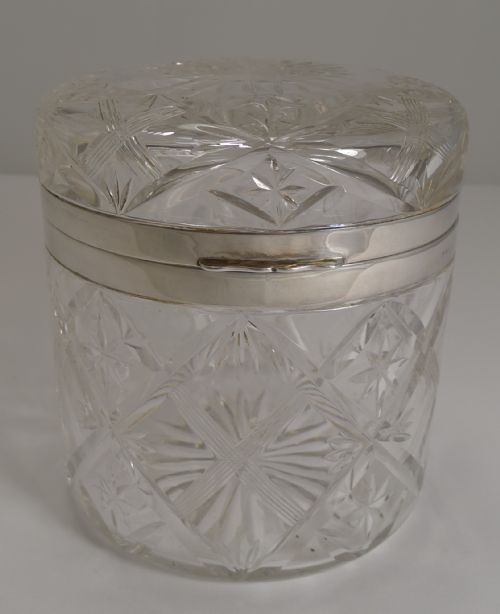


Edwardian Silver Powder Bowl
These edwardian silver powder bowl pieces are elegant vanity vessels that bring tactile period charm to a modern dressing table.
Edwardian Silver Powder Bowl
When searching for an edwardian silver powder bowl, a buyer encounters lidded vessels and vanity jars created for dressing tables and boudoirs. The forms range from compact trinket boxes to substantial cut crystal receptacles.
Most examples found here date across the Edwardian era into the early twentieth century, with related pieces reaching into the Art Deco and George V periods. These items encompass cut glass, cranberry glass, and sterling silver bodies.
The objects serve as functional receptacles for powders and small trinkets, combining precious metal lids with glass or crystal bases. Scottish and English provincial halls appear among the pieces.
Materials and construction
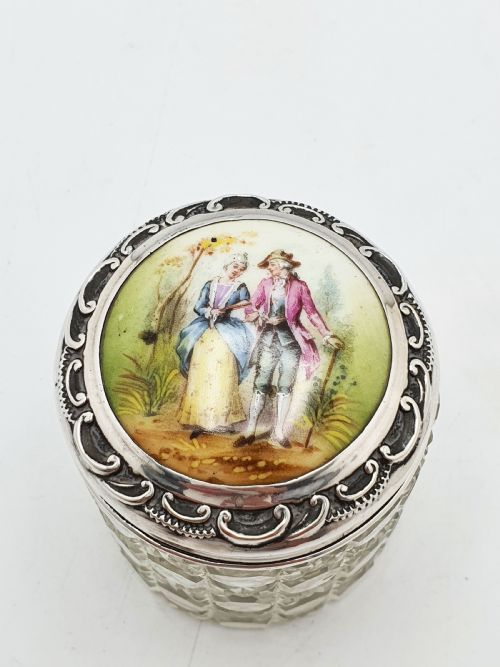
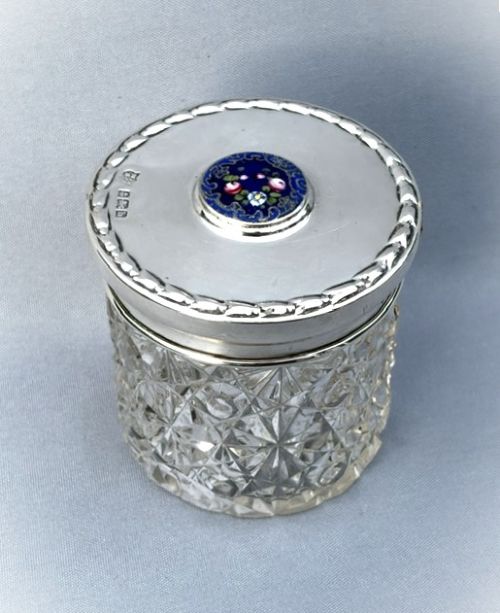
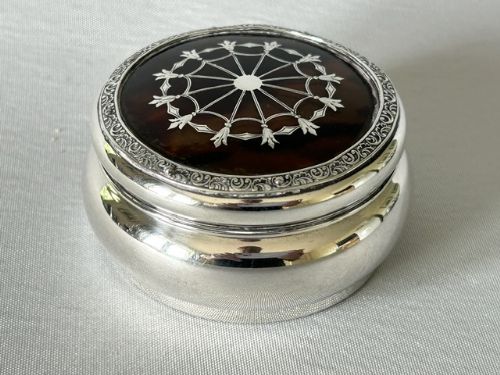
Makers combined sterling silver with cut glass and cut crystal to form the main bodies of these lidded vessels. Surface decoration frequently incorporates enamel and tortoiseshell with pique work.
Silversmiths hallmarked the metal components in assay offices such as Birmingham and Edinburgh during the early twentieth century. Gemstones including citrine embellish specific lids alongside intricate glass cutting.
Edwardian Silver Powder Bowl Retail Price Guide 2026
Typical asking prices for edwardian silver powder bowl among the pieces listed under this phrase on Sellingantiques today, from the lower quarter to the upper quarter. They describe what is for sale here now, not the wider market.
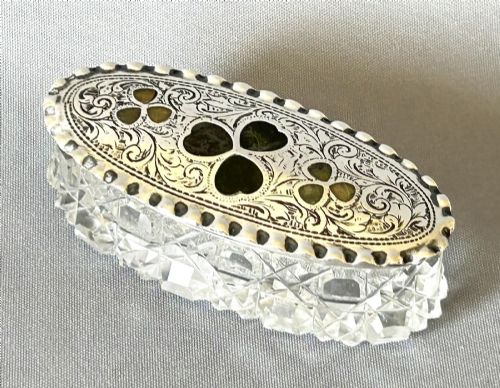
A sparkling citrine stone glints from a Scottish silver lid, proving that Edwardian dressers loved a flash of yellow.
Distinctions in quality
Quality rests in the weight of the sterling silver lids and the depth of the cut crystal bodies. Substantial scale and crisp facets distinguish finer examples from lighter wares.
The refinement of decorative elements, such as polychrome enamel work and detailed tortoiseshell pique, separates standard production from exceptional pieces. Maker attribution also plays a role in the standing of a vessel.
Asprey & Co.·Henry Williamson Ltd
The Edwardian Silver Powder Bowl Glossary
- Hallmark
- Official stamps applied to precious metals indicating the assay office, standard of purity, and year of testing. These marks provide definitive evidence of origin and date.
- Pique work
- The technique of inlaying tiny pins of gold or silver into tortoiseshell to create geometric or floral patterns. This delicate ornamentation is characteristic of luxury vanity items.
- Cranberry glass
- A rich red-pink glass produced by adding gold chloride to the molten batch. It appears frequently in decorative Victorian and Edwardian table and vanity wares.
- Trinket box
- A small lidded container designed for storing rings, brooches, and other small personal items. They form a major category among early twentieth-century dressing table accessories.
- Citrine
- A transparent yellow quartz variety occasionally set into silver lids as a decorative accent. It provides a warm colour contrast to the cool tones of silver and crystal.
Edwardian Silver Powder Bowl: Frequently Asked Questions
What were these bowls used for?
These vessels were kept on dressing tables to hold face powder, cosmetics, hairpins, and small personal trinkets. They formed part of a matching set of boudoir accessories used during daily grooming.
Their decorative lids protected the contents while adding a touch of polished silver and coloured glass to the bedroom interior.
How do I date an Edwardian silver piece?
Dating relies upon the assay office marks and date letters stamped into the sterling silver mounts and lids. These hallmarks correspond to specific active years for the silversmiths.
Stylistic shifts between early Edwardian floral motifs and later geometric Art Deco influences also help narrow down the period of manufacture.
Are the bodies glass or crystal?
The listings include both cut glass and heavy cut crystal receptacles paired with silver lids. Crystal contains lead oxide, which gives the material greater weight, clarity, and brilliance than standard glass.
Both materials feature deep geometric or floral cutting designed to catch the light on a dressing table.
How do I care for silver and tortoiseshell?
Silver requires gentle polishing with a dedicated cloth to maintain its shine, avoiding contact with the glass and decorative panels. Tortoiseshell and enamel should be kept away from direct sunlight and harsh chemicals.
Regular dusting with a dry microfiber cloth is sufficient for daily maintenance of the glass bodies.