





Curved Ladies Writing Table
These curved ladies writing table pieces offer refined writing surfaces, appearing most often in Edwardian and Victorian forms.
Curved Ladies Writing Table
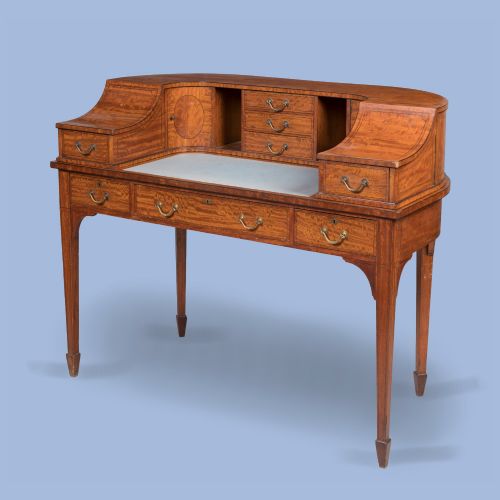
When someone searches for a curved ladies writing table, they encounter compact and graceful furniture designed for correspondence. These pieces combine decorative presence with practical compartments, frequently adopting kidney-shaped profiles or elaborate superstructures.
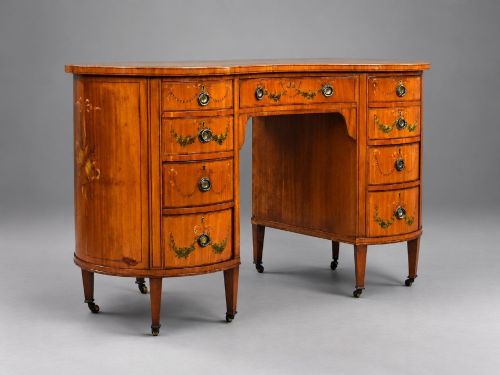
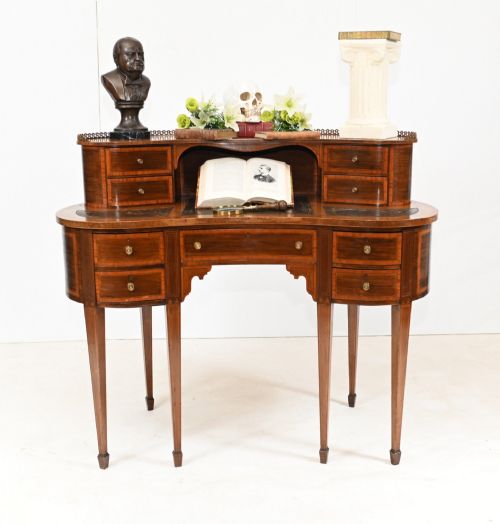
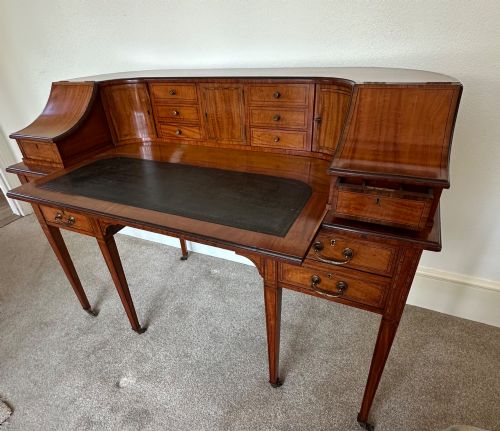
The versions most commonly met on this page span the Edwardian and Victorian eras, along with the nineteenth century. They appear in distinctive forms such as Carlton house desks, kidney shaped writing desks, and dressing tables.
Makers drew on Sheraton style, Sheraton revival, and French Louis XV style influences. This heritage produces pieces that function as both writing desks and decorative focal points within a room.
How they were made
Cabinet makers utilised choice timbers including mahogany, satinwood, rosewood, and kingwood for the primary carcases. These woods provided durable foundations capable of sustaining intricate curved designs.
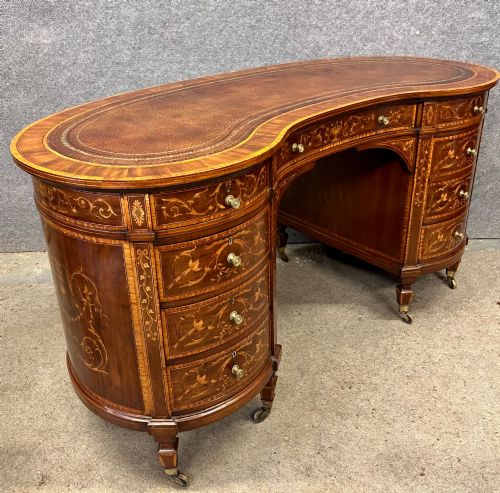
Surfaces frequently incorporated supple leather writing inserts alongside delicate boxwood and satinwood inlay. Marquetry decoration further embellished French and English examples, adding visual depth to the timber.
Curved Ladies Writing Table Retail Price Guide 2026
Typical asking prices for curved ladies writing table among the pieces listed under this phrase on Sellingantiques today, from the lower quarter to the upper quarter. They describe what is for sale here now, not the wider market.
Design styles recorded across the pieces include Sheraton Revival, Neoclassical, and French Louis XV influences.
What varies in quality
Quality rests upon the crispness of the inlay and the selection of figured timber across the curved planes. Superior examples display precise boxwood stringing and well-matched grain patterns that follow the contours of the desk.
The execution of the superstructure and the integration of drawers define the upper tier of production. Finer pieces demonstrate meticulous cabinet work in the framing of curved writing surfaces and internal compartments.
Edwards and Roberts
The Curved Ladies Writing Table Glossary
- Carlton house desk
- A type of writing desk featuring a curved superstructure of small drawers and compartments enclosing the writing surface. It originated in the late eighteenth century and saw revivals in later periods.
- Kidney shaped desk
- A writing table characterised by a concave curve on the working side that wraps around the user. This form became particularly popular during the Victorian and Edwardian eras.
- Marquetry
- The art of applying pieces of veneer to a structure to form decorative patterns and pictures. Makers utilised contrasting timbers to create floral or geometric motifs.
- Sheraton revival
- A late nineteenth and early twentieth century design movement that reinterpreted the neoclassical furniture forms of Thomas Sheraton. These pieces often feature satinwood and delicate inlay work.
- Escritoire
- A small writing cabinet or desk equipped with a sloping or folding writing flap. They often conceal pigeonholes and small drawers within the interior.
Curved Ladies Writing Table: Frequently Asked Questions
What is a kidney shaped desk?
A kidney shaped desk is a writing table featuring a curved top designed to partially enclose the user. The concave front edge allows for a comfortable sitting position while maintaining a compact footprint.
These desks often incorporate leather writing surfaces and decorative inlay. They appear frequently in Edwardian satinwood and Victorian mahogany variants.
How do I identify a Carlton house desk?
A Carlton house desk is distinguished by its curved superstructure of small drawers and pigeonholes wrapping around the rear of the writing surface. This layout provides extensive organisation within a relatively compact piece of furniture.
They frequently feature satinwood or mahogany construction with decorative inlay work. The upper compartments follow the curved contours characteristic of the form.
What woods were used for these desks?
Cabinet makers constructed these pieces primarily using mahogany, satinwood, rosewood, and kingwood. These dense timbers provided stable bases for the curved designs and fine veneers.
Inlay work often utilised boxwood and contrasting timbers to create geometric or floral patterns. The choice of wood heavily influences the visual character of each piece.
Are these desks suitable for daily writing?
These writing tables provide functional surfaces equipped with leather inserts and integrated storage drawers. Their compact proportions make them adaptable to contemporary domestic interiors.
Care should be taken to protect the historic leather and polished timber surfaces during regular use. Many include compartments for modern stationery alongside traditional ink wells.
How do Edwardian and Victorian pieces differ?
Edwardian writing tables frequently utilise lighter satinwood veneers and delicate boxwood stringing, reflecting Sheraton revival tastes. Victorian examples tend to employ darker timbers such as mahogany and rosewood with robust proportions.
Both periods embraced the kidney shape and incorporated leather writing inserts. The decorative vocabulary shifts from ornate Victorian carving to lighter neoclassical inlay in the Edwardian era.