





Ladies Kidney Desk
These ladies kidney desks offer a graceful, curved silhouette suited to lighter writing tasks and domestic studies.
Ladies Kidney Desk
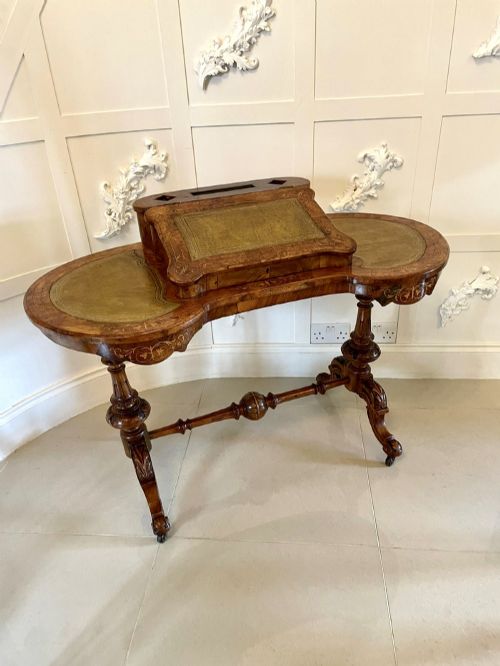
A ladies kidney desk presents a distinctive concave curve at the front, designed to wrap comfortably around the user. These pieces emerge primarily from Victorian and Edwardian periods, stretching from the mid-nineteenth century through to the early decades of the twentieth century.
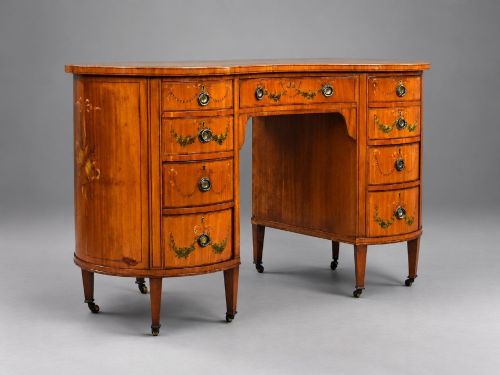
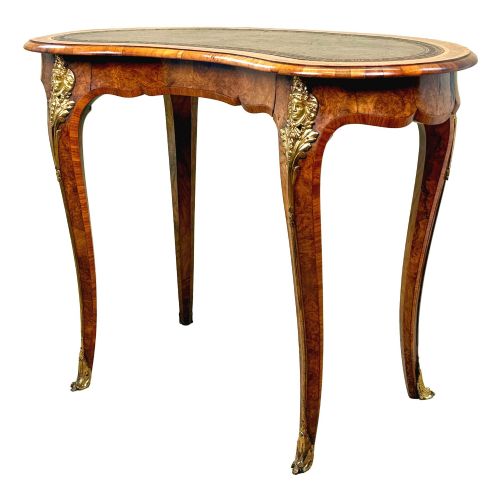
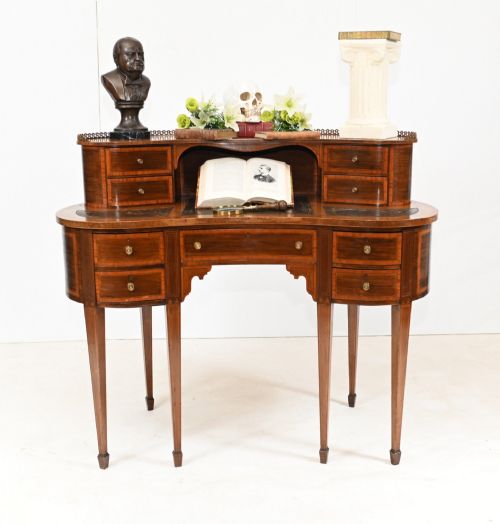
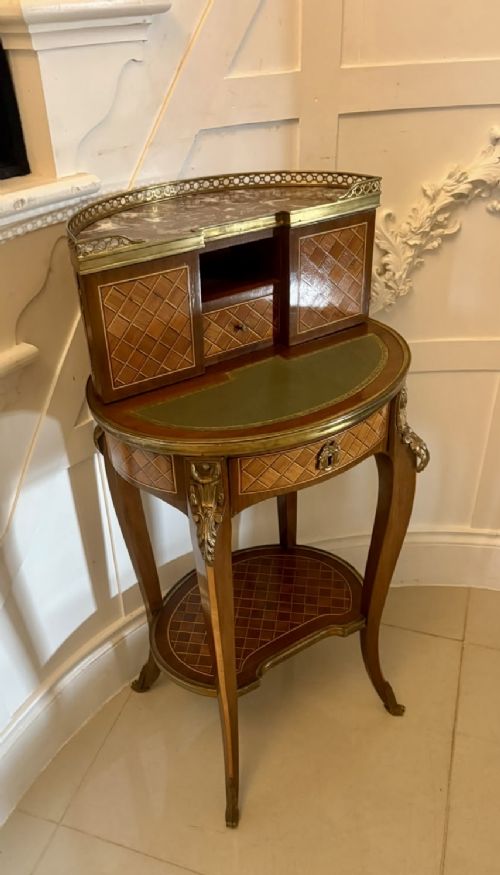
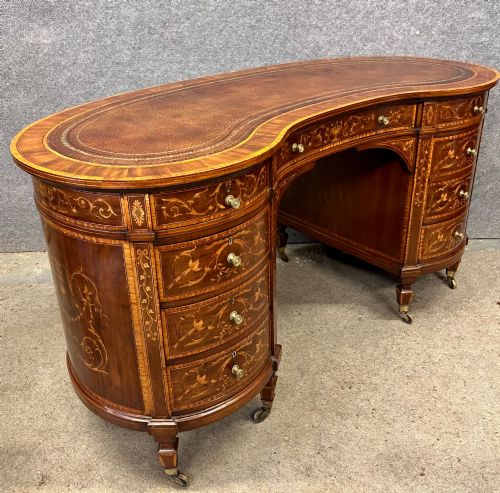
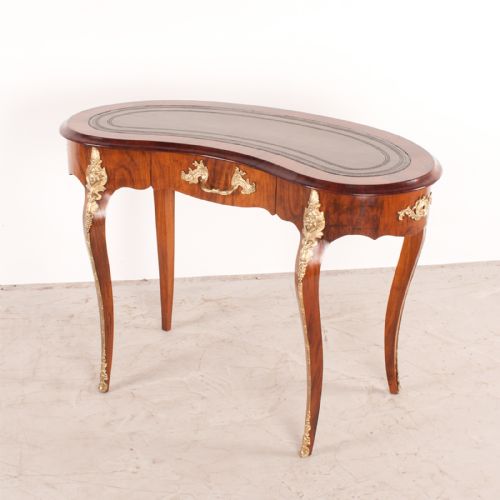
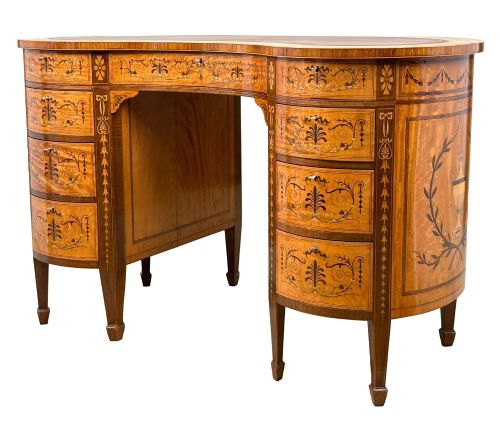
Makers construct these tables in various timbers including mahogany, burr walnut, rosewood, and satinwood, often finished with leather writing surfaces. Examples range from simple freestanding writing tables to elaborate pieces featuring marquetry, painted decoration, and brass fittings.
How they were made
Cabinet makers shape the complex curved top by working with solid timbers and finely figured veneers like burr walnut and mahogany over sturdy secondary woods. They frequently incorporate intricate marquetry, stringing, and inlays of contrasting woods into the desktop and frieze.
Many writing surfaces feature inset panels of tooled leather, complemented by cast brass handles, gallery rails, and sometimes ormolu mounts. Freestanding versions demand finished backs, ensuring the piece looks accomplished from every angle in a room.
Ladies Kidney Desk Retail Price Guide 2026
Typical asking prices for ladies kidney desk among the pieces listed under this phrase on Sellingantiques today, from the lower quarter to the upper quarter. They describe what is for sale here now, not the wider market.
The listings span from 1850 through the Edwardian era into the 1930s, showing a strong preference for mahogany, burr walnut, and rosewood.
What varies in quality
The distinction between standard production and the finest work lies in the choice of veneers and the crispness of the marquetry inlay. Dense burr walnut and figured satinwood indicate superior selection by the maker.
Construction details such as dovetailed drawer linings, original brass hardware, and the finesse of hand-carved or painted elements separate workshop masterpieces from simpler commercial furniture.
Edwards & Roberts·Shapland & Petter
The Ladies Kidney Desk Glossary
- Kidney shape
- A distinctive horizontal outline resembling a kidney bean, featuring a concave front curve. This curve allows the user to sit closer to the centre of the desk.
- Marquetry
- Decorative patterns formed by fitting together small pieces of wood veneer, shell, or ivory onto a structural surface. Craftsmen utilise this technique to create elaborate floral or geometric table tops.
- Frieze
- The horizontal band running directly beneath the desk top, which often houses one or more small drawers. On better examples, this section carries matching inlay or decorative veneers.
- Ormolu
- Gilded bronze mounts applied to furniture for decorative effect, common on pieces influenced by French revival styles. This metallic ornament highlights the structural contours of the desk.
- Stringing
- Thin lines of contrasting wood inlaid into the surface of the desk to outline drawers and borders. This delicate technique defines the geometric panels characteristic of Edwardian pieces.
Ladies Kidney Desk: Frequently Asked Questions
Where should I place a kidney desk?
Because many of these pieces feature finished backs and polished veneers all round, they sit effectively away from walls as freestanding room dividers.
Position one where natural light falls across the leather writing surface from the side, ensuring the curved front provides comfortable access.
How do I care for the leather top?
The inset leather panel requires occasional treatment with neutral wax balms to keep the surface supple and prevent it from drying out over time.
Avoid placing damp items directly onto the hide and keep the desk away from direct heat sources to protect both the leather and the underlying timber.
Are these desks suitable for daily work?
These tables were originally intended for correspondence and light administrative duties rather than heavy office work or modern computer setups.
Their compact proportions and shallow drawers mean they function best for laptop use, notebook writing, or as an elegant dressing table.
How do I distinguish Victorian from Edwardian examples?
Victorian models often utilise darker timbers like rosewood and heavily figured burr walnut, sometimes displaying robust proportions and rich French revival influences.
Edwardian pieces tend to favour lighter mahogany and satinwood frames with refined marquetry, reflecting the Sheraton Revival taste popular around the start of the twentieth century.