



Curved Front Corner Cabinet
These curved front corner cabinet examples make clever use of awkward domestic angles, bringing generous storage and handsome timber into otherwise dead room space.
Curved Front Corner Cabinet
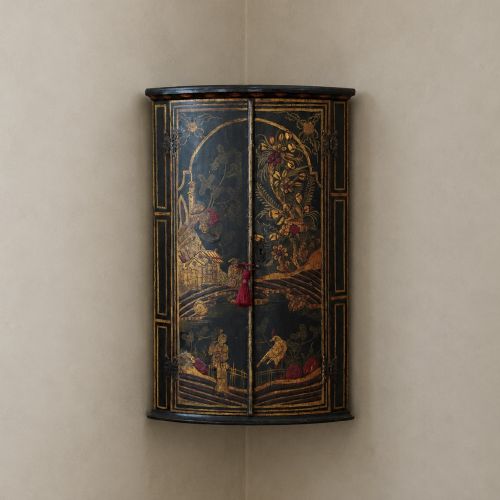
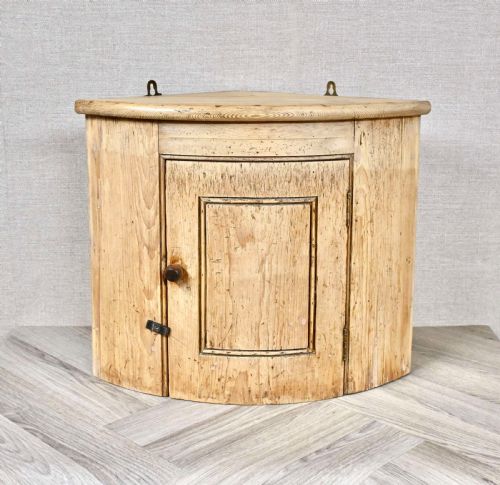
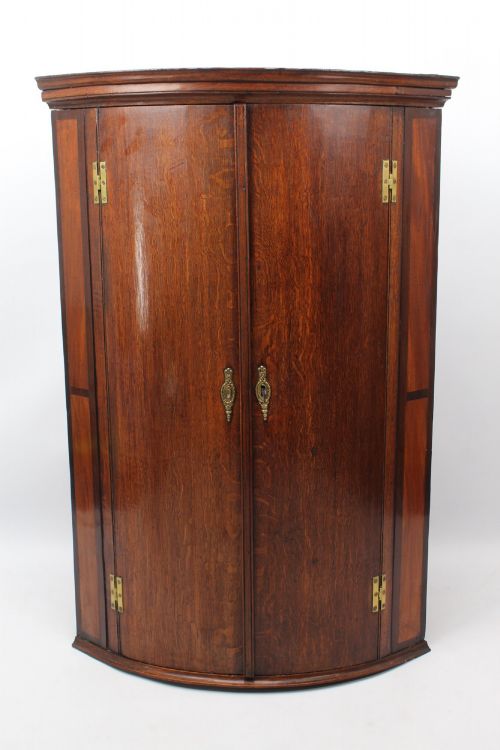
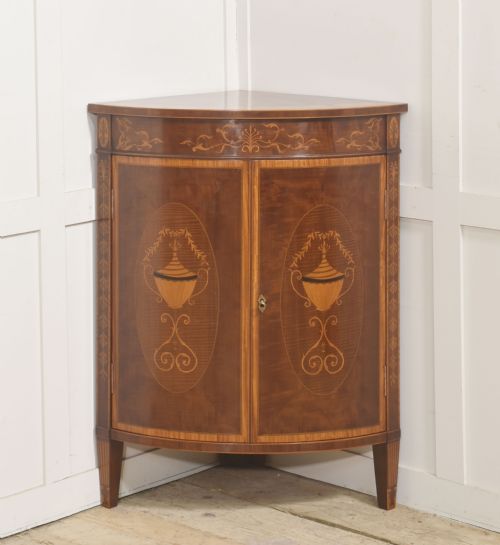
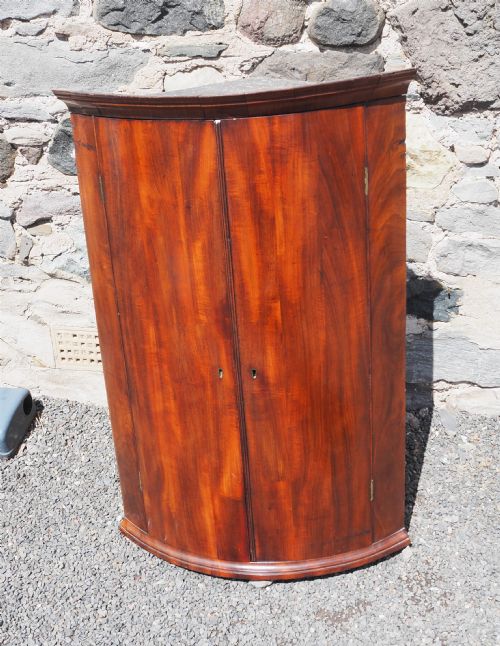
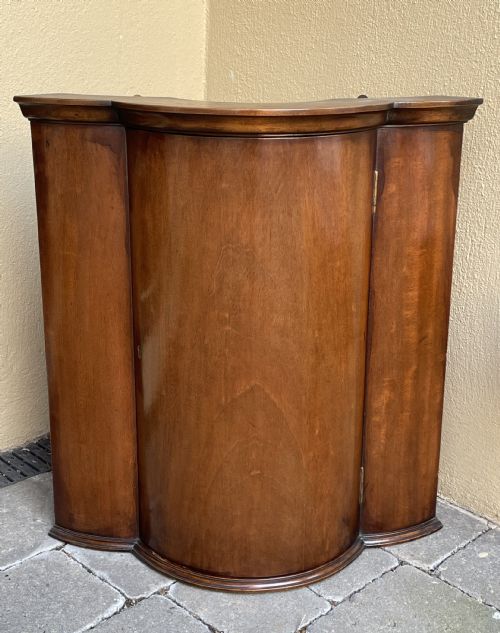
A curved front corner cabinet turns unused room junctions into focal points, appearing across Georgian, Victorian, and Edwardian periods. Most specimens on this page feature bow fronts or serpentine shapes, housing books, china, or household stores behind single doors.
Makers shaped these cupboards to fit snugly into 90-degree angles while presenting a convex facade to the room. You find both hanging wall versions and taller standing double-height or floor-standing pieces built to occupy the full height of a corner.
How they were made
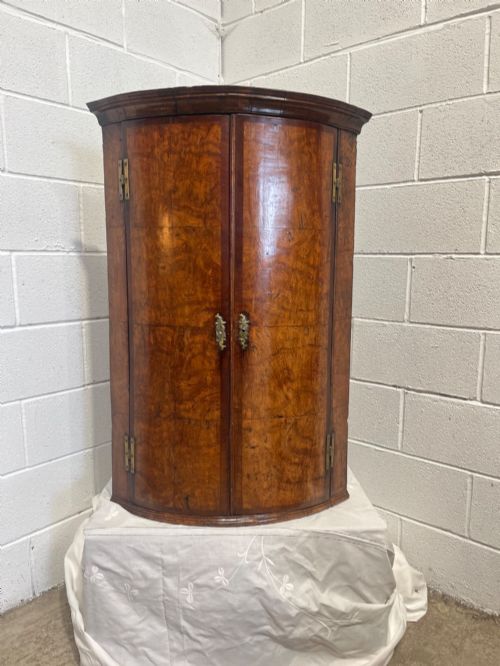
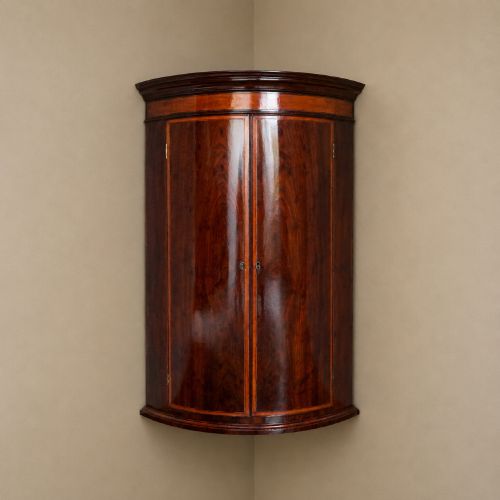
Cabinet makers built these pieces primarily using solid or veneered mahogany, oak, and walnut, often selecting figured timbers like plum pudding mahogany or burr oak for the doors. They constructed curved door fronts by bending timber or shaping solid stock, frequently incorporating satinwood inlay and boxwood stringing.
Brass fittings such as H-hinges, escutcheons, and working locks secure the doors, while internal construction often relies on deal or pine for the secondary framing and shelving. Some examples utilise japanned and Chinoiserie surface decoration over the wood.
Curved Front Corner Cabinet Retail Price Guide 2026
Typical asking prices for curved front corner cabinet among the pieces listed under this phrase on Sellingantiques today, from the lower quarter to the upper quarter. They describe what is for sale here now, not the wider market.
Listings feature mahogany and oak as the dominant cabinet timbers, alongside walnut and decorative satinwood inlay.
What varies in quality
The choice of primary timber sets the baseline, moving from utilitarian pine and standard oak up to highly figured plum pudding mahogany and richly patterned Dutch walnut. Finer workshops invested in intricate marquetry, satinwood inlay, and serpentine rather than simple bow fronts.
Proportion and execution of the curved doors distinguish finer examples from simpler provincial work. Well-made specimens retain original brass hardware, tight joinery at the wall angles, and balanced cornice mouldings that suit the scale of the room.
Edwards And Roberts
The Curved Front Corner Cabinet Glossary
- Bow front
- A convex, outward-curving front facade common on many corner cabinets. This shape softens the angular geometry of a room corner.
- Serpentine front
- A facade featuring a convex centre flanked by concave curves, demanding high skill from the cabinet maker. This outline appears on more elaborate Georgian and later pieces.
- Plum pudding mahogany
- A highly prized timber figuring marked by small circular disruptions in the grain resembling Christmas pudding. Cabinet makers reserved this wood for principal doors and display surfaces.
- Japanned
- European imitation of East Asian lacquerwork using layered paints and varnishes, often seen with raised gilt motifs. This technique decorated specific 19th-century pieces.
- Marquetry
- The art of applying thin slices of varied wood veneers to form decorative patterns and pictures on a surface. It appears on Sheraton Revival and continental cabinets.
Curved Front Corner Cabinet: Frequently Asked Questions
How do I hang a wall cabinet?
Hanging corner cupboards require secure fixing into wall studs or masonry because the cantilevered weight of solid timber and stored items exerts strong pulling force on the top fixings.
Most wall-mounted versions provide internal brackets or heavy-duty screw holes through the back framing to anchor the piece safely into the corner.
Are these cabinets difficult to position?
Placing a curved front corner cabinet depends entirely on the precise 90-degree squareness of your room junction, as older walls often lean or bow out of true.
Floor-standing and standing double-height models offer easier adjustment with shims underneath, whereas hanging versions need careful leveling against the wall before final fixing.
What is the difference between hanging and standing versions?
Hanging models mount directly to the wall to free up floor space, often finishing with a shaped apron or bracket foot beneath the main body. Standing versions rest on the floor, ranging from washstands to tall double-height display units.
Standing pieces provide much greater storage capacity and often incorporate lower cupboards or drawers beneath the main upper cabinet.
How do I care for antique mahogany and walnut?
Maintain these timbers by keeping them away from direct sunlight and steady radiator heat, which causes dry wood veneers to lift and split.
Apply traditional beeswax occasionally and buff gently with a soft cloth to nourish the grain without building up synthetic residues.