
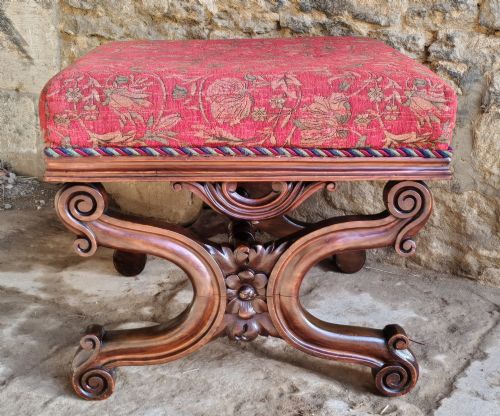
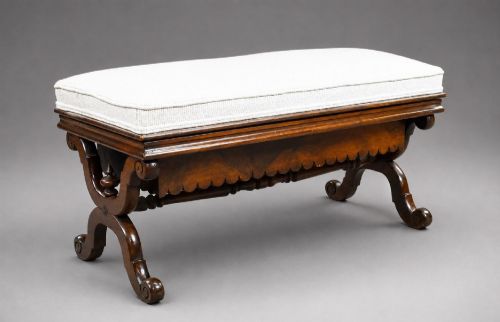
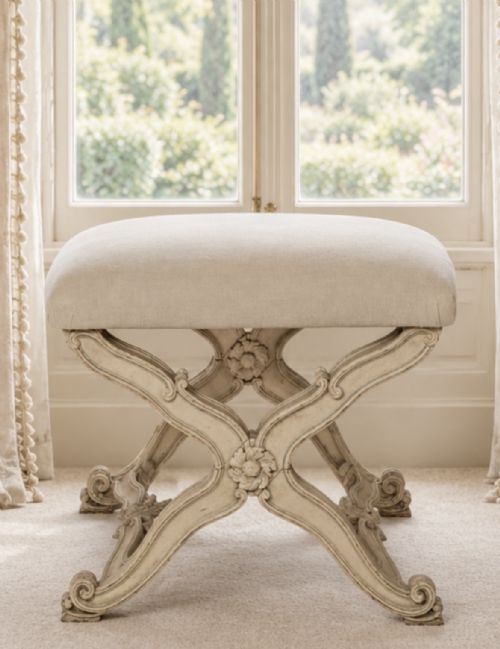
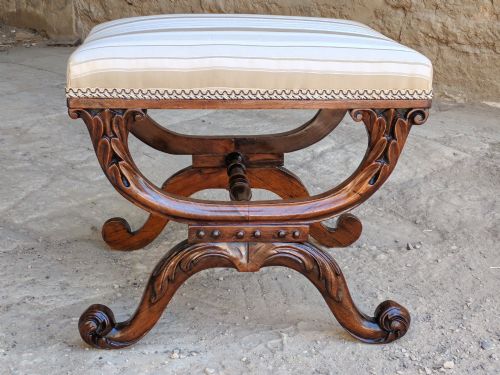


Curule Frame Bench
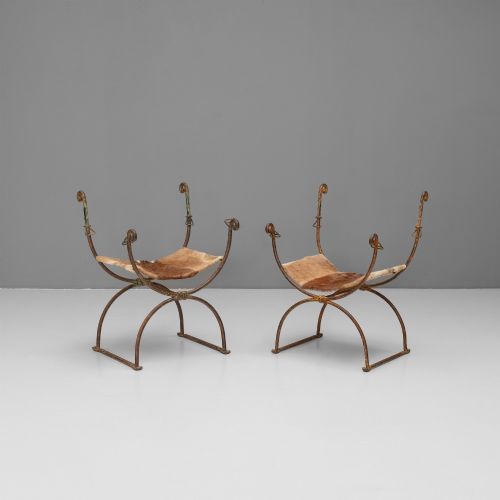
A curule frame bench brings ancient Roman curule architecture into domestic spaces through crossed supports that offer both strength and sculptural poise.
Curule Frame Bench
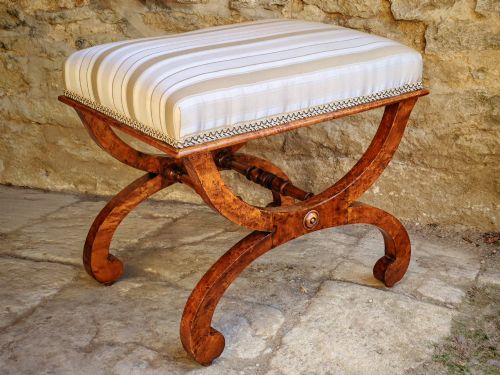
A curule frame bench draws its enduring form from the classic folding X-shape utilised by magistrates in antiquity. On this page, the search phrase leads you primarily to nineteenth-century examples alongside occasional Edwardian and Georgian interpretations.
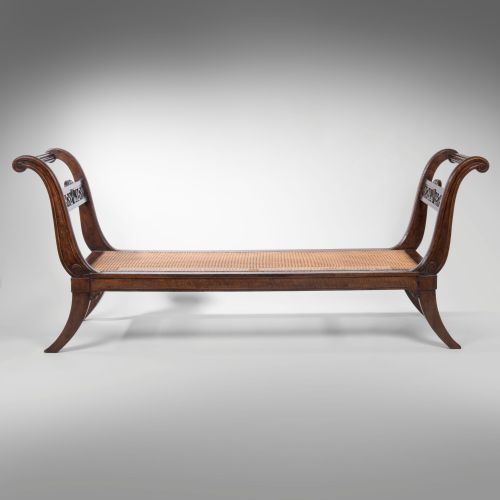
The objects span varied seating forms including footstools, window seats, piano stools and larger benches. Walnut, mahogany, ebonised wood and giltwood frame the upholstered seats and damask fabrics across these periods.
Materials and construction
Cabinetmakers constructed these frames using dense timbers like mahogany, walnut and rosewood to support the structural stress placed on intersecting legs. Giltwood, gesso and ebonised finishes were frequently applied to enhance the formal neoclassical or aesthetic appearance.
Upholstery techniques varied from simple leather to rich red damask and cane seats secured over the crossed wooden framework. Joinery at the central pivot or intersection required precise carpentry to ensure stability.
Assessing quality in construction
Quality rests in the precision of the timber carving at the intersection and the integrity of the frame joints. Denser hardwoods and crisper gesso or gilt details indicate superior workshop production.
The refinement of the upholstery fabric and the harmony of the X-frame proportions distinguish standard domestic pieces from exceptional cabinetmaker commissions.
Miles & Edwards
The Curule Frame Bench Glossary
- Curule
- An ancient Roman magistrate's chair shape featuring two curved legs intersecting in an X-form. This geometric silhouette underpins every piece collected under this search.
- X-frame
- A structural furniture support formed by two diagonal members crossing like the letter X. It provides inherent load-bearing strength while creating a distinct profile.
- Giltwood
- Timber coated with a thin layer of gold leaf or gesso preparation. It appears frequently on neoclassical and revival pieces.
- Ebonised
- Wood stained or finished to resemble dark ebony. This treatment was particularly popular during the Victorian and aesthetic periods.
- Damask
- A reversible figured fabric traditionally woven on a drawloom. It often provides the upholstery for formal nineteenth-century stools.
Curule Frame Bench: Frequently Asked Questions
What is a curule frame bench?
A curule frame bench is a form of seating supported by crossed X-shaped legs derived from classical Roman design. These pieces range from small footstools to long window seats.
Cabinetmakers adapted this ancient architectural silhouette across the Georgian, Regency and Victorian eras, utilising mahogany, walnut and giltwood to build sturdy frames.
How were these benches used historically?
Historically, these benches served as movable seating in parlours, dressing rooms and grand hallways. Their compact footprint allowed them to be placed easily near windows or by fireplaces.
Larger versions functioned as window seats or piano stools, combining decorative presence with practical daily seating in formal interiors.
Where should I place one at home?
These benches fit naturally at the foot of a bed, beneath a hallway window or beside a fireplace. Their distinct silhouette makes them effective standalone accent pieces.
Because the X-frame profile is visually open, the benches do not crowd smaller rooms while offering convenient occasional seating.
How do I date a curule bench?
Dating relies on identifying the primary wood, upholstery style and decorative motifs such as neoclassical carving or aesthetic movement ebonising. Georgian and Regency pieces show different timber selections than later Victorian revivals.
Examining the construction methods and joinery beneath the upholstery also helps determine whether a piece originates from the early nineteenth century or later.