


Curio Glass Display Table
A curio glass display table puts small treasures on stage through a clear glass top, turning storage into a desktop exhibition.
Curio Glass Display Table
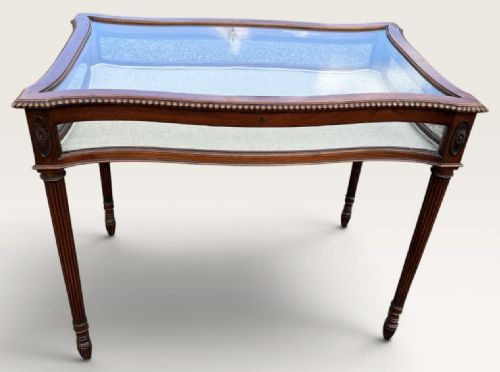
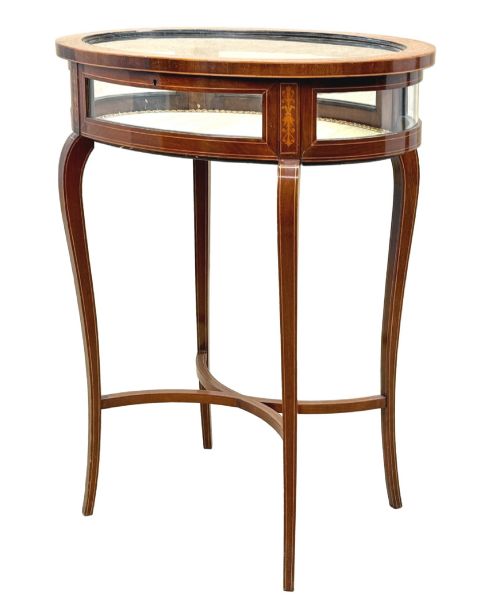
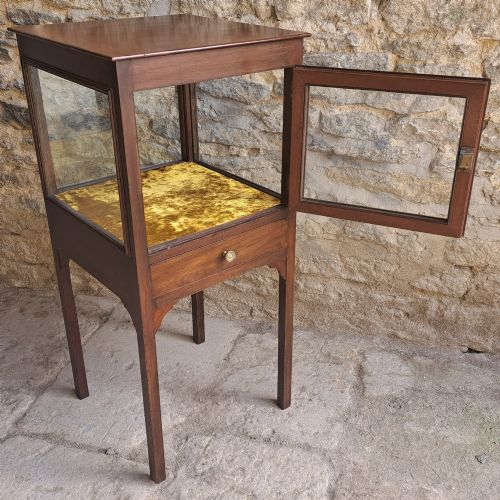
A curio glass display table combines a glazed compartment for small valuables with the height and stance of a standalone table. These pieces emerge in various forms across the nineteenth and early twentieth centuries, spanning Victorian, Edwardian, and later periods.
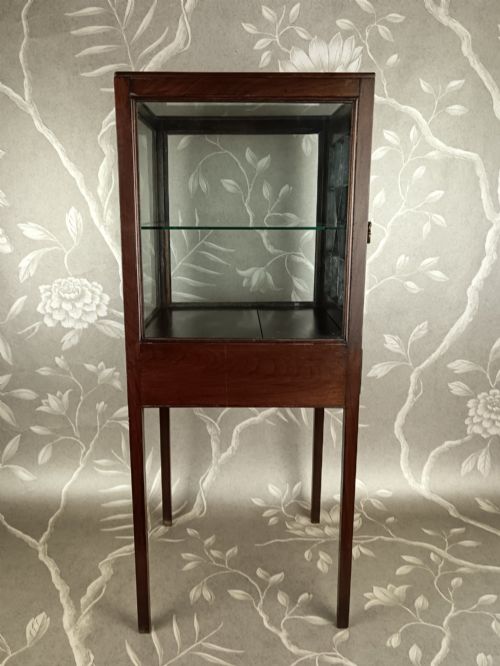
The most common version on this page is the bijouterie table, built specifically to exhibit medals, miniatures, and small ornaments under glass. Alongside these stand larger vitrines, display cabinets, and occasional kidney-shaped or serpentine examples.
English and French workshops dominate the selection, utilising mahogany, rosewood, and satinwood to frame the glazed display areas. Many carry revival styles, drawing heavily on Louis XV, Louis XVI, and Sheraton designs.
Materials and Construction
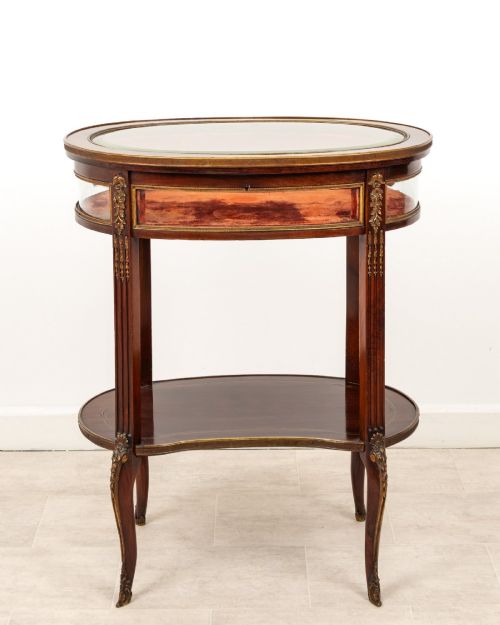
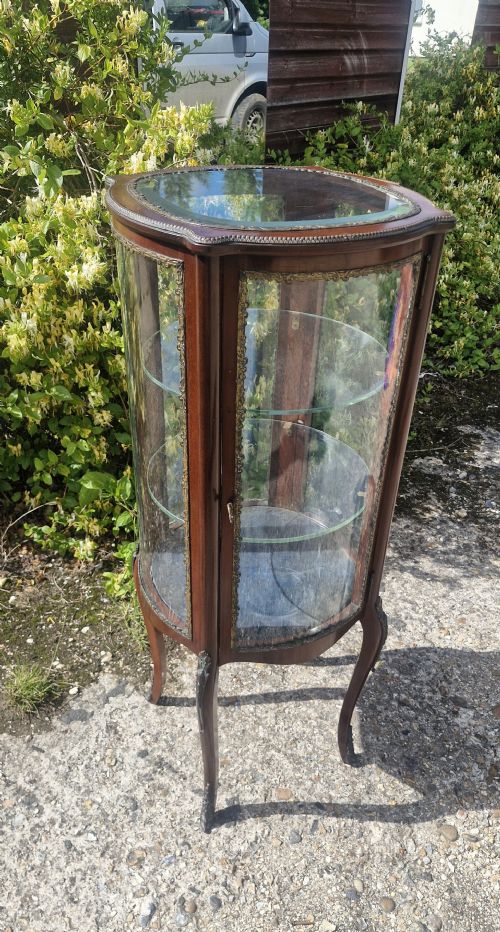
Cabinetmakers constructed the frames primarily in mahogany, rosewood, or satinwood, often applying intricate wood inlays or veneers such as kingwood. Brass and ormolu mounts provide structural detailing and decorative borders around the glass panels.
A French table hides its treasures behind curved glass, daring a curious guest not to lean in close.
Craftsmanship and Proportion
The distinction between standard and superior pieces rests in the sharpness of the timber carving and the precision of the brass or ormolu mounts. Better examples exhibit crisp corner joints, well-fitted glass held securely by rebate moulding, and finely cast gilt metalwork.
Proportion and wood selection define the higher tier of these tables. Finely figured mahogany or banded satinwood paired with harmonious leg geometry separates workshop standard productions from master cabinetmaker commissions.
Quincy Showcase Works Illinois
The Curio Glass Display Table Glossary
- Bijouterie table
- A specialised display table with a glazed top and velvet-lined interior designed for holding small precious objects and trinkets.
- Ormolu
- Gilded bronze applied as decorative mounts and feet on furniture, most frequently seen on French-influenced tables.
- Vitrine
- An enclosed glass cabinet or table designed for displaying fine objects and porcelain to visitors.
- Kingwood
- A dense, richly figured exotic timber utilised for veneers and decorative banding on cabinet furniture.
- Kidney shape
- A curved, asymmetrical desk or table silhouette popular in Edwardian satinwood and mahogany pieces.
Curio Glass Display Table: Frequently Asked Questions
What fits inside a curio glass display table?
These tables suit small collections such as pocket watches, vintage medals, coins, miniatures, and delicate porcelain pieces. The shallow velvet-lined well keeps items arranged neatly and visible from above.
Larger variations accommodate slightly taller ornaments, though the primary design focus remains on flat or low-profile collectibles rather than bulky artefacts.
How do I clean the glass and interior?
Use a soft microfiber cloth with mild glass cleaner applied to the cloth rather than sprayed directly onto the wood or mounts. Liquid pooling can damage antique timber finishes and fabric linings.
Vacuum the interior velvet gently with a soft brush attachment on a low suction setting to remove dust without disturbing the lining fabric.
Where should I place a display table?
Position the table away from direct sunlight to prevent the fading of mahogany, rosewood, and interior fabric linings. Consistent room temperatures also protect the wooden joints from drying and splitting.
Place the piece where overhead lighting or natural window light can pass through the glass top, enhancing the visibility of the items displayed inside.
How do I tell Edwardian from Victorian examples?
Victorian pieces often feature darker timbers like rosewood or heavy mahogany, frequently paired with robust brass mounts and ornate carving. They lean towards heavier proportions and Victorian revival styles.
Edwardian items frequently display lighter satinwood, delicate string inlay, and graceful tapered legs. The overall aesthetic feels lighter and more restrained than the preceding century.