



Crystal Whisky Decanter
A crystal whisky decanter holds spirit in heavy cut glass, bringing weight and clarity to an after-dinner sideboard.
Crystal Whisky Decanter
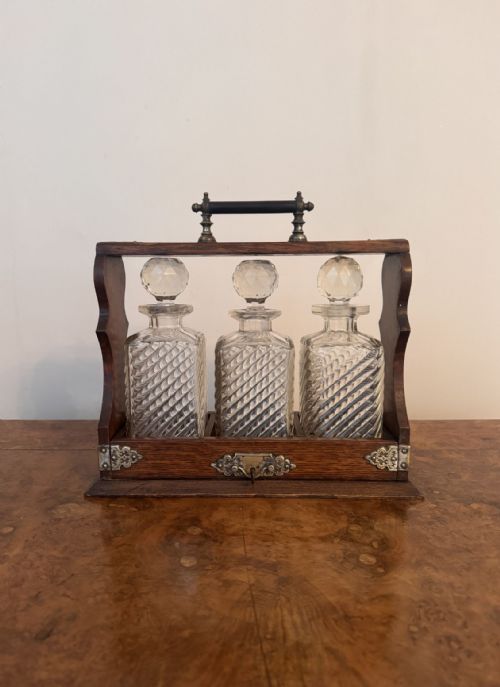
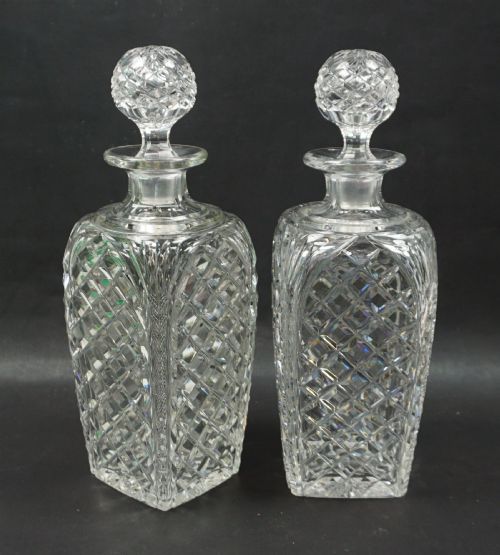
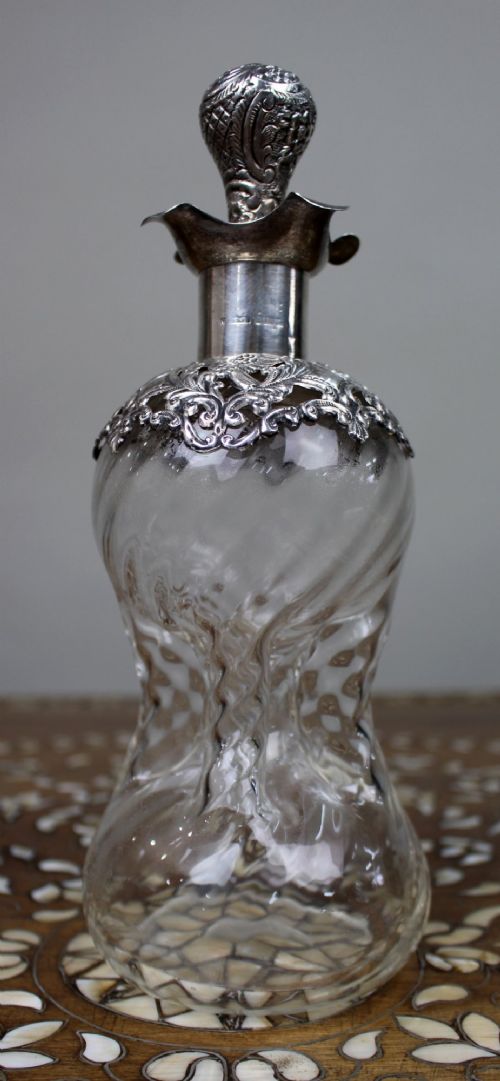
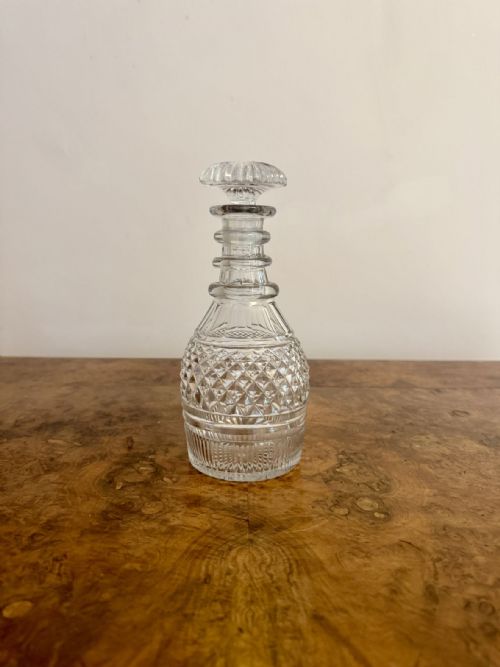
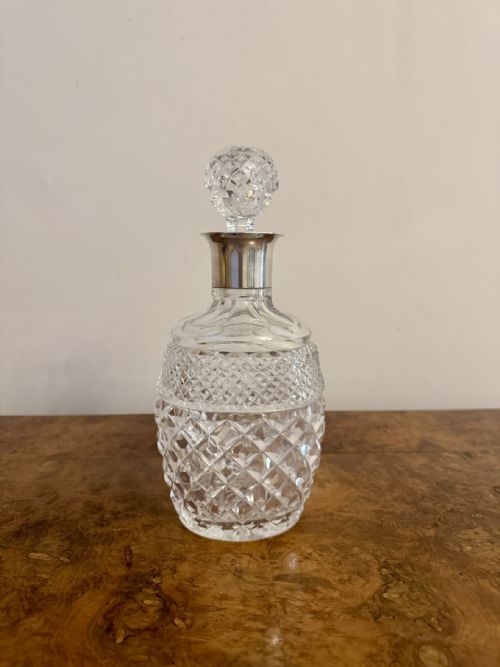
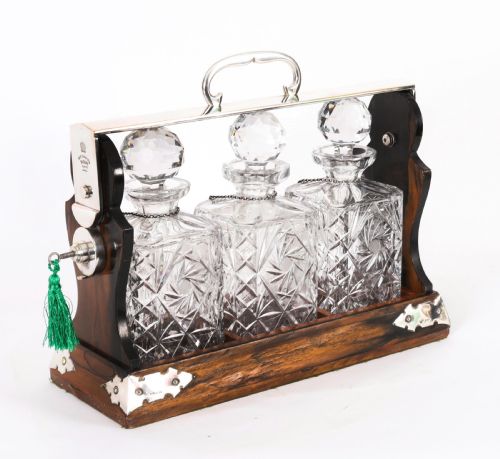
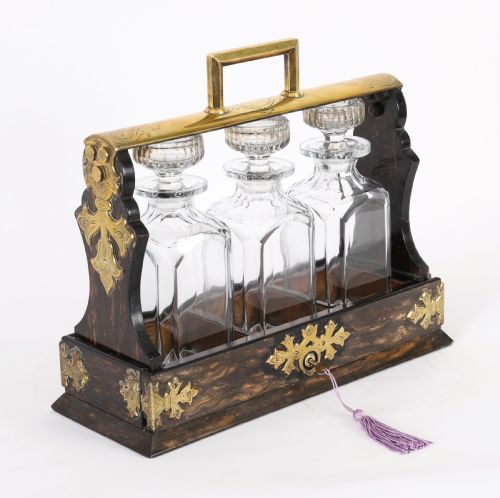
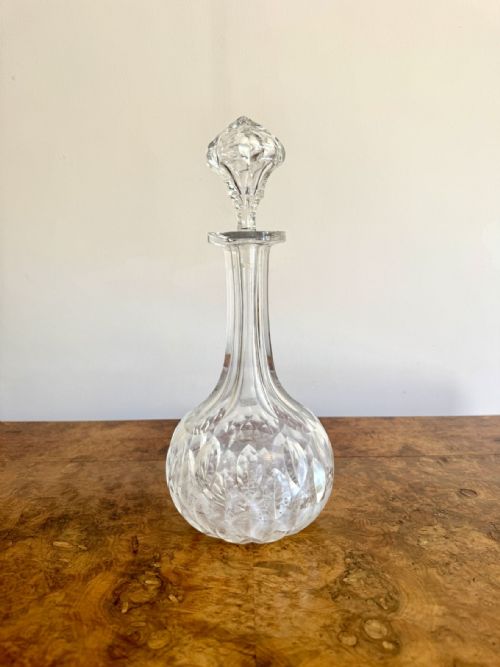
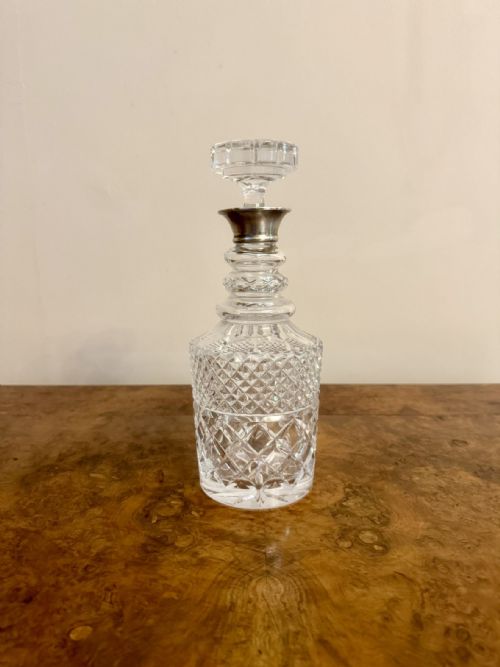
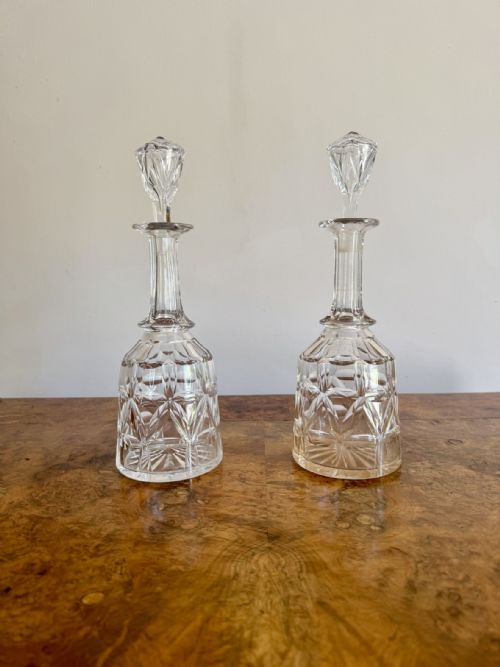
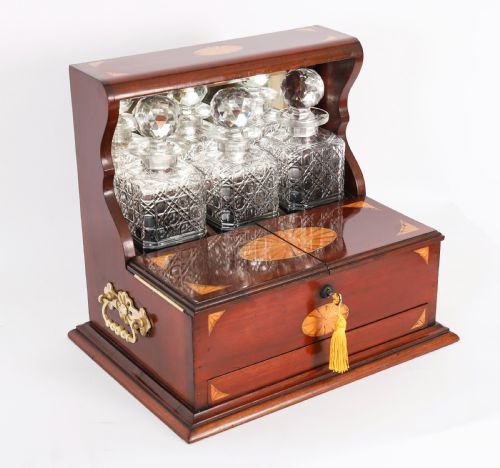
A crystal whisky decanter appears in various historic forms spanning the Victorian, Edwardian, and Art Deco periods, ranging from standalone vessels to complex locking tantalus sets. Buyers searching for a crystal whisky decanter commonly encounter square section tapered shapes, bell-shaped bodies, and silver-collared bottles produced across the nineteenth and early twentieth centuries. These pieces reflect the drinking habits of past eras, often housing scotch or brandy within heavy glass frames accompanied by brass or silver-plated mountings.
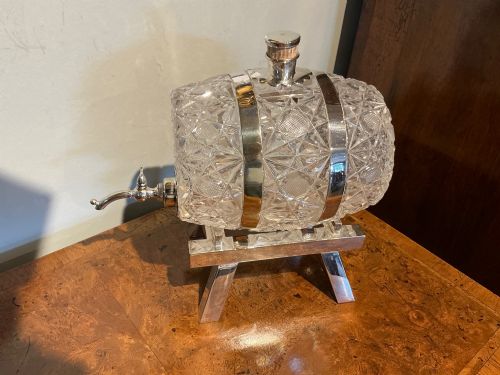
The selection includes matched pairs, single spirit barrels, and complete drinks sets complete with trays and matching glasses. Craftsmanship from the Art Deco period introduces geometric crystal glass sets from makers such as Karl Palda, alongside playful motifs like the jazz man design. Oak, coromandel, and satinwood frequently house multiple bottles in secure after-dinner frames that lock the spirit away from servants or guests.
Materials and Construction
Makers shaped these vessels using lead crystal, cut glass, and standard glass, often mounting the bottles in sterling silver collars, brass hardware, or wooden frames of oak and coromandel. The cutting technique relies on wheel-cut geometric patterns that catch the light, while optically blown crystal creates thin yet resilient walls with subtle internal movement.
Metalwork involved silver hallmarking for collars and hinges, alongside brass mounts that secured the locking mechanisms of tantalus frames. Woodwork required precision cabinet making to fit three-bottle and two-bottle decanter frames with lockable drop-fronts and secret game drawers.
Some Victorian tantalus frames included secret game drawers, ensuring guests could gamble for stakes only after the host unlocked the whisky.
Assessing Quality and Execution
Quality rests in the crispness of the cut glass facets and the weight of the lead crystal material. Superior examples display deep, sharp hobnail or geometric cutting that feels substantial in the hand, paired with heavy silver collars bearing clear hallmarks.
The sophistication of the housing enclosure separates standard pieces from masterworks. Fitted wooden cases with functioning locks, intact keys, satinwood inlay, and integrated games compendiums demonstrate a higher tier of period craftsmanship.
Betjemann·Karl Palda·James Powell
The Crystal Whisky Decanter Glossary
- Tantalus
- A locking wooden frame that holds decanters securely while displaying the contents behind a metal bar. The design prevents guests or household staff from pouring a drink without the key.
- Lead Crystal
- Glass containing metallic oxide that increases weight, refractive index, and clarity. This material allows deep, sharp cutting without fracturing the body.
- Silver Collar
- A protective or decorative band of sterling silver fitted around the neck of a decanter. These mounts often carry hallmarks indicating the assay office and year of production.
- Optically Blown
- A glassmaking technique where molten metal is inflated in a ribbed mould to produce swirling internal patterns and uniform wall thickness. It gives the body a distinctive textural shimmer.
- Spirit Barrel
- A horizontal cylindrical decanter vessel mounted on a small wooden or metal cradle. They were popular for serving whisky and port on Victorian dining tables.
Crystal Whisky Decanter: Frequently Asked Questions
How do I date an antique decanter?
Dating relies on a combination of glass manufacturing techniques, pontil marks, and silver hallmarks where present. Victorian and Edwardian examples often feature distinct cut glass patterns and hallmarked silver collars that pinpoint the exact year of manufacture.
Heavier oak frames and tantalus mechanisms also reflect the joinery styles of specific decades, moving from ornate mid-nineteenth-century carvings to cleaner Edwardian lines.
What is a tantalus set?
A tantalus is a lockable wooden stand that holds glass decanters in place so they cannot be removed without a key. This invention kept expensive spirits secure during the Victorian and Edwardian eras.
Units often house two or three bottles alongside compartments for cigars or card games, making them self-contained after-dinner entertainment pieces.
Can I use an antique decanter for daily whisky?
These vessels were designed for serving spirits and remain fully functional for daily use today. Lead crystal houses whisky safely, though modern cleaning requires careful handwashing without harsh detergents.
Checking the ground glass stopper for a matching identification number ensures the original seal remains intact for preserving the spirit.
How do I clean inside an old decanter?
Cleaning historic glassware requires warm water and mild dish soap, avoiding sudden temperature changes that can crack aged crystal. Stubborn interior residue responds to specialised cleaning beads or raw rice swirled gently inside.
Stoppers should be stored separately from the bottle when not in use to prevent them from sticking permanently due to residual spirit sugars.