


Glass Whisky Carafe
These glass whisky carafe selections bring together period bottles and noggins designed to hold and pour spirits with traditional weight.
Glass Whisky Carafe
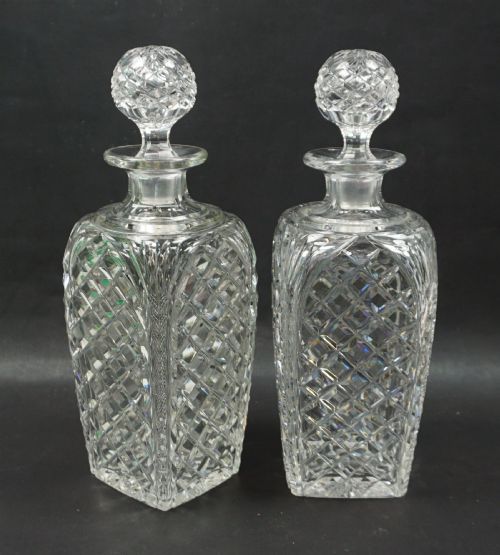
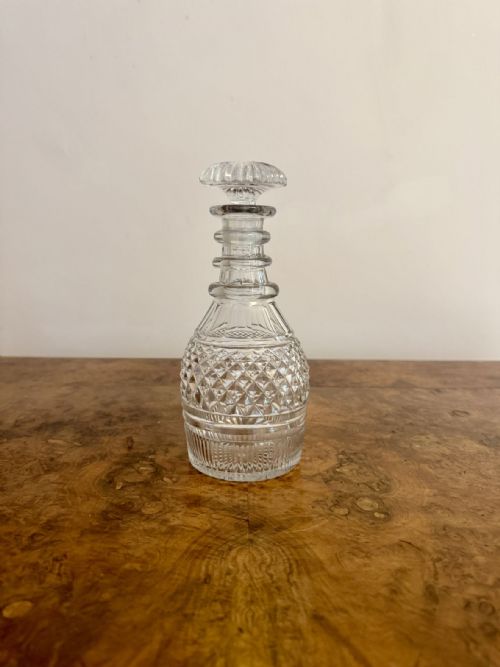
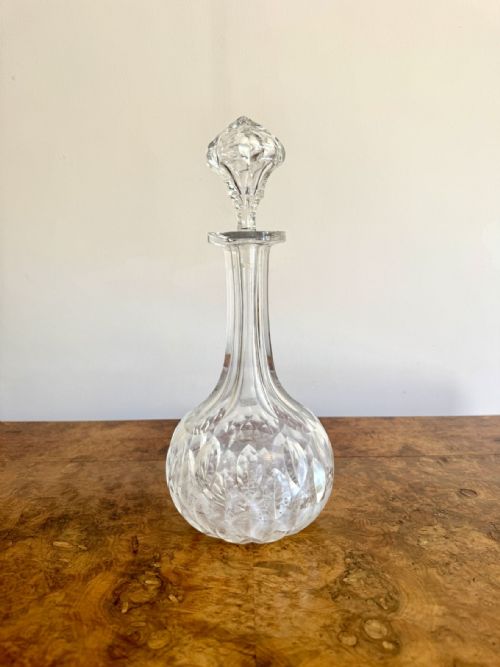
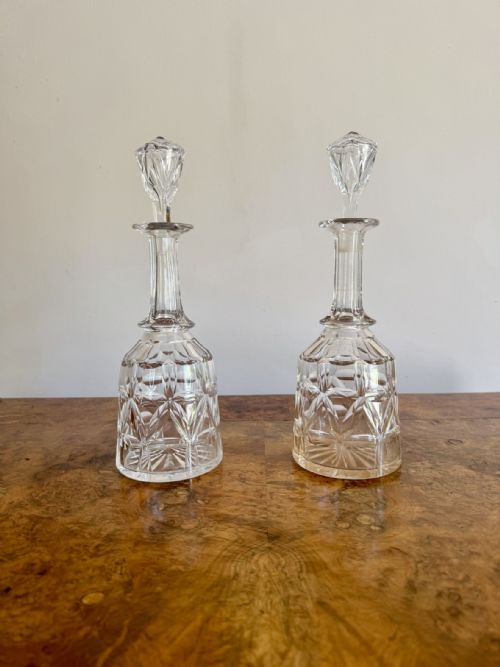
A glass whisky carafe search brings up robust drinking vessels spanning the Victorian, Edwardian and Georgian eras. You will encounter tall cut glass spirit bottles alongside smaller whiskey noggins and personal carafes meant for individual service.
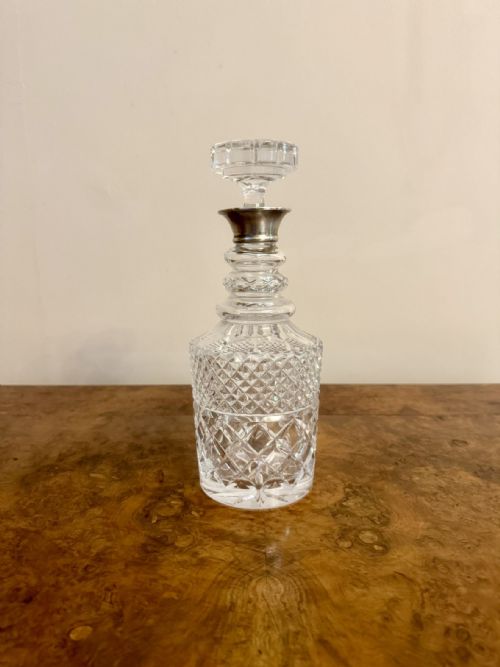
The Edwardian examples dominate the selection, often featuring heavy silver collars, square sections or bell shapes. Victorian and Georgian pieces appear too, bringing deeper hand-cut facets and sometimes colourful glass bodies.
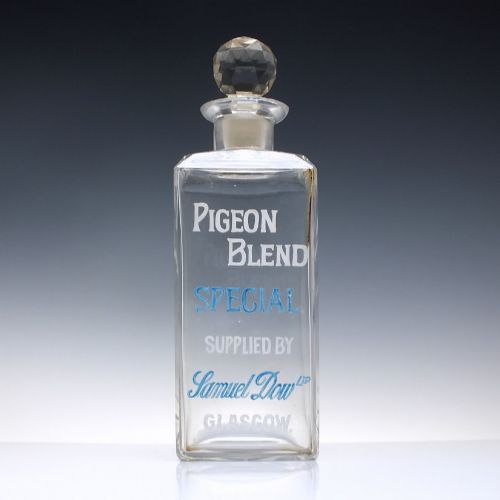
These items served practical roles on dining sideboards and smoking room trays, holding Scotch, Irish whiskey and brandy. Surviving pieces range from plain blown glass to elaborately enamelled Scottish regional bottles.
Glass, crystal and silver mounts
Makers shaped the vessels using clear glass, lead crystal or coloured glass, often applying heavy mould-blown or optical-blown techniques. Many pieces feature deep hand-cut flutes, diamonds and geometric patterns that catch the light.
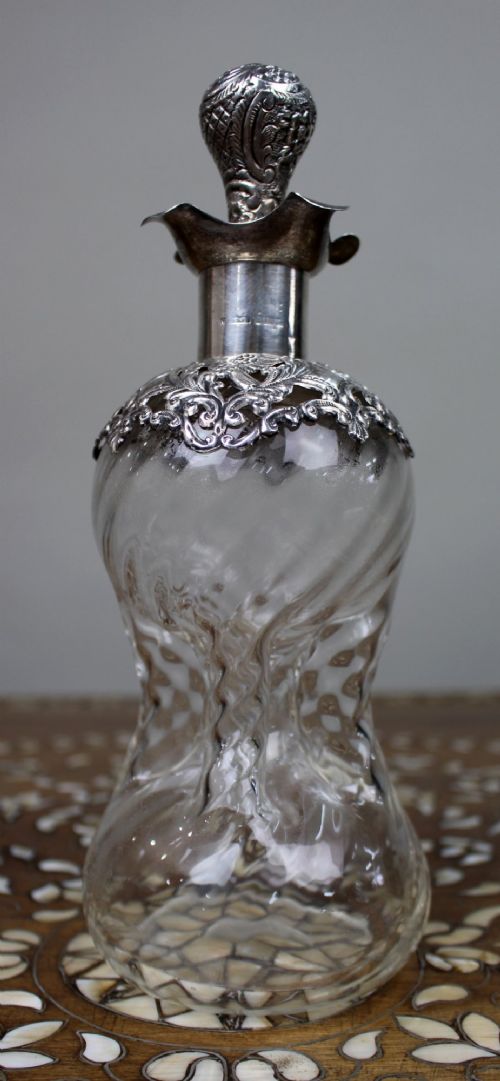
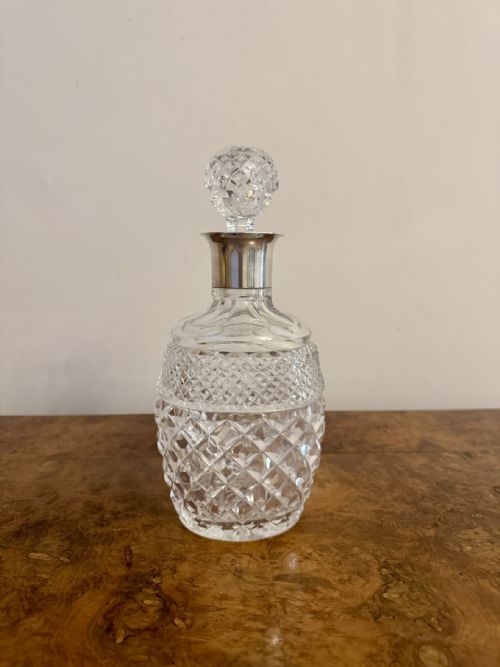
Artisans combined the glass bodies with sterling silver collars, mounts and stoppers, frequently hallmarked for English and Scottish assay offices. Enamelled lettering directly on the glass surface identifies specific regional blends and distilleries.
Listings feature lead crystal, clear glass and coloured glass vessels mounted with sterling silver collars.
Cut depth and mount execution
The crispness of the cutting separates standard vessels from finer ones, with sharp, deep facets showing superior handwork. Weight and wall thickness also matter, as heavier lead crystal provides a more substantial feel in the hand.
The quality of the metalwork defines the upper tier, seen in solid sterling silver collars, heavy hallmarked mounts and matching stoppers. Original enamelling on Scottish blend carafes adds further distinction to the surviving examples.
Hukin and Heath·James Powell·Freeman and Son Ltd
The Glass Whisky Carafe Glossary
- Whiskey Noggin
- A small single-measure spirit jug, typically fitted with a silver lip and handle for personal pouring.
- Glug Glug Decanter
- A vessel with a multi-chambered neck that produces a gurgling sound when the liquid is poured.
- Mell Decanter
- A heavy-bottomed, tapering decanter shape popular during the Georgian period.
- Sterling Silver Collar
- A metal band fitted around the neck of a glass bottle, often bearing town marks and date letters.
Glass Whisky Carafe: Frequently Asked Questions
What is the difference between a noggin and a decanter?
A whisky noggin is a small, single-portion jug with a handle, designed for individual use at a table or desk. A decanter is a larger vessel meant to hold an entire bottle of spirit for general serving.
Noggins often hold a quarter-pint or similar small measure and feature fitted silver rims and pouring lips. Decanters rely on stoppers rather than spouts and have heavier, more volumetric bodies.
How do I date a silver-collared glass bottle?
Silver collars on Edwardian and Victorian pieces usually carry full hallmarks stamped directly into the metal. These marks indicate the assay office, the maker's mark and a specific date letter.
Matching the date letter against hallmarking tables reveals the exact year the silver mount was tested and applied. The glass body itself generally matches that same period.
Why do some decanters have enamelled lettering?
Enamelled lettering on nineteenth-century bottles often advertised specific Scottish whisky blends or regional distilleries. Pubs, clubs and merchants commissioned these labelled carafes for branding and display.
Surviving examples bearing vintage blend names now serve as collectible pieces of social history. The enamel was fired onto the glass to withstand handling.