



Shaped Glass Decanter
These shaped glass decanter pieces combine practical service with heavy cut or coloured material, offering a functional centrepiece for the table.
Shaped Glass Decanter
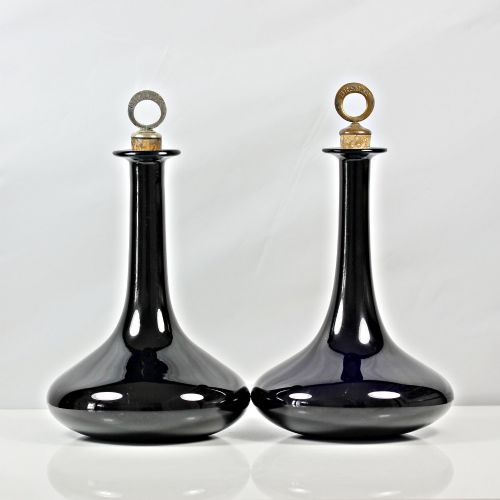
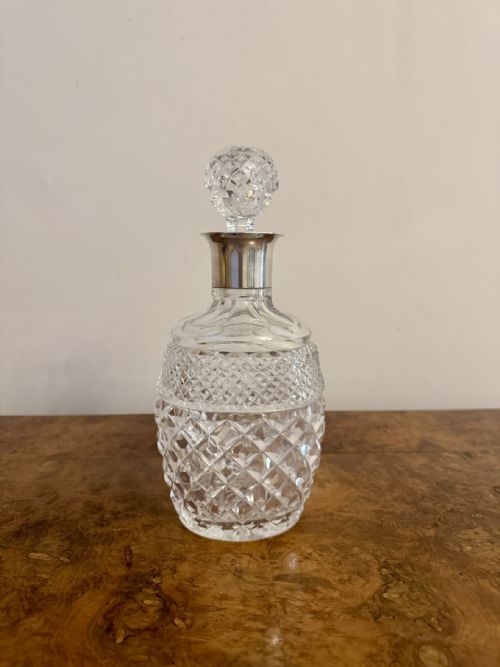
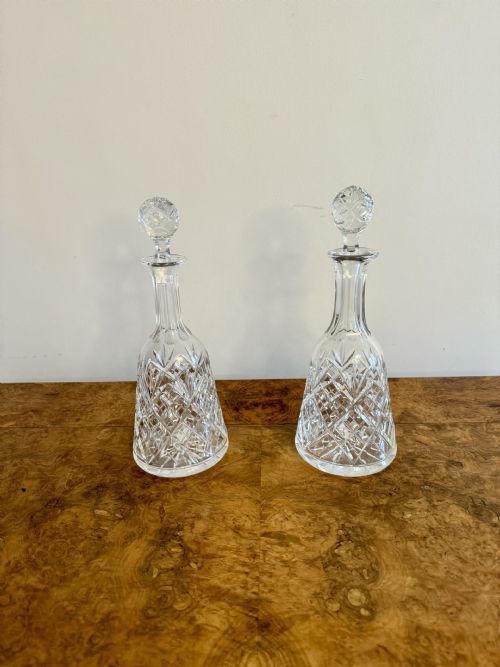
A shaped glass decanter sits on the sideboard or table to hold wine and spirits, taking forms from the Georgian and Victorian eras up to the Edwardian period. Buyers examining this page will encounter various distinct profiles, including bell shapes, mell forms, and barrel or globe bodies.
Vessels range from plain wine decanters with heart-shaped stoppers to novelty champagne bottle decanters and dog-shaped glass vessels. Pairs frequently emerge alongside single items, offering options for symmetrical table placement.
What varies in quality
The distinction between standard and superior examples rests on the crispness of the cutting, the weight of the lead crystal, and the clarity of the material. Heavy metal mounts and original stoppers elevate a piece beyond standard utilitarian production.
Unusual forms, such as figurative dog shapes or novelty champagne bottles, demand greater skill from the glassblower, distinguishing them from traditional geometric profiles. Depth of colour in blue glass items and fine hand-engraving similarly separate finer work from plain production.
A glass decanter formed as a dog from Bohemia or Scandinavia proves that Victorian drinkers enjoyed sharing table space with canine spirits.
The Shaped Glass Decanter Glossary
- Mell decanter
- A form shaped like a mallet or round-bottomed mallet, frequently produced in blue glass during the nineteenth century. This silhouette provides stability on shipboard tables.
- Prussian style decanter
- A vessel featuring a tapering cylindrical neck adorned with three or more glass rings. This design aids grip when pouring heavy vintage wines.
- Lead crystal
- Glass containing metallic oxide that increases weight, refractive brilliance, and resonance. This material allows for deeper, sharper facet cutting.
- Heart-shaped stopper
- A closure fashioned with a flat, heart-like profile that seals the decanter neck. These appear on late eighteenth-century and early nineteenth-century wine vessels.
- Silver collar
- A metal mount fitted around the neck of the glass body. This addition often reinforces the rim and provides a polished finish to Edwardian examples.
Shaped Glass Decanter: Frequently Asked Questions
How do I clean an old glass decanter?
Residue inside vintage glass requires gentle treatment without harsh abrasives that scratch the material. Warm water and specialised cleaning beads lift staining from the interior base.
After rinsing, leave the stopper out until the interior dries completely to prevent moisture retention. Avoid sudden temperature changes to protect old glass from cracking.
Are these old decanters safe for modern wine?
Most glass and lead crystal vessels remain suitable for holding wine and spirits for serving. Older crystal from specific periods can contain trace elements, so storing spirits for long periods inside them is generally avoided.
Brief exposure during a meal presents no difficulty for serving. Inspect the interior for any stubborn haze before filling.
How can I date a shaped glass decanter?
Dating relies on body profile, neck rings, and the style of the stopper. Early pieces often feature three-ring necks and hand-cut facets, while Edwardian examples show machine-polished brilliance.
Pontil marks on the base indicate older manufacturing techniques before late nineteenth-century smoothing became common. Comparing the weight and glass tint further clarifies the period of origin.
Should the stopper match the decanter?
Original stoppers fit the individual neck grind and share the same glass colour and wear patterns as the body. Finding a matching number or grinding mark helps confirm originality.
Replacement stoppers are common in older glassware, though matching weight and style preserves the visual balance of the piece.