


Whisky Bottle Stopper
A whisky bottle stopper secures the spirit within, and these pieces arrive mounted in sterling silver and cut glass from Victorian, Edwardian and Georgian years.
Whisky Bottle Stopper
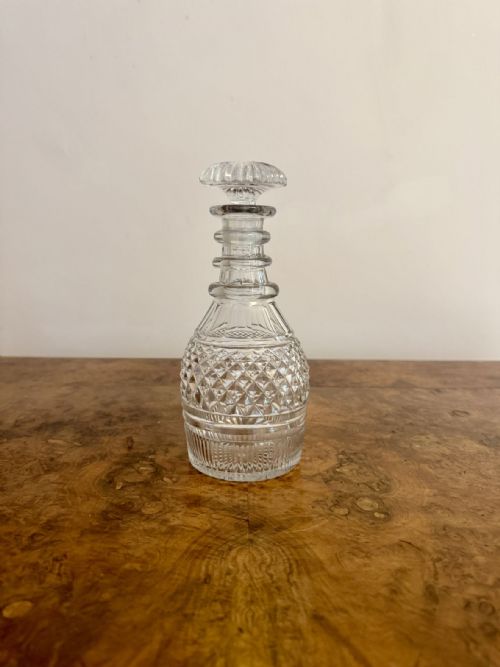
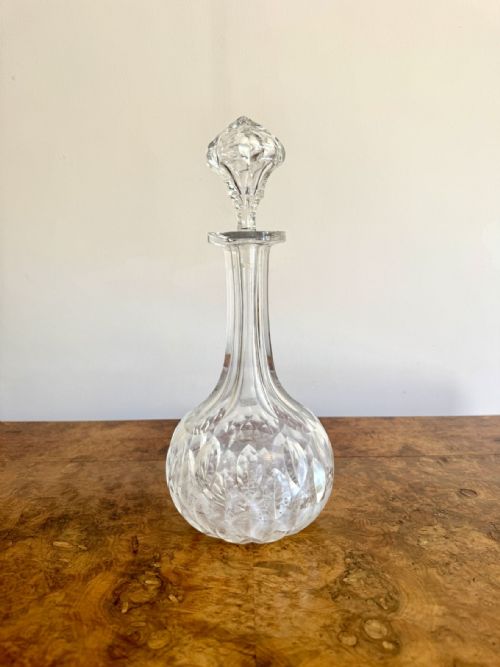
When you search for a whisky bottle stopper, you encounter barware companions designed to seal spirit decanters and jugs across the Georgian, Victorian, and Edwardian eras. The listings here contain numerous decanters and spirit bottles shaped in bell, hourglass, and mell profiles, many paired with silver collars or mounts.
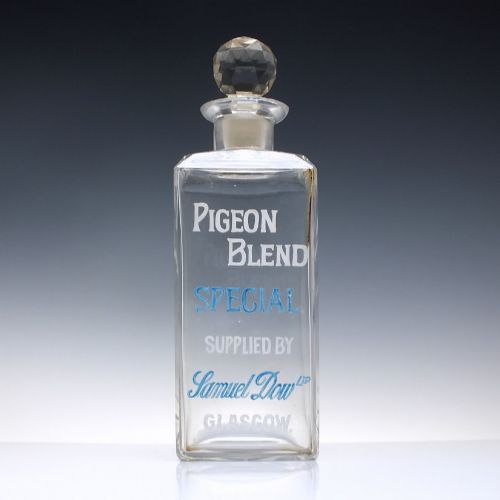
The most frequent items you meet on this page are Edwardian cut glass decanters and Victorian vessels bearing silver mounts. Pieces range from plain clear glass bottles to enamelled Scottish examples labelled for specific blends like Pigeon Blend and Cattos Vosh.
Makers and silver-mounted forms span the nineteenth and early twentieth centuries, including pieces marked by firms such as Hukin and Heath and Mappin & Webb. Collectors also encounter novelty designs shaped as Scottish thistles alongside locking decanters.
Materials and construction
Glass production relies on lead crystal and clear glass shaped into cut patterns, bell forms, and hourglass bodies. Decanters feature hand-cut facets and engraved decoration across the body.
Silver collars, mounts, and bottle labels utilise sterling silver and silver plate, often bearing hallmarks that date the metalwork to the Victorian and Edwardian periods. Enamel work decorates specific nineteenth-century Scottish examples.
A Scottish thistle shape guards the whisky.
Distinctions in quality
Quality depends upon the clarity of the lead crystal and the depth of the hand-cut facets. Heavy cutting and crisp geometric patterns elevate a piece above plain, moulded glass.
The presence of hallmarked sterling silver mounts, silver bottle labels, and specialised locking mechanisms by known makers distinguishes standard table bottles from finer examples.
Hukin and Heath·Mappin & Webb·Betjemann Brothers
The Whisky Bottle Stopper Glossary
- Cut crystal
- Glass with a high lead content shaped by grinding and polishing geometric facets. This process increases the weight and refractive brilliance of the vessel.
- Hallmark
- An official stamp applied to precious metals indicating the standard of purity, the assay office, and the date letter. Sterling silver collars and mounts often display these marks.
- Mell decanter
- A specific bottle shape featuring a rounded body and a tapering neck, frequently produced in Irish and English glass during the Georgian period.
- Locking decanter
- A spirits bottle fitted with a metal frame and a lock across the neck to restrict access. These mechanisms often require a key to release the stopper.
Whisky Bottle Stopper: Frequently Asked Questions
What periods do these pieces span?
The items range from Georgian and Regency eras through the Victorian and Edwardian decades, extending into the early twentieth century.
Most examples originate from the late nineteenth and early twentieth centuries.
What materials make up these bottles?
Vessels utilise clear glass, cut crystal, and lead crystal paired with sterling silver collars, mounts, and labels.
Some pieces incorporate coloured glass such as Bristol Blue or green alongside enamel decoration.
How were these decanters used?
They served to hold and pour spirits like whisky, brandy, and port upon dining tables and sideboards.
Locking versions provided security for expensive spirits in domestic settings.
How do I identify Scottish examples?
Certain nineteenth-century pieces feature enamel lettering naming Scottish locations like Glasgow and Aberdeen alongside whisky brand names.
Novelty forms also draw upon Scottish themes, including decanters shaped as thistles.