



Crystal Prism Candle Holders
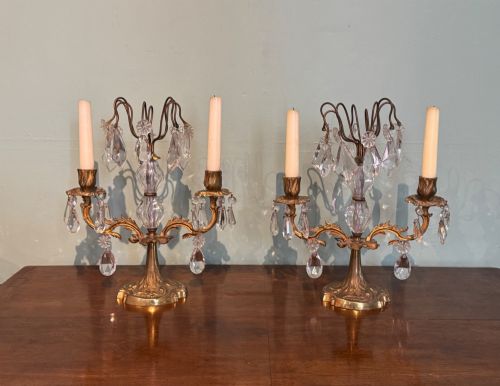
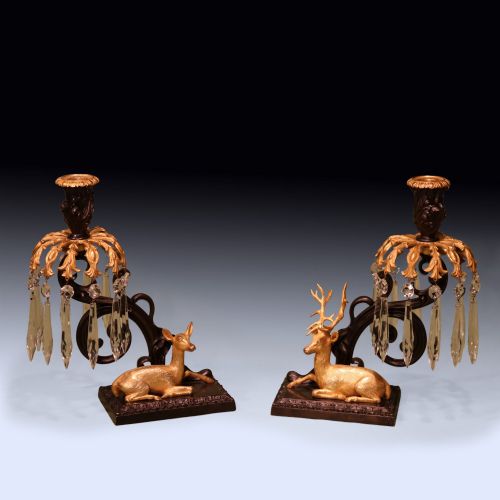
Crystal prism candle holders combine faceted glass drops with brass, bronze, or coloured glass to scatter candlelight across a room.
Crystal Prism Candle Holders
When you search for crystal prism candle holders, you encounter candle-burning lighting pieces designed with hanging glass drops or lustres that refract light. The selection includes Victorian, Regency, and Edwardian examples alongside French Empire and Rococo styles.
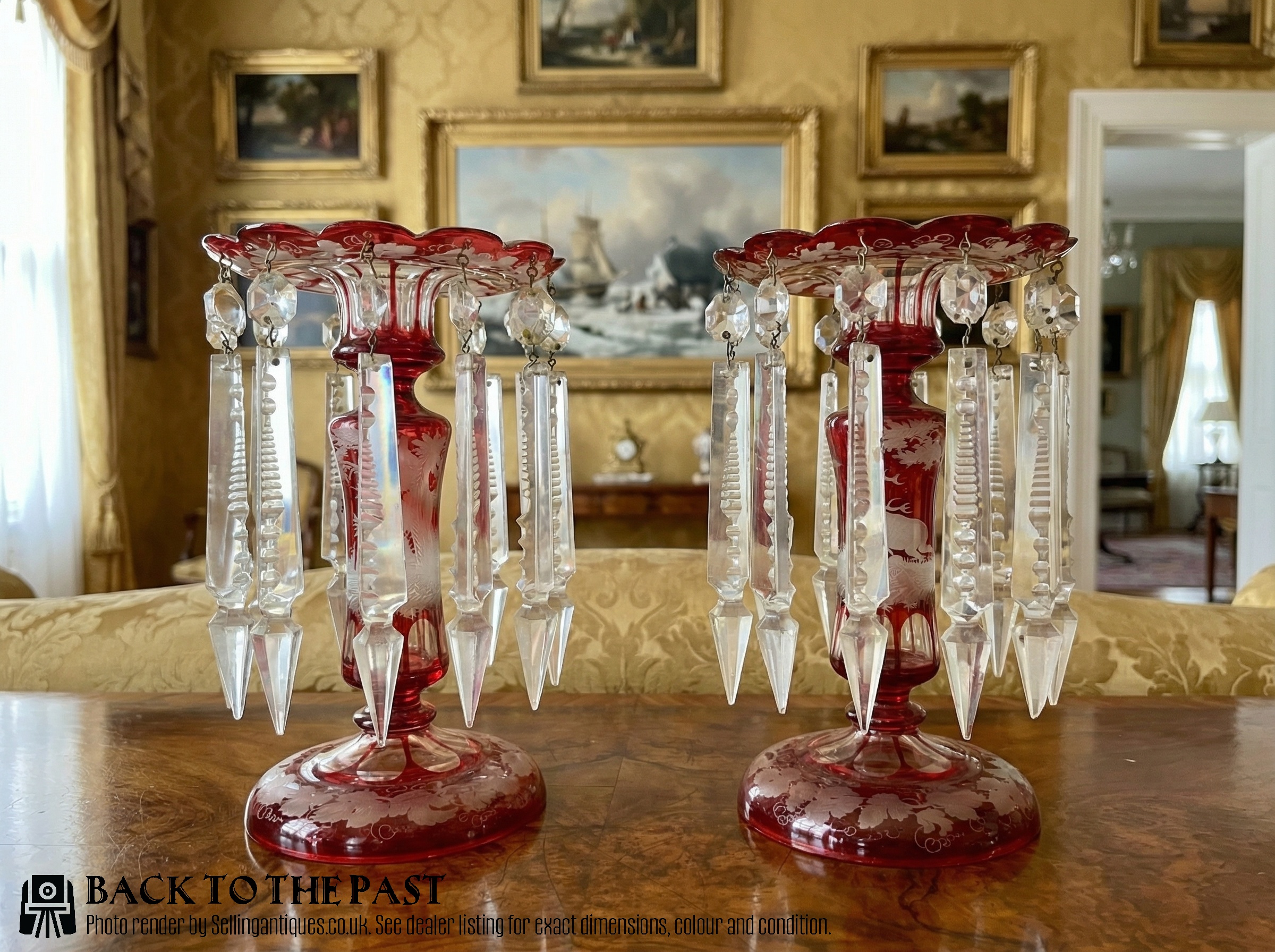
Most entries on this page take the form of paired table lustres or candlesticks configured in clear, ruby, and green glass, often mounted in ormolu or brass. These items serve as decorative mantel and table furniture originating from the nineteenth and early twentieth centuries.
The assortment encompasses multi-branch candelabra fitted with storm shades and gilt bronze frames, demonstrating the diverse output of period workshops. Buyers find both single mantle lustres and matched pairs intended to sit symmetrically in a room.
How they were made
Makers utilised heavy lead crystal and soda glass, shaping them through blowing, moulding, and wheel-cutting to produce sharp facets on the hanging prisms. Metal components combine cast ormolu, gilt bronze, and brass, occasionally finished with silvered surfaces or enamel details.
Prisms hang from the upper bowls or rims by means of wire loops or pinned attachments, allowing the glass drops to swing freely and catch the light from the candles.
Materials span crystal, cut glass, ormolu, gilt bronze, brass, and coloured flash glass.
What varies in quality
The standard of cutting on the crystal drops and the depth of the hand-polishing distinguish finer pieces from standard production. Crisp facets create sharper refraction, whereas softer edges dull the visual impact of the hanging prisms.
Metal mounts display different levels of chasing and finishing in the ormolu and bronze, with heavier casting and more articulate detailing marking superior manufacture. Glass body colours, such as ruby flash or deep green, vary in saturation and clarity across periods.
The Crystal Prism Candle Holders Glossary
- Lustre
- A candle holder hung with cut glass prisms designed to reflect and refract flame light. These decorative pieces became popular during the Regency and Victorian eras for dining tables and mantelpieces.
- Ormolu
- Finely ground high-carat gold mercury-gilded onto a bronze base. This technique creates a rich golden finish seen on French and English metal mounts from the eighteenth and nineteenth centuries.
- Prism
- A cut glass pendant suspended from the rim of a lustre or candelabrum. Prisms disperse light into spectral colours when illuminated by candles.
- Flash glass
- Glass formed of a thin layer of coloured glass applied over a clear or contrasting body before cutting. Cutting through the top layer reveals the clear glass beneath.
- Candelabra
- A branched candlestick holding multiple lights. These fixtures often incorporate central columns adorned with glass drops or storm shades.
Crystal Prism Candle Holders: Frequently Asked Questions
What are crystal prism candle holders?
These pieces are decorative candle lighting fixtures featuring suspended glass drops that catch and scatter light. They combine metal bases or glass bodies with hanging prisms.
Most examples date from the nineteenth and early twentieth centuries, encompassing Victorian, Regency, and Edwardian periods in clear, ruby, and green glass.
How were mantle lustres used?
Mantle lustres stood on fireplace mantelpieces to provide decorative display and ambient illumination in period rooms. Their hanging prisms magnified the flickering light of burning candles.
Pairs were arranged symmetrically on mantels, sideboards, or dining tables to frame other decorative objects.
How do I clean glass prisms?
Prisms require careful removal and gentle washing in warm soapy water to avoid scratching the glass or bending the wire hangers. Each drop must be dried thoroughly before reattachment.
Harsh chemical cleaners damage metal mounts and ormolu surfaces, so cleaning should focus solely on the glass elements.
How do I tell Regency from Victorian pieces?
Regency items typically show neoclassical restraint, clean cut-glass lines, and precise bronze or ormolu mounts. They lean towards architectural symmetry and clear crystal.
Victorian pieces introduce bolder colours like ruby and green glass, alongside heavier ornamentation reflecting Rococo and Gothic revivals.