



Antique Glass Candle Vases
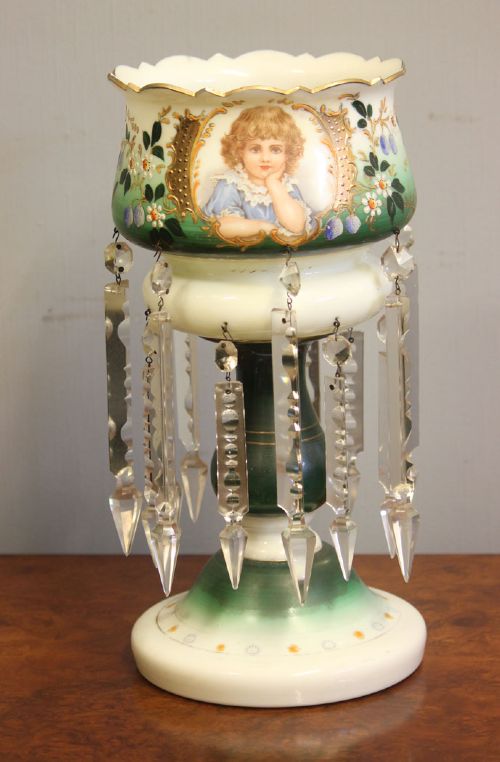
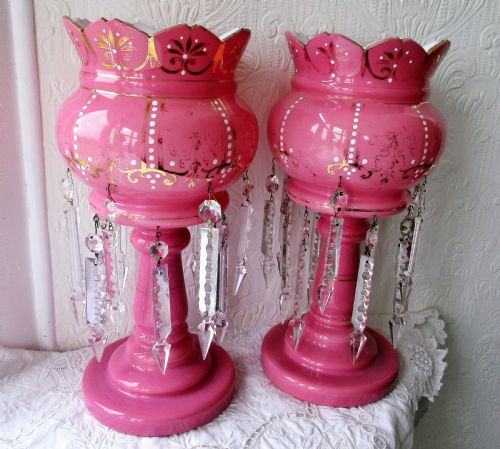
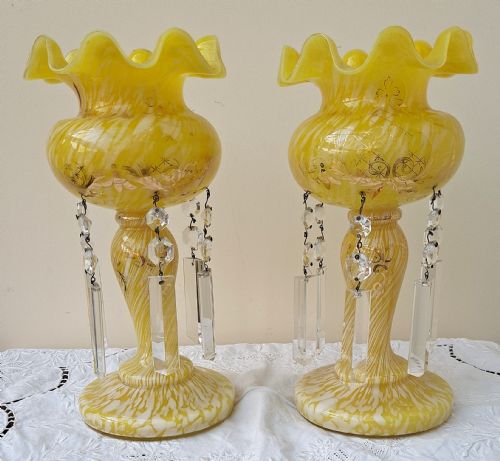
These antique glass candle vases are mantel lustres and table lustres designed to hold candles while scattering light through hanging glass prisms.
Antique Glass Candle Vases
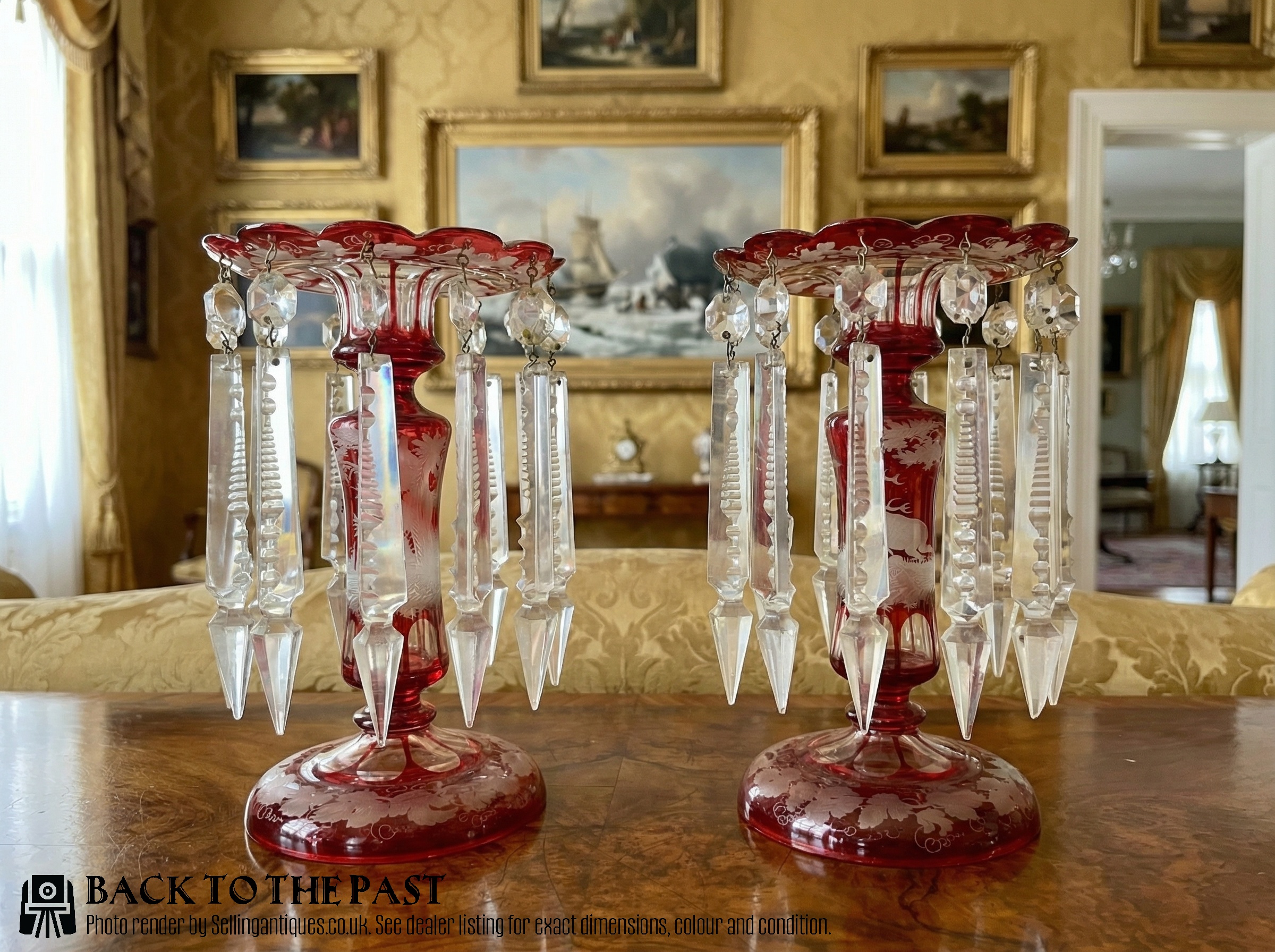
When you search for antique glass candle vases, you encounter decorative mantel lustres and table lustres that date primarily from the Victorian period and the late nineteenth century. These items typically function as candleholders fitted with glass drops or prisms suspended from the rim to catch and refract the flame light.
You are most likely to meet pairs of lustres on this page, though single examples also appear. The forms encompass English and French pieces, alongside Bohemian overlay glass and flash glass variations from the same era.
The physical design centres on a central stem and vase body, often shaped with panelled or flared bowls, supporting a crown of glass pendants. These vessels served a decorative and illuminating purpose in nineteenth-century interiors, usually displayed in pairs upon a mantelpiece.
How they were made
The construction relies heavily on blown and moulded glass, finished with hand-cutting, enamel decoration, or gold leaf gilding. Makers shaped crystal and coloured glass into vases before applying flash layers or overlay techniques to create contrast.
Hanging prisms were individually cut and faceted to maximise light reflection, then suspended from the main body using wire or metal connectors fitted through drilled rims.
Victorian mantel lustres were essentially glittering light-catchers designed to make a single flickering candle look like a small fireworks display.
What varies in quality
The distinction between standard examples and superior pieces rests on the depth of the glass colour, the precision of the hand-cut facets, and the presence of fine gilding or enamel work. Rich ruby glass, opaque opaline glass, and layered Bohemian overlay demonstrate greater manufacturing complexity than plain transparent alternatives.
The completeness and originality of the hanging crystal prisms heavily influence the standing of a lustre. Pieces retaining their matching, period-correct drops possess higher integrity than those with replaced or missing components.
The Antique Glass Candle Vases Glossary
- Mantel lustre
- A decorative vase fitted with hanging glass prisms designed for display on a fireplace mantelpiece. They frequently hold candles and reflect ambient light.
- Overlay glass
- A glass-making technique involving two or more distinct layers of different coloured glass fused together. The outer layer is partially cut away to reveal the contrasting colour beneath.
- Flash glass
- A thin layer of coloured glass applied over a colourless or contrasting glass body. Artisans cut through this top layer to create patterns and designs.
- Opaline glass
- An opaque, pale glass with a milky appearance, popular in nineteenth-century decorative objects. It often exhibits pastel shades of pink, green, or blue.
- Prism
- A cut glass pendant suspended from the rim of a lustre. These elements fracture candlelight into spectral colours.
Antique Glass Candle Vases: Frequently Asked Questions
What are antique glass candle vases used for?
These pieces function primarily as decorative mantel ornaments designed to hold candles and scatter light through suspended glass drops.
In nineteenth-century interiors, they occupied prominent positions on mantelpieces and tables to enhance illumination from flames.
How do you clean antique glass lustres?
Maintenance requires gentle cleaning with a soft, damp cloth to preserve delicate enamel work and gold leaf gilding.
Prisms should be washed individually and dried thoroughly before being reattached to the main body.
Are these pieces always found in pairs?
While pairs represent the standard format for mantel display, single lustres do occur occasionally in the listings.
Victorian interior decoration favoured symmetry, which explains why surviving examples are frequently matched sets.
How do you identify Victorian glass lustres?
Identification depends on characteristic nineteenth-century forms, heavy lead crystal or opaline materials, and hand-cut prism configurations.
Many examples also exhibit period-specific ruby, green, or Bohemian overlay glass techniques.