




Victorian Glass Candle Lustres
Victorian glass candle lustres are striking decorative mantel ornaments that hold candles while dangling cut-crystal prisms to reflect the flame.
Victorian Glass Candle Lustres
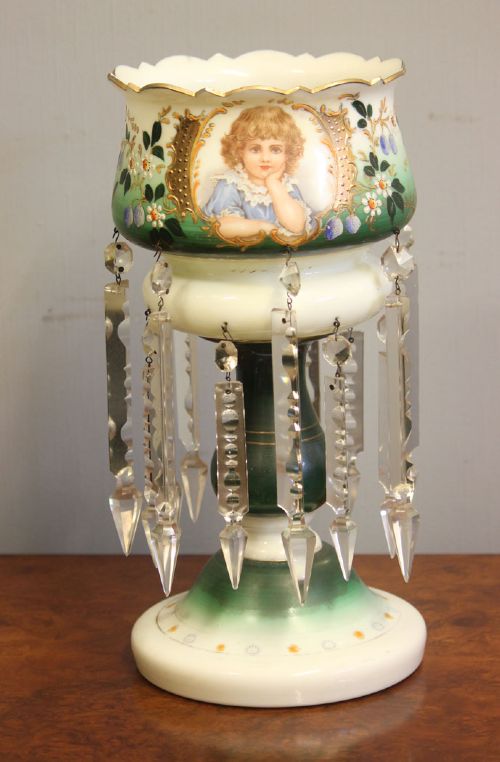
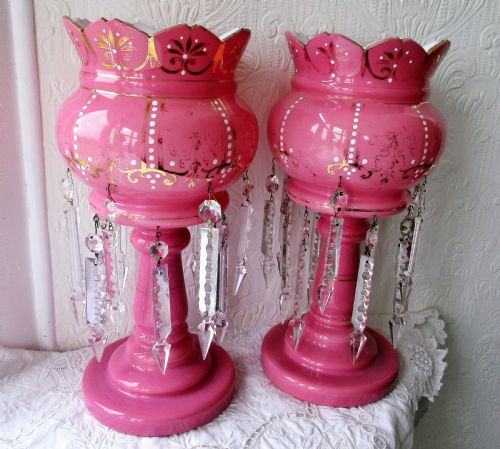
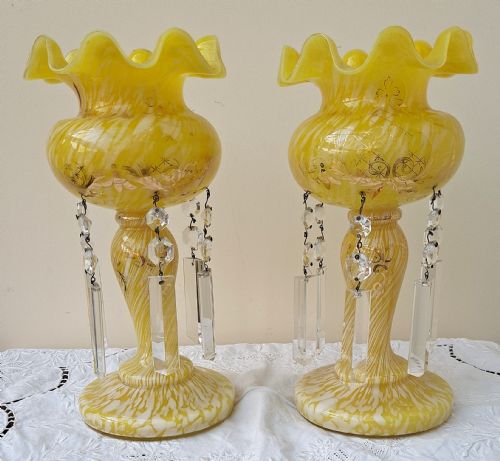
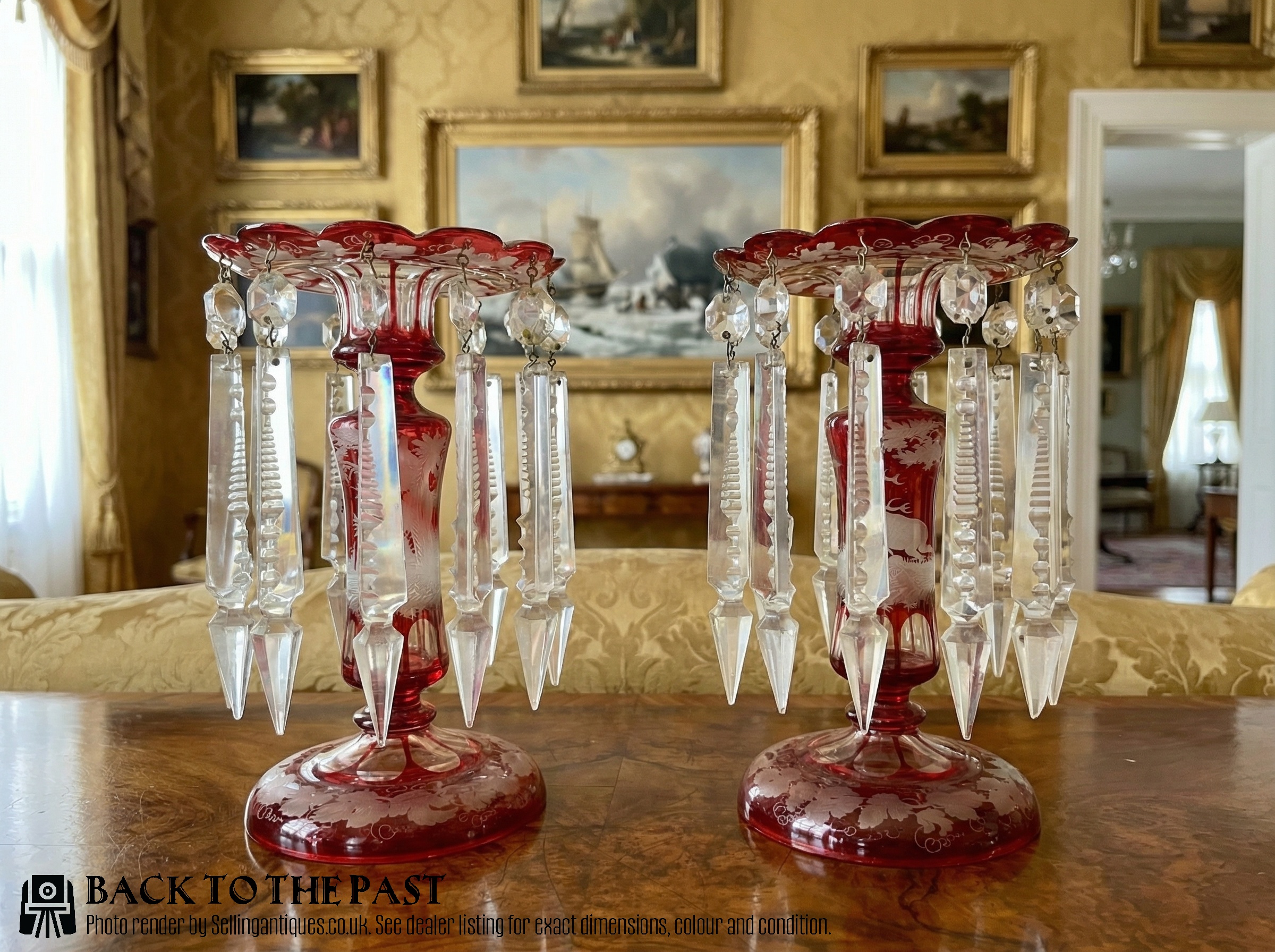
When you search for victorian glass candle lustres, you encounter mantel ornaments designed to catch and multiply candlelight through dangling glass pendants. The most common form on this page is the paired table or mantel lustre, standing upright with a central socket and a ring of hanging prisms.
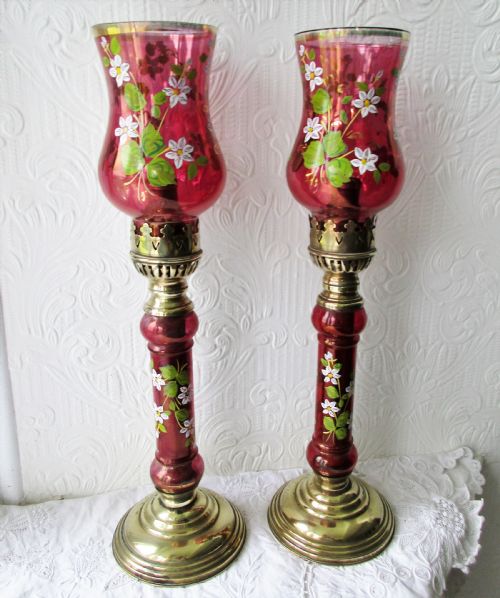
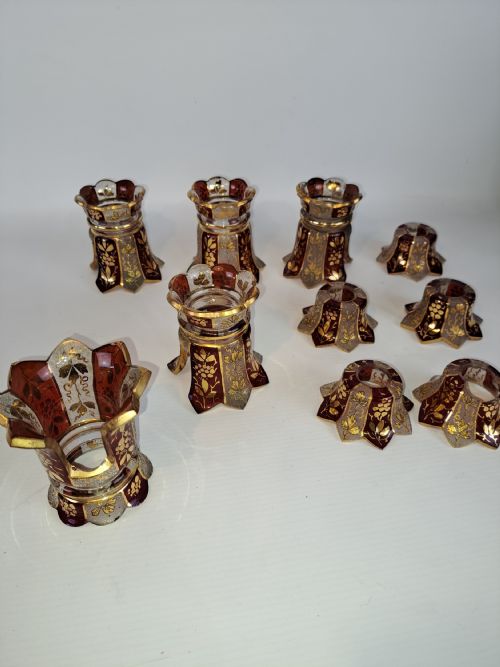
Makers produced these pieces across the nineteenth century, utilising colourful glass bodies in ruby, green, pink, yellow, and cranberry hues alongside clear crystal. Forms span from simple glass trumpet bodies to complex arrangements featuring brass, bronze, ormolu, and storm shades.
Origin points visible in the records include English and Bohemian workshops, alongside French opaline and empire styles. Collectors meet these objects under various period designations, including Victorian, William IV, Regency, and late nineteenth-century dates.
Production materials and techniques
Glassmakers shaped these bodies using coloured, opaline, or flash glass, often employing overlay techniques where layers of different coloured glass were fused and cut away. Cut glass and lead crystal components provided the faceted surfaces needed to refract light effectively.
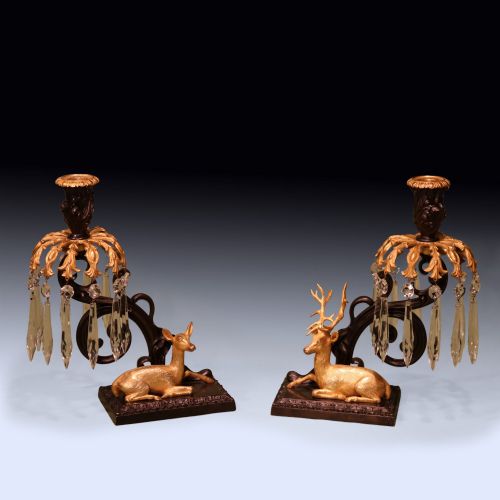
Metalwork played a structural and decorative role, incorporating brass, gilt bronze, and ormolu mounts, capitals, and bases. Artisans added surface enrichment through enamel painting, gold leaf application, and delicate etching upon the glass capitals.
Some nineteenth-century examples feature bronze stags and does peering out beneath the candle nozzles.
Distinctions in craftsmanship and design
Quality separates through the depth and clarity of the glass cutting, where crisp facets on lead crystal create superior light refraction compared to softer moulded edges. The richness of the body colour, such as deep ruby flash glass or layered Bohemian overlay, dictates visual impact.
The sophistication of the supporting hardware distinguishes superior examples, particularly where ormolu, gilt bronze, or cast brass mountings integrate seamlessly with the glass. Complete sets of matching prisms with sharp cutting represent high manufacturing standards.
Clarkes
The Victorian Glass Candle Lustres Glossary
- Lustre
- A decorative candlestick or lamp fitted with hanging glass pendants designed to reflect candlelight. These objects sat prominently on mantelpieces and parlour tables.
- Prism
- A cut-glass pendant suspended from the rim of a lustre to refract light. They are sometimes called drops or icicles.
- Flash glass
- Glass formed by blowing a thin layer of coloured glass over a colourless or contrasting base layer. This technique allowed artisans to cut through the top layer to reveal the contrasting glass beneath.
- Opaline
- An opaque or translucent pale glass popular in nineteenth-century decorative objects. It often appears in soft pastel tones.
- Ormolu
- Gilt bronze ornamentation applied to furniture and decorative objects. The technique involves coating bronze with a finely ground mercury and gold amalgam.
Victorian Glass Candle Lustres: Frequently Asked Questions
What are glass candle lustres?
Glass candle lustres are decorative nineteenth-century mantel ornaments that combine a candle holder with hanging glass prisms. The pendants catch and multiply the flickering light of the candle flame.
They served as ornamental centrepieces in Victorian parlours and drawing rooms rather than primary light sources. Their bright colours and reflective crystals brought warmth and visual interest to unlit hearths during daylight hours.
How do you clean them safely?
Cleaning requires removing each glass pendant individually and washing them by hand in lukewarm soapy water. Harsh chemicals and hot water risk damaging nineteenth-century gilding and enamel work.
The main glass body and metal mounts need gentle wiping with a dry or slightly damp cloth. Reattaching prisms should proceed carefully to avoid chipping the delicate hanging loops.
Were they used for lighting?
These pieces functioned primarily as decorative showpieces rather than everyday lighting fixtures. While they held candles securely, the primary purpose was aesthetic display.
The arrangement of cut glass prisms and coloured bodies created a sparkling effect when candles were lit during evening gatherings. Many survived with little actual use, preserving their original gilding and fragile components.
How are different periods told apart?
Distinguishing periods involves examining the glass colours, metal mounts, and cutting styles characteristic of specific decades. Regency and William IV pieces often display heavier neoclassical bronze mounts, while late Victorian items introduce diverse coloured glass and specialised fittings like storm shades.
Changes in manufacturing techniques, such as the evolution from hand-blown lead crystal to pressed and flash glass, help date individual examples. Records show pieces spanning from the eighteenth century through the late Victorian era.