

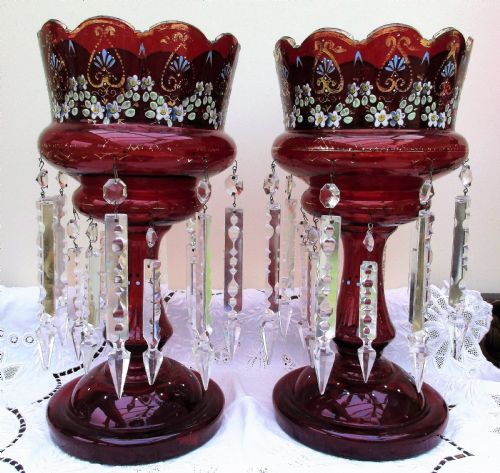


Antique Glass Drop Candleholders
These antique glass drop candleholders bring sparkling nineteenth-century candlelight to any mantelpiece through cut crystal drops and rich coloured glass.
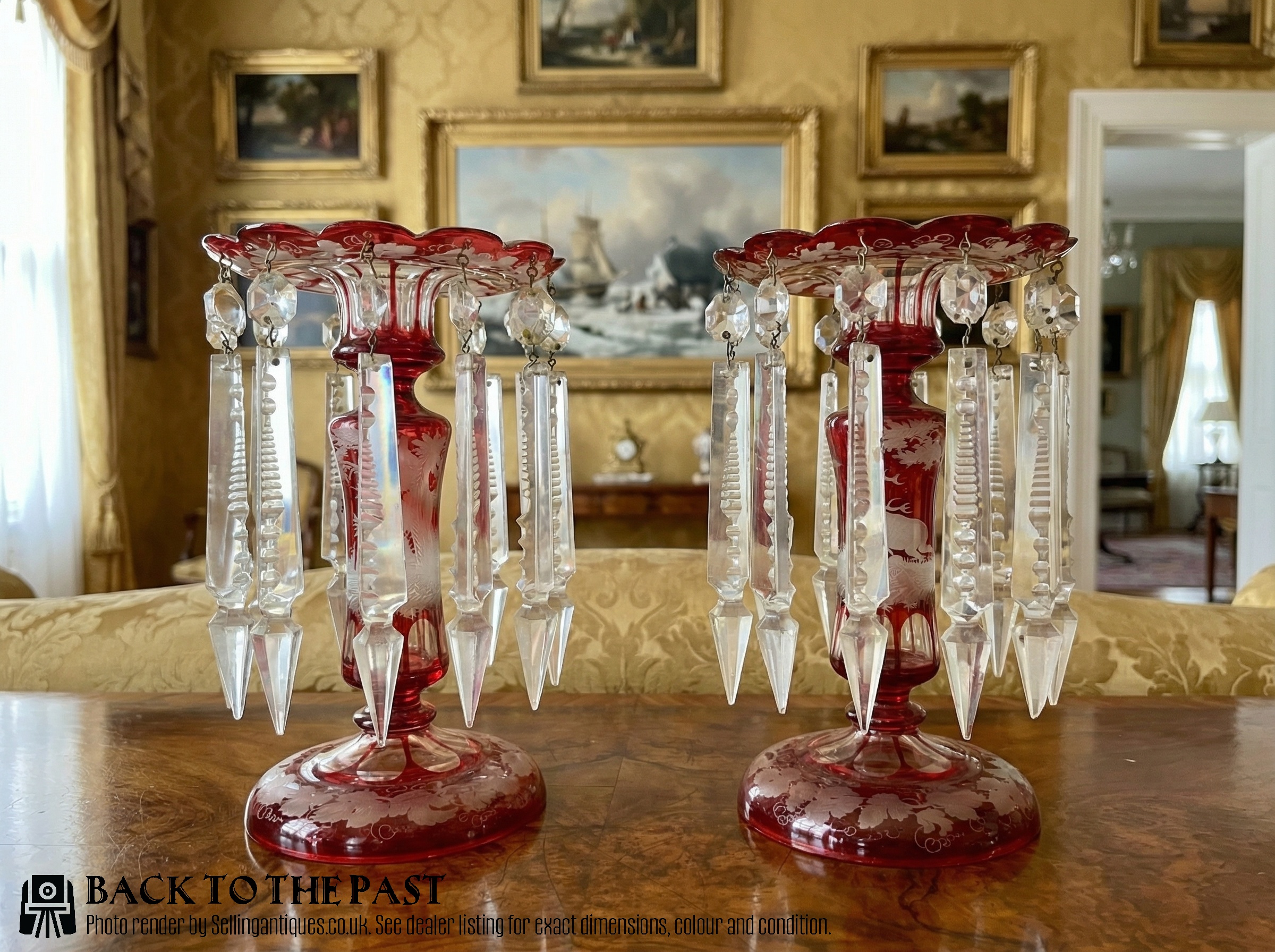
Antique Glass Drop Candleholders
When you search for antique glass drop candleholders, you find ornamental mantle and table lustres alongside multi-armed candelabras from the nineteenth century. These lighting pieces serve both functional and decorative roles, designed to sit on mantelpieces and tables where suspended crystal prisms catch and multiply the flame light. Most examples appearing on this page belong to the Victorian era, particularly the latter half of that period.
The dominant forms you will encounter are pairs of mantel lustres, often fashioned in deep ruby or cranberry glass. These objects combine a vase-like central body with a flared top rim that suspends numerous cut glass drops on wire hooks. Alongside these traditional lustres, the inventory includes occasional Louis XVI style brass and glass candelabras featuring multiple arms for illumination.
Origin and styling reflect nineteenth-century British and Bohemian glassmaking traditions, with specific pieces noted as Bohemian flash glass. Makers utilised rich coloration, flash layering, and enamel or gold leaf decoration to enhance the visual appeal of these table lustres. Whether configured as single candle holders or six-armed candelabras, they remain quintessential Victorian decorative objects.
How they were made
Glassmakers created these pieces using coloured and clear glass, frequently employing flash techniques where a thin layer of ruby or green glass coats a clear base before cutting through to reveal the contrast. Cut crystal and cut glass components undergo meticulous facet polishing to maximise light refraction from the hanging drops. Artisans then fitted brass or metal collars to support the glass bodies and secure the wire loops holding the glass drops.
Decoration on these lustres often involves applied enamelwork and gold leaf detailing painted directly onto the glass surface. The hanging glass drops themselves are individually hand-cut and faceted, then attached via small metal loops to the scalloped rims of the lustre bowls. This combination of glassblowing, facet cutting, and metallic ornamentation defines the physical construction of nineteenth-century lustres.
Materials recorded across the inventory include ruby glass, cranberry glass, crystal, enamel, gold leaf, gilt, and brass.
What varies in quality
Quality in these candleholders is determined by the depth and richness of the glass colour, such as deep ruby or cranberry tones, alongside the precision of the hand-cut facets on the crystal drops. Superior examples exhibit heavy, clear metal content in the glass and intricate enamel or gold leaf painting that remains crisp and well-adhered to the surface. The presence of a matching pair rather than a single lustre also elevates the standing of the pieces.
The complexity of the glass cutting on both the body and the hanging pendants separates finer production from simpler commercial output. Better pieces feature well-balanced proportions between the central vase stem, the scalloped rim, and the suspended drops, ensuring the entire assembly refracts light uniformly.
The Antique Glass Drop Candleholders Glossary
- Lustre
- An ornamental glass vase or stand fitted with hanging glass pendants designed to reflect candle or lamp light. These objects were popular status symbols on Victorian mantelpieces.
- Flash Glass
- A two-layer glass formed by blowing a thin casing of coloured glass over a colourless or contrasting body. Artisans cut through the outer layer to expose the glass beneath.
- Candelabra
- A branched candlestick holding multiple candles on separate arms. Nineteenth-century versions often incorporate glass drops and brass frames.
- Drop
- A small, faceted piece of cut crystal or glass suspended from the rim of a lustre. These pendants swing and catch the light.
- Enamel
- Opaque vitreous material fused onto the glass surface for decoration. It provides raised colour details and patterns.
Antique Glass Drop Candleholders: Frequently Asked Questions
What are mantle lustres used for?
Mantle lustres served primarily as decorative ornaments on nineteenth-century mantelpieces rather than main light sources. The hanging glass drops caught the flickering light from candles placed nearby, brightening dim Victorian rooms.
Today, they function as striking decorative centrepieces that bring historical colour and nineteenth-century craftsmanship to a room. Collectors display them on side tables, mantelpieces, and dining consoles.
How do I identify Victorian glass lustres?
Victorian glass lustres are identified by their characteristic vase-shaped bodies, scalloped rims, and suspended crystal drops. They frequently feature rich ruby, cranberry, or green glass colours associated with nineteenth-century production.
Examination of the glass reveals hand-cut facets and sometimes flash glass techniques where coloured layers are cut away to show clear glass underneath. Most examples date from the mid to late nineteenth century.
What is Bohemian flash glass?
Bohemian flash glass involves a thin layer of coloured glass applied over a clear or contrasting glass body during the blowing process. Glassmakers cut through this outer layer to create intricate patterns and windows of contrasting colour.
This technique was widely used in nineteenth-century Central Europe to produce highly decorative lustres and vases. The resulting pieces combine deep colours with brilliant clear crystal highlights.
How should I clean glass drop candleholders?
Cleaning glass drop candleholders requires removing the delicate glass drops individually to wash them in warm, soapy water. Care must be taken around any gold leaf or enamel decoration painted on the glass surface.
The main body should be wiped gently with a soft cloth without submerging metal components or mounts in water. Reattaching the drops with their wire loops completes the maintenance.