
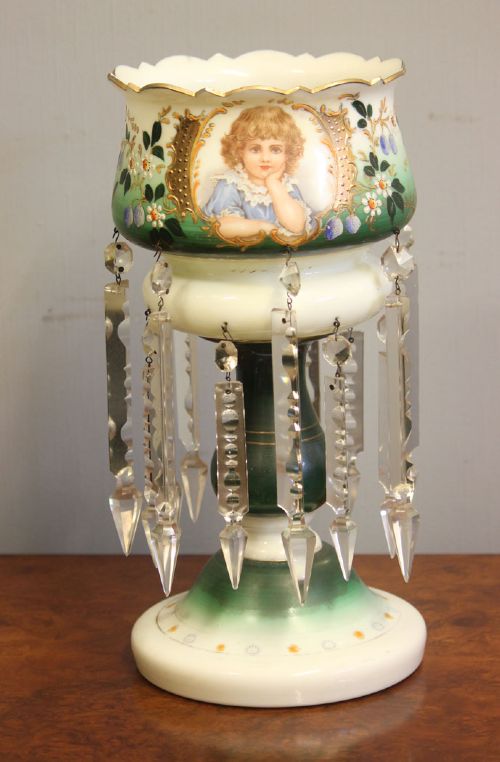
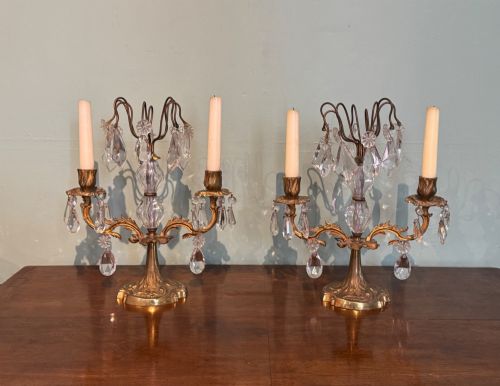
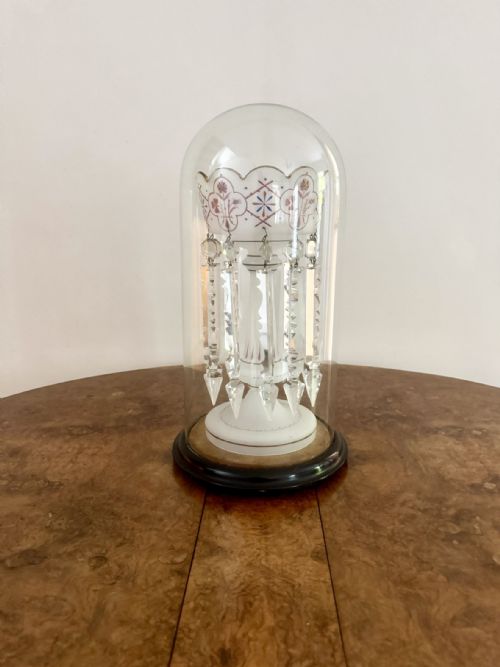


Cut Glass Mantle Lustres
Cut glass mantle lustres are ornamental candle holders hung with crystal prisms that catch and scatter light across a room.
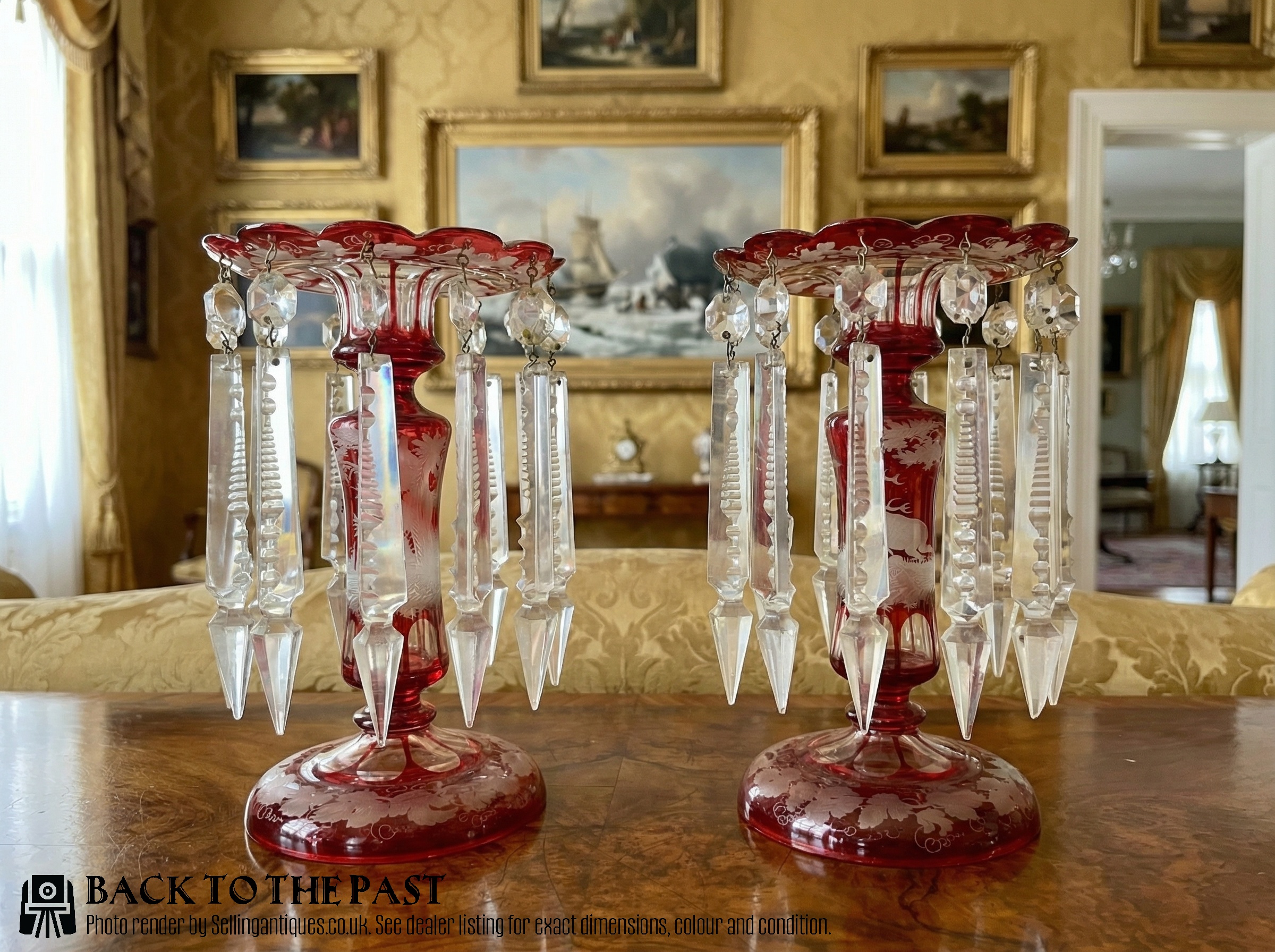
Cut Glass Mantle Lustres
Cut glass mantle lustres combine functional illumination with dazzling optical display, designed to sit prominently on a fireplace mantelpiece. These decorative objects typically feature a central socket for a candle surrounded by suspended pendants that refract candlelight.
The selections available here span the Victorian, Edwardian, and Regency periods, alongside pieces dated around 1900 and 1930. Visitors will frequently encounter matching pairs featuring prismatic drops alongside single table lustres and variants incorporating storm shades.
Origins represented in the current selection range from British Victorian workshops to French styles. Forms include table lustres, candelabras, and standard mantle lustres designed to reflect the flickering light of candles in formal reception rooms.
How they were made
Master glassmakers shaped these pieces using clear glass, crystal, lead crystal, and cranberry glass, frequently combining them with brass, gilt brass, bronze, and ormolu mounts. The bodies of the lustres were often blown and subsequently finished with wheel-cut facets to enhance their ability to refract light.
Pendant drops were individually cut and polished before being suspended from the rim using wire or metal pins. The metal components, including brass and gilt brass bases or storm shade fittings, were cast and chased to support the heavy glass reservoirs securely.
Current listings feature materials ranging from simple brass and glass to heavy lead crystal, cranberry glass, and gilt bronze.
What varies in quality
Quality in these items is determined by the depth and crispness of the glass cutting, which dictates how brilliantly the piece captures and disperses light. Finer examples display sharp, clean facets on both the body and the hanging drops rather than soft, rounded edges.
The choice of materials also establishes the tier of the piece, with heavy lead crystal and rich cranberry flash glass representing more ambitious manufacturing standards. Furthermore, the integration of gilded bronze or ormolu mounts rather than simple brass elevates the visual weight and sophistication of the object.
The Cut Glass Mantle Lustres Glossary
- Lustre
- An ornamental glass or porcelain candlestick hung with cut crystal pendants designed to refract light. They were popular centrepieces on Victorian and Regency mantelpieces.
- Cranberry glass
- A rich red glass coloured with gold chloride during the manufacturing process. This vibrant material is especially prominent in Victorian decorative pieces.
- Ormolu
- Gilded bronze used for decorative mounts and furniture fittings in the 18th and 19th centuries. It provides a warm metallic contrast to cut glass.
- Storm shade
- A tall glass cylinder fitted over a candle holder to protect the flame from draughts. They appear on specific brass and glass lighting configurations.
- Flash glass
- Glass formed of two or more distinct layers of different colours, usually a thin layer of coloured glass over a clear base. This technique allowed artisans to cut through the outer layer to reveal the contrasting glass beneath.
Cut Glass Mantle Lustres: Frequently Asked Questions
What is a mantle lustre?
A mantle lustre is a decorative candlestick embellished with hanging glass prisms designed to catch and amplify candlelight.
Placed upon a fireplace mantel, these objects served both as functional lighting and as ornamental centrepieces during the nineteenth century.
How do you clean glass lustres?
Cleaning requires removing the hanging crystal drops and washing them individually in lukewarm soapy water using a soft cloth. The main body should be wiped carefully with a damp cloth to avoid disturbing any gilt brass or bronze mounts.
Great care must be taken when handling the delicate wire fixings that attach the pendants to the main glass body.
Were these used for lighting?
They were primarily utilised to provide ambient illumination in reception rooms before the invention of electric lighting. The cut glass prisms multiplied the light emitted by a single candle.
Over time, their decorative qualities often outlived their practical use as primary light sources.
How do I identify Victorian lustres?
Victorian examples frequently display deep wheel-cut patterns, rich colours like cranberry, or robust brass bases. They often appear as matching pairs intended to balance the decoration of a mantelpiece.
Stylistic cues such as French Rococo Revival influences also help date these decorative objects to the nineteenth century.
Can I burn candles in them?
While they are fully functional candle holders, many collectors prefer not to burn candles in antique lustres to prevent heat damage or wax drips on the glass. If used, tapers should be secured firmly in the sockets and extinguished before the flame reaches the glass rim.