


Antique Mantle Lustres
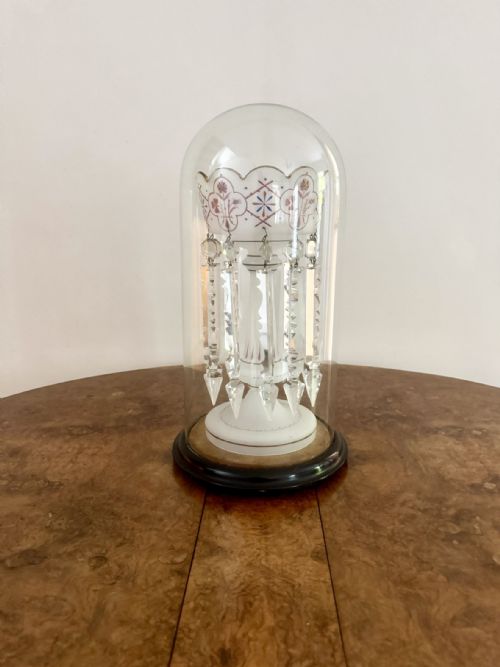
Antique mantle lustres are ornamental glass and metal candle lamps designed to catch the firelight, bringing brilliant colour and sparkle to a room.
Antique Mantle Lustres
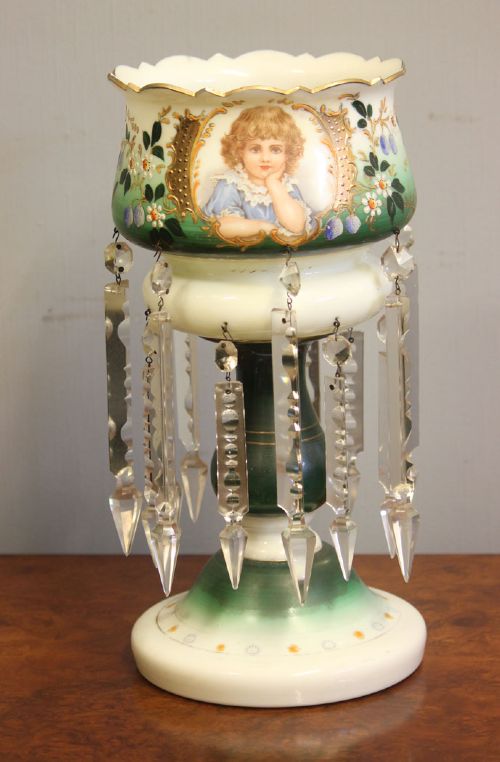
Antique mantle lustres sit on a fireplace mantelpiece or side table, combining a candleholder with a ring of hanging crystal drops. These decorative pieces emerge primarily in the nineteenth century, spanning Victorian and Regency periods with occasional Edwardian examples.
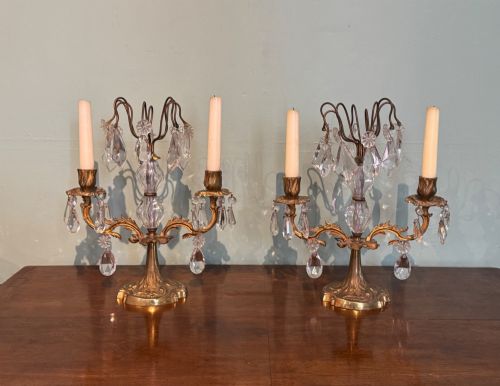
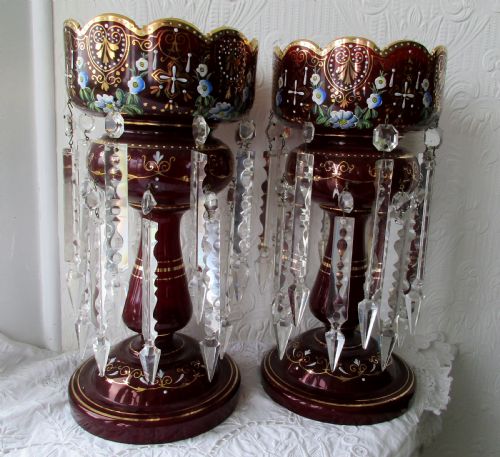
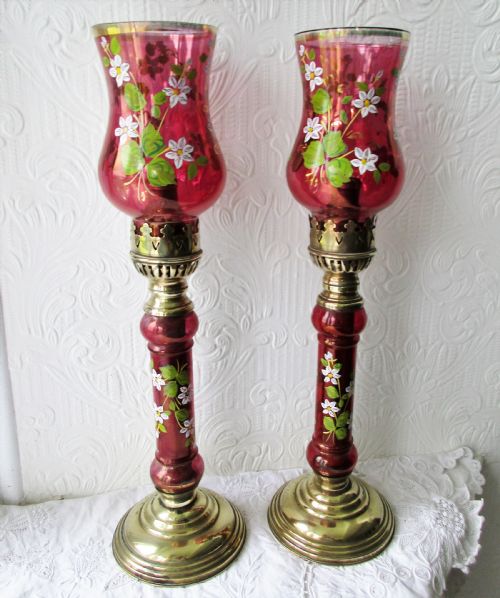
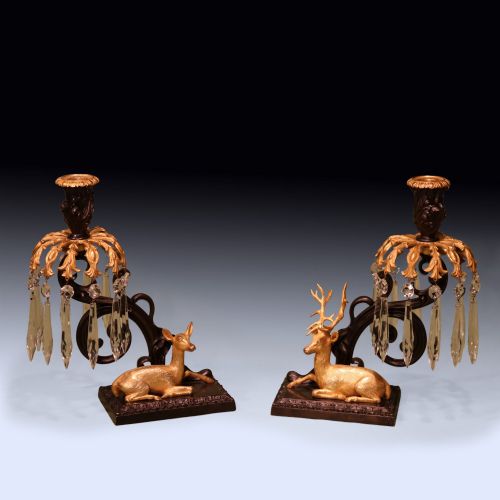
The most common form on this page is the pair of glass mantle lustres, often rendered in deep ruby, cranberry, pink opaline, or Bristol blue glass. Single lustres and variations incorporating brass, bronze, ormolu, and storm shades also appear among the selections.
Origin varies between English workshops and French Empire or Rococo Revival styles, showing diverse decorative idioms from simple cut crystal to elaborate hand-painted bodies. Buyers encounter both matched pairs designed for mantel symmetry and individual statement pieces.
How they were made
Glassmakers shaped the central body through blowing and moulding, frequently employing flash glass techniques to create layered colours that could be cut back to reveal clear glass underneath. Coloured glass varieties like cranberry and ruby required specific metallic oxides added to the molten batch.
Cut glass and crystal drops were shaped by hand on grinding wheels, then drilled and suspended from the rim using wire loops or metal pins. Metal components such as gilt brass, bronze, and ormolu provided sturdy bases and structural mounts for the glass shafts.
Stag and doe figures occasionally guard the candles, bringing a touch of the nineteenth-century forest directly onto the mantelpiece.
What varies in quality
Quality rests heavily on the crispness of the glass cutting and the depth of colour in the body. Superior examples display heavy lead crystal with sharp facets that refract light cleanly, alongside rich, saturated hues in the glass rather than thin surface staining.
The completeness and originality of the hanging crystal drops dictate the standing of a piece. Lustres retaining their full complement of matched, period-correct drops command greater regard than those with mismatched or replacement pendants.
The Antique Mantle Lustres Glossary
- Lustre
- An ornamental candlestick or vase fitted with a ring of pendant glass drops designed to reflect light. These pieces gained popularity during the nineteenth century for illuminating formal rooms.
- Flash glass
- Glass composed of a thin layer of coloured glass fused over a colourless or contrasting base. Cutting through the top layer exposes the underlying glass to create patterns.
- Ormolu
- Gilded bronze or brass mounts used extensively in French-style decorative arts. The technique involves applying a gold amalgam to a bronze base.
- Opaline glass
- An opaque or semi-translucent glass, often tinted in soft pastel shades such as pink. It provides a smooth, milky surface popular in Victorian decorative wares.
- Prism
- A cut glass pendant suspended from the rim of a lustre. These drops disperse candlelight into spectral colours.
Antique Mantle Lustres: Frequently Asked Questions
How do I clean antique mantle lustres safely?
Remove the hanging crystal drops individually before cleaning to prevent them from striking each other and chipping. Wash each component gently in lukewarm water with mild soap, avoiding harsh chemical cleaners that might damage gilt surfaces.
Dry every piece thoroughly with a soft lint-free cloth before reassembling the drops onto the frame. Take care around hand-painted details or gold leaf accents, which require a light touch to preserve.
Were mantle lustres meant to hold candles?
These pieces functioned primarily as ornamental objects rather than everyday light sources, despite incorporating a candle socket at the top. The central candle flame served to illuminate the hanging glass drops, creating a decorative sparkle.
Many surviving examples show little or no wax residue in the wells, confirming their decorative role in the Victorian parlour.
How do I spot replacement crystal drops?
Examine the glass colour, weight, and cutting style of the pendants relative to the central body. Replacement drops often use modern machine-cut glass that feels lighter and shows sharper, more uniform machine facets than nineteenth-century hand-cut crystal.
Check the suspension wires as well, as old wire fixings typically show natural oxidation and wear consistent with the age of the base.
Did lustres always come in pairs?
Makers produced both matched pairs for symmetrical placement on a mantelpiece and single pieces meant for smaller spaces or side tables. Pairs remain the most sought-after configuration for formal interior display.
Single lustres appear frequently enough in the record, often serving as centrepieces or decorative accents on smaller surfaces.