
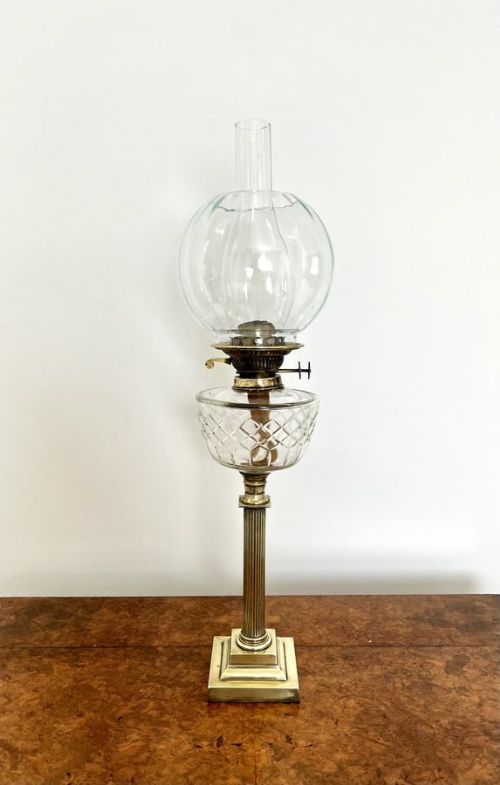
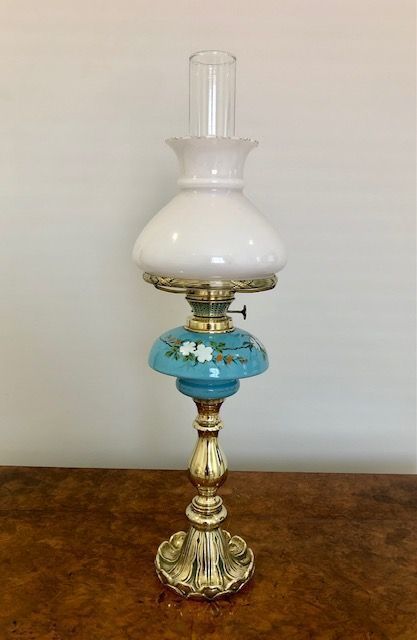
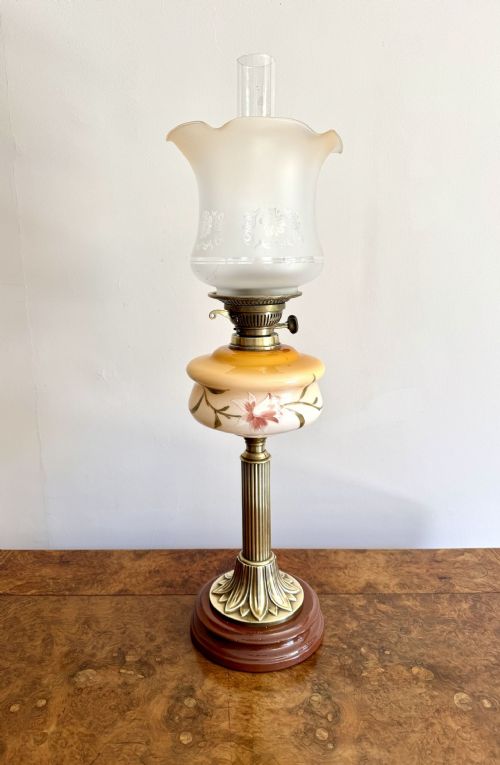
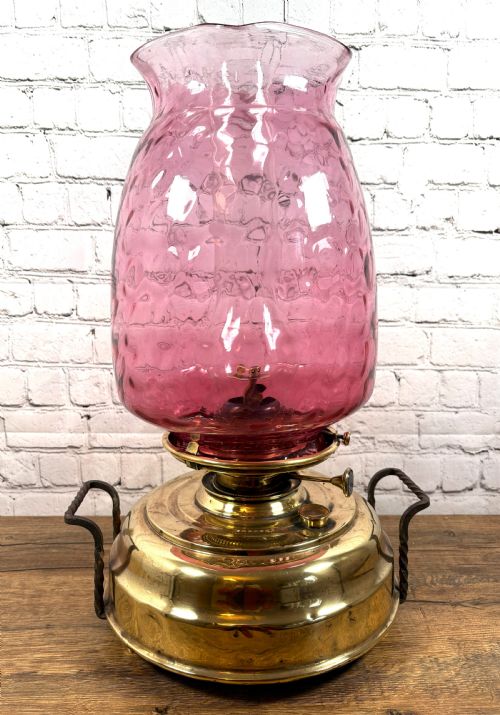


Brass Hurricane Lamps
These brass hurricane lamps are dependable nineteenth-century lighting pieces that bring a warm, steady glow to any room.
Brass Hurricane Lamps
Brass hurricane lamps span the Victorian and Edwardian eras, combining sturdy metal bases with protective glass chimneys. These functional pieces range from simple table lamps to decorative oil lamps and candle lamps.
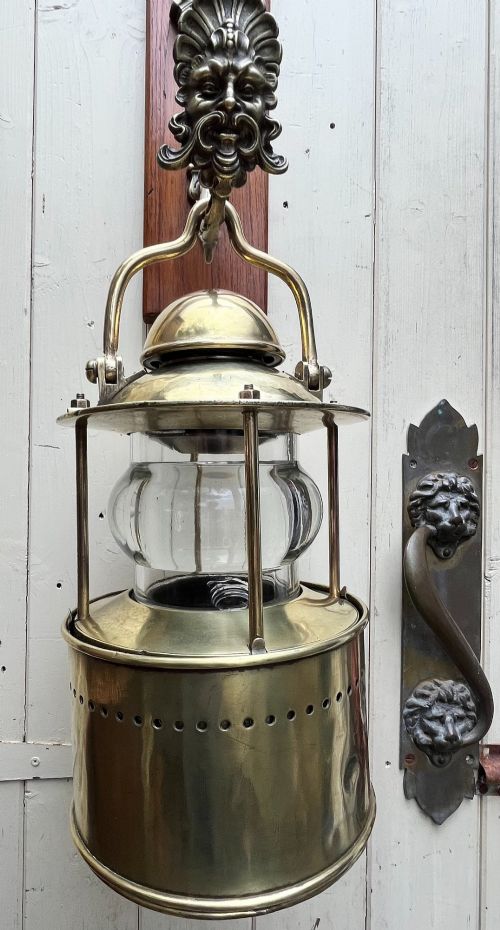
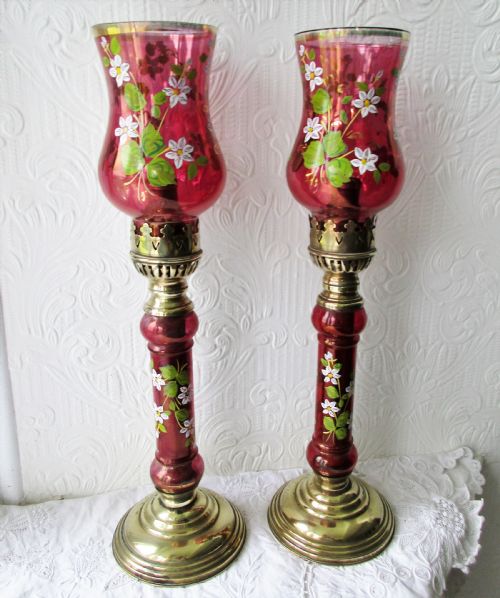
Most examples date from the nineteenth century, including specific years like 1860, 1870, 1880, and 1900. Buyers will frequently encounter oil lamps and table lamps alongside rarer forms such as wall lanterns and candlesticks with lustres.
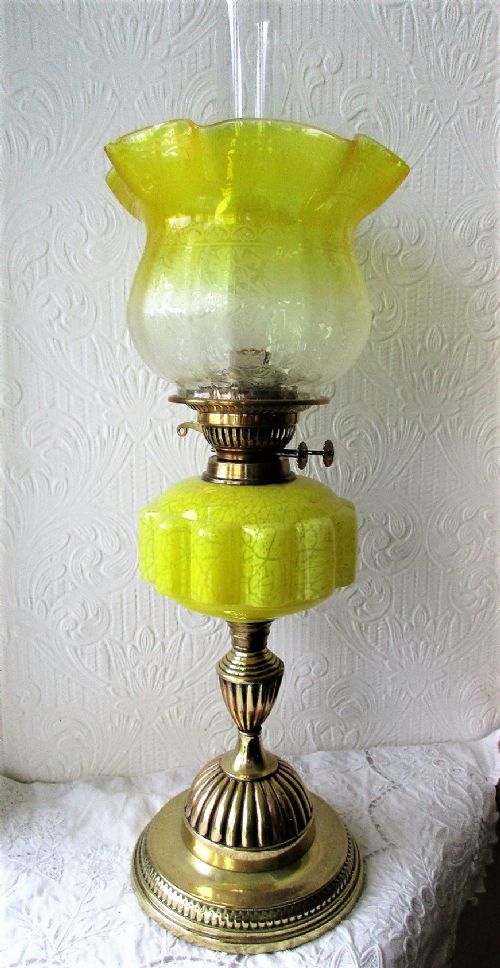
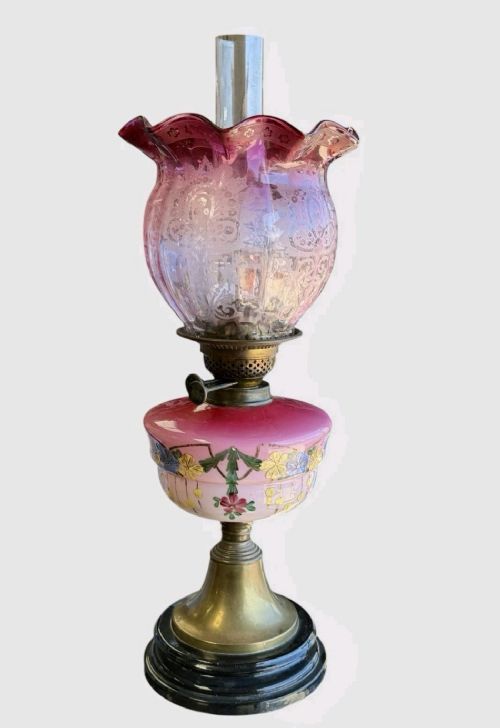
The aesthetic leans heavily towards Victorian and Rococo Revival styles, often featuring hand-painted fonts or embossed metalwork. English craftsmanship dominates the selection, frequently paired with coloured glass components.
How they were made
Makers utilised solid brass for the structural bodies, bases, and fonts, often employing turning and embossing techniques to shape the metal. This provided a durable and weighty foundation to support glass components safely.
Glass production played a vital role, incorporating cranberry glass, opaline glass, frosted glass, cut glass, and crystal for chimneys, shades, and fonts. Coloured glass added both visual depth and functional light diffusion.
Some elaborate pieces integrated ceramic elements, such as Meissen porcelain figures, alongside specialised patented designs like Cricklite systems. Hand-painted details completed the decoration on specific glass fonts and shades.
Listings span the nineteenth century up to 1900, uniting brass, cranberry glass, opaline glass, and ceramics within Victorian and Edwardian aesthetics.
What varies in quality
The calibre of the brass casting and the crispness of any embossed or turned details set superior examples apart from standard work. Weight and balance also indicate a higher standard of manufacture.
The choice and execution of the glass elements significantly influence overall merit, particularly with hand-painted fonts or specialty glass types like cranberry and opaline. Matching original chimneys and shades complete a more desirable piece.
The Brass Hurricane Lamps Glossary
- Chimney
- A tall glass cylinder placed over the burner to steady the flame and protect it from draughts. This essential component is often made of clear or tinted glass.
- Font
- The reservoir that holds the oil or paraffin beneath the burner. In these pieces, it is frequently fashioned from coloured glass or polished brass.
- Cricklite
- A patented candle lamp system popular in the Victorian period. These assemblies often utilise specialised glass candlesticks and shades.
- Lustre
- A decorative tabletop ornament featuring hanging glass prisms around a central candle or oil holder. They catch and refract the light from the flame.
- Opaline glass
- An opaque, milky-white glass used extensively for decorative shades during the nineteenth century. It diffuses a soft, even light.
Brass Hurricane Lamps: Frequently Asked Questions
Are these lamps safe for daily use?
Many nineteenth-century oil lamps remain functional, but they require careful handling and supervision when lit. Ensure the brass base is stable and the glass chimney has no cracks.
Modern buyers often use them primarily as decorative objects or ambient lighting rather than primary illumination sources.
How do I clean antique brass?
Dust the metal gently with a soft cloth to remove everyday particles. Avoid harsh chemical polishes that can strip away desirable historical patination.
Preserving the natural surface character is generally preferred by collectors over achieving a bright, modern shine.
How can I date my lamp?
Examine the construction methods, such as turned brass components versus modern machine-made fittings. Stylistic cues like Victorian embossing or Edwardian proportions also help narrow the period.
Registered design numbers or maker marks, where present, provide more precise chronological markers.