






Brass Candle Shade Lamps
Brass candle shade lamps combine adjustable illumination and classic metalwork, offering focused task lighting and period character.
Brass Candle Shade Lamps
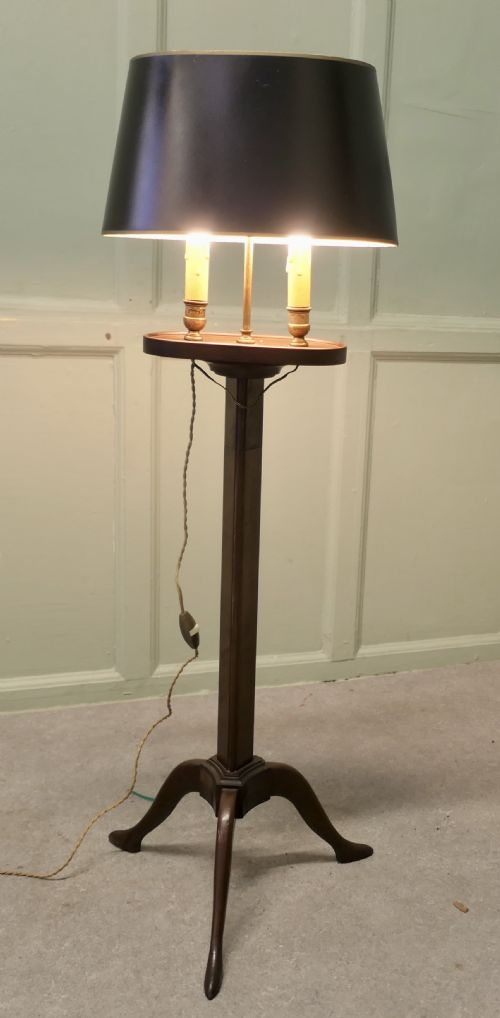
Brass candle shade lamps comprise various lighting forms designed to hold candles or adapt to them, featuring metal frames paired with shades. Buyers seeking brass candle shade lamps will encounter desk lamps, wall lights, and floor lamps originating from the nineteenth and early twentieth centuries.
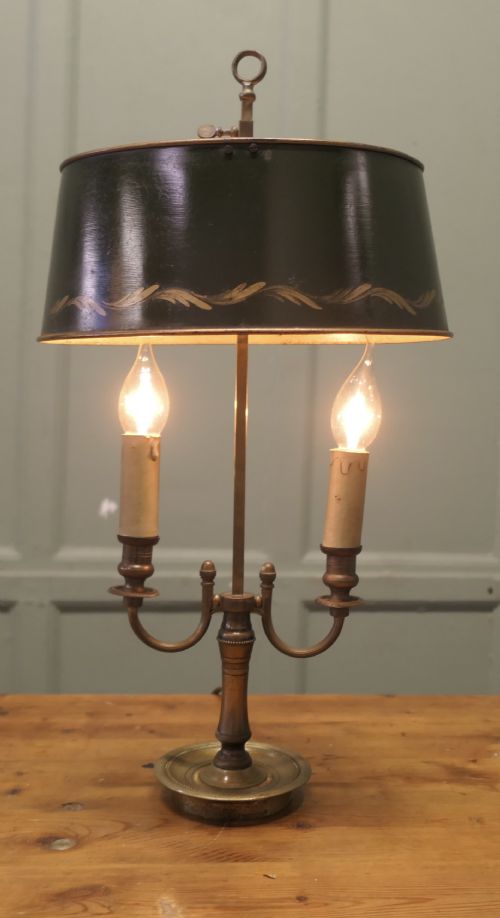
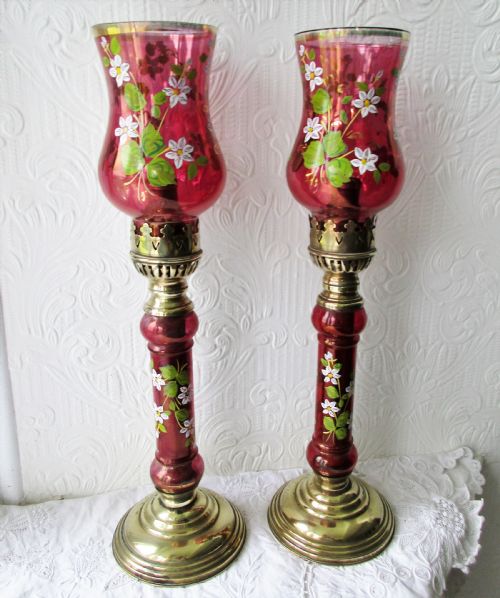
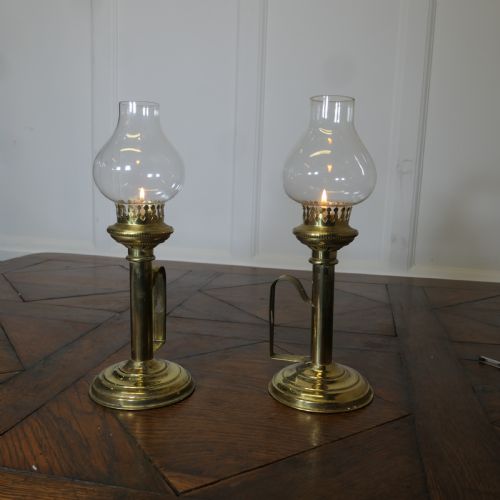
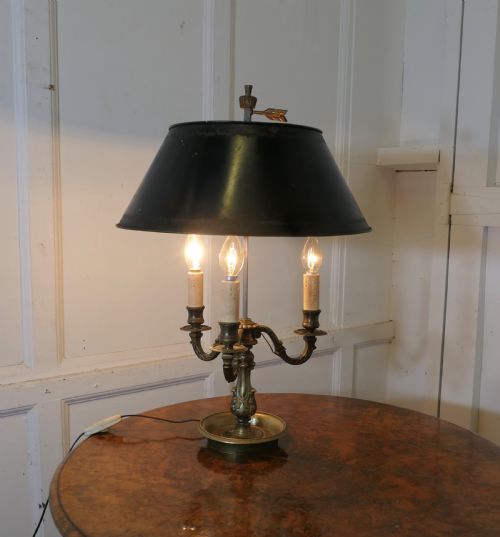
The selection ranges from French bouillotte desk lamps with toleware shades to English Victorian glass and brass variants. Most pieces reflect Victorian, Edwardian, or Regency styles, often utilising twin or triple candle arrangements.
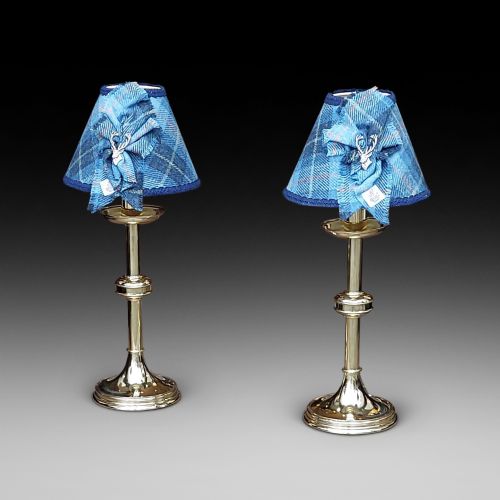
Specialised items such as scientific microscopy lamps and Gothic style candlestands also appear within this category. These pieces demonstrate the practical evolution of domestic and specialised illumination over successive decades.
Materials and Construction Techniques
Makers constructed the primary frames and supports using cast and spun brass, sometimes pairing the metal with mahogany bases or structural elements. Toleware, painted metal, and enamel provided the material for adjustable shades, frequently rendered in green or other traditional hues.
Glass elements such as chimneys, shades, and cranberry or ruby glass components were incorporated to direct or soften the light. Assembly relied on threaded fittings, pivoting joints for adjustable arms, and fitted cases for specialised scientific apparatus.
Listings feature brass combined with toleware, cranberry glass, and painted metal across Victorian, Edwardian, and Regency styles.
Factors Determining Quality
Quality rests upon the weight and precision of the brass casting, alongside the integrity of any mechanical adjustment mechanisms for height and shade position. Finer examples retain original painted finishes on toleware shades and undamaged period glass components.
The presence of maker signatures, original fitted cases, or matched pairs elevates the standing of individual pieces. Superior proportion and refined detailing across styles from French Empire to Gothic Revival distinguish better examples.
M Pillischer of London·F. & C. Osler
The Brass Candle Shade Lamps Glossary
- Bouillotte lamp
- A type of adjustable desk lamp featuring a central standard, candle arms, and a movable shade that lowers as the candles burn down.
- Toleware
- Painted or lacquered sheet metal, commonly utilised for lamp shades in green, red, or dark tones during the nineteenth century.
- Cranberry glass
- A translucent pink-red glass created by adding gold chloride to the molten batch, often seen in Victorian lighting components.
- Gothic Revival
- An architectural and decorative style drawing inspiration from medieval forms, characterised in metalwork by pointed arches and ecclesiastical motifs.
- Glass chimney
- A narrow tubular glass shade placed over a flame to steady the light and protect surrounding materials.
Brass Candle Shade Lamps: Frequently Asked Questions
What are brass candle shade lamps?
These pieces are historical lighting fixtures built from brass and paired with adjustable shades made from toleware or glass. They encompass desk lamps, wall lights, and floor models designed for focused illumination.
Most examples date from the Victorian and Edwardian periods, reflecting French and English stylistic influences. They demonstrate how historical interiors managed task lighting before widespread electricity.
How were these lamps used?
Owners placed them on desks, tables, and walls to direct light downwards for reading, writing, or detailed work. The adjustable shades allowed users to control the pool of light as candles burned.
Some specialised versions served in scientific settings, such as microscopy, where precise illumination was essential. Others functioned as decorative room lighting in grand domestic interiors.
How do I live with them?
Integrate them into modern interiors as accent lighting on sideboards, desks, or console tables where their warm brass surfaces stand out. They suit traditional and eclectic rooms alike, adding metallic texture and historical depth.
Keep them away from direct moisture and handle adjustable joints with care to preserve the original metalwork. Many owners use them with low-output replica candles or modern wired conversions depending on personal preference.
How do I tell periods apart?
Examine the decorative motifs, casting techniques, and material combinations to identify the era of manufacture. Regency and French Empire pieces often display classical proportions and neoclassical details, while Victorian items lean towards heavier brass work and painted toleware.
Edwardian examples frequently show lighter construction and refined proportions. Makers' marks or original fitted cases also provide definitive dating evidence.