





Victorian Brass Lustres
Victorian brass lustres catch candlelight and throw it across a room through hung glass drops.
Victorian Brass Lustres
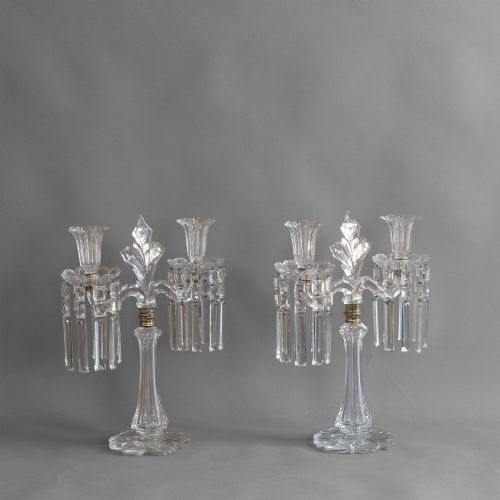
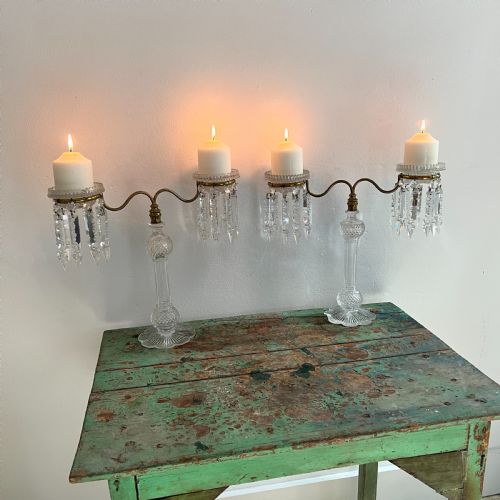
Victorian brass lustres combine metal bases and candle sockets with dangling glass prisms that refract the flame. These lighting pieces appear in forms ranging from simple pairs of candlesticks to complex candle-lamps and multi-branch candelabra.
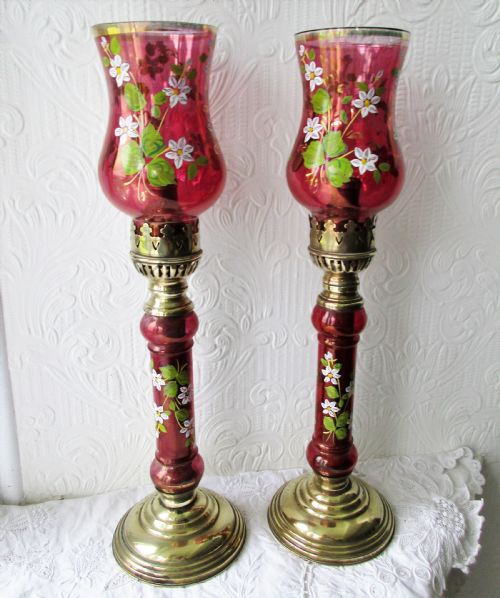
The materials span brass, gilt bronze, patinated bronze, and ormolu paired with crystal, cut glass, cranberry glass, and enamel. Influences from French Empire, Rococo Revival, French Chateau, and William IV styles shape their silhouettes.
Examples on this page draw from 18th century, Regency, and Victorian periods up to nineteen hundred. Buyers encounter pairs of table lustres, fitted storm shades, and specific designs like Clarkes Cricklite candelabra.
How they were made
Foundry workers cast brass, gilt bronze, and ormolu into structural stems and bases, sometimes applying patination or gilding to the metal surfaces. Glassmakers blew and cut crystal and cranberry glass components, forming bowls, shafts, and hanging prisms.
Assembly involved piercing the metal work to suspend glass drops on wire loops or pins around the candle nozzle. Enamel details and storm shades added layers of decoration and function to protect the flame.
Victorian Brass Lustres Retail Price Guide 2026
Typical asking prices for victorian brass lustres among the pieces listed under this phrase on Sellingantiques today, from the lower quarter to the upper quarter. They describe what is for sale here now, not the wider market.
Some lustre drops are cut so precisely they cast miniature rainbows across the wallpaper when the afternoon sun hits them.
What varies in quality
Quality rests on the crispness of the metal casting and the depth of the hand-cut facets on the glass drops. Sharp, well-defined chasing in gilt bronze and heavy, clear crystal prismatic cuts separate finer works from simpler production.
The completeness of the hanging lustres and the matching weight of the glass components dictate the integrity of a pair. Integrated elements such as original storm shades or signed maker components elevate the piece.
Clarkes
The Victorian Brass Lustres Glossary
- Lustre
- A candlestick or candelabrum hung with cut glass pendants that catch and multiply the light. These glass drops move gently in air currents.
- Cricklite
- A patented candle-lamp system often incorporating brass and cut glass, designed by Clarkes for safe table lighting. They frequently feature protective glass shades.
- Ormolu
- Gilded bronze produced by applying a mercury and gold amalgam to a bronze base and heating it. This technique creates a rich, lasting metallic sheen.
- Cranberry glass
- Transparent red glass coloured with gold chloride during manufacture. It adds vivid colour to the hanging drops or body of the lighting.
- Storm shade
- A tall glass cylinder placed over the candle to steady the flame against drafts. They attach securely to the top of the lustre.
Victorian Brass Lustres: Frequently Asked Questions
What are Victorian brass lustres?
These are decorative lighting pieces made from brass or gilt metal, fitted with glass pendants that sparkle when candles are lit. They were designed to sit on mantelpieces, sideboards, or dining tables.
Craftsmen combined metal casting with glass cutting to produce matched pairs that enhanced the interior illumination of period homes.
How were lustres used?
People placed them in reception rooms and parlours where the hanging glass drops could reflect candlelight during evening gatherings. They served both as functional light sources and as ornamental centrepieces.
Some variants included storm shades to protect the flame from draughts in drafty 19th-century rooms.
How do I live with them?
Place them away from heavy foot traffic where dangling glass drops might be brushed against or dislodged. Position them on stable surfaces like mantelpieces or side tables to let natural and artificial light play through the crystal.
Cleaning requires gentle dusting of the metal and careful washing of individual glass drops in warm soapy water.
How do I tell periods apart?
Regency and William IV pieces often display classical restraint with patinated bronze and ormolu, while later Victorian examples embrace elaborate Rococo Revival curves or gilt bronze. Materials shift from 18th-century heavier cut glass traditions toward varied coloured glass like cranberry in the later 19th century.
Construction methods also help date pieces, noting how the brass is cast and how the glass drops are attached to the bobeche.