




Cut Crystal Drop Lustres
Cut crystal drop lustres are decorative mantel ornaments and candle holders designed to catch the candlelight, and you want a pair for their brilliant sparkle.
Cut Crystal Drop Lustres
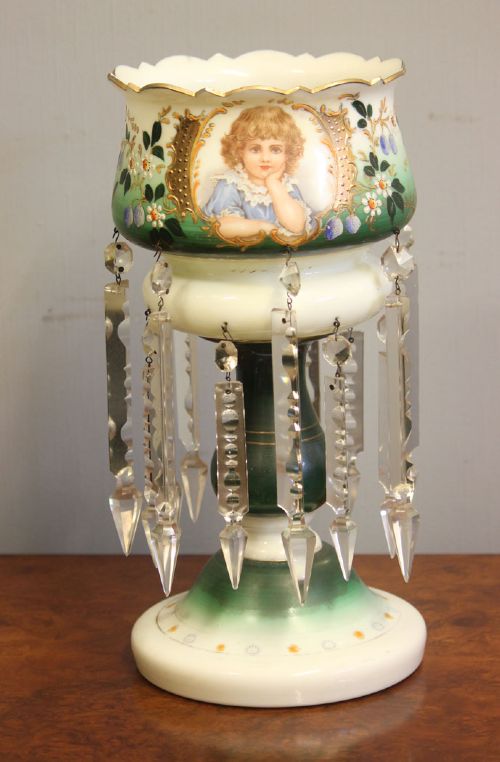
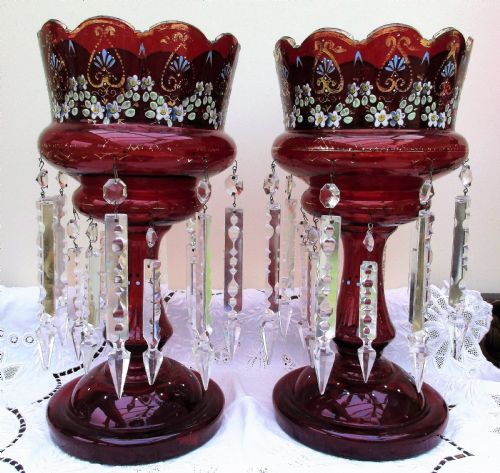
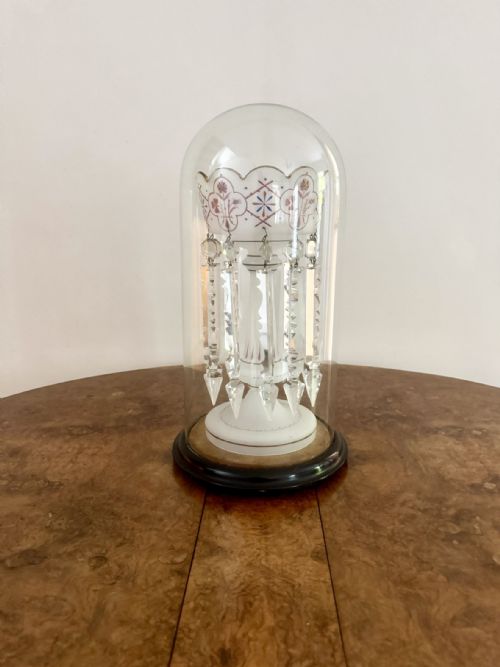
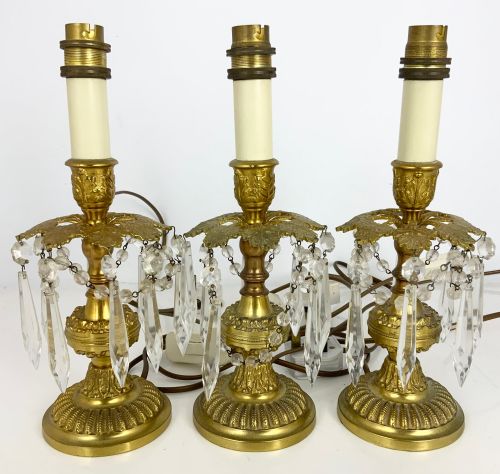
Cut crystal drop lustres are primarily encountered as mantel lustres and table lustres, often formed as pairs intended to sit on either side of a clock or urn. These pieces function as decorative candle holders or decorative ornaments fitted with dangling crystal prisms that refract light into the room.
The pieces on this page span the Regency, William IV, and Victorian eras through to the Edwardian period, with Victorian examples in ruby, green, cranberry, and uranium glass appearing frequently alongside clear cut glass. French influences also emerge through gilt brass and ormolu mounts, French Chateau styles, and Rococo Revival forms.
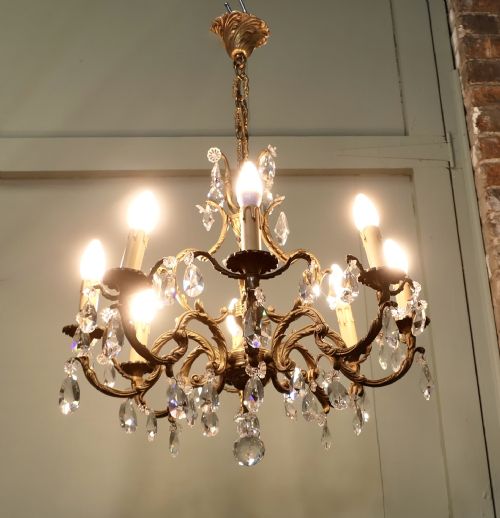
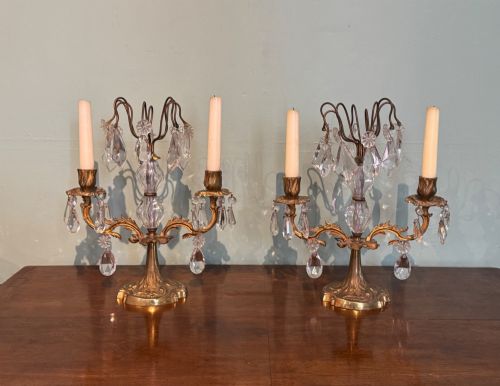
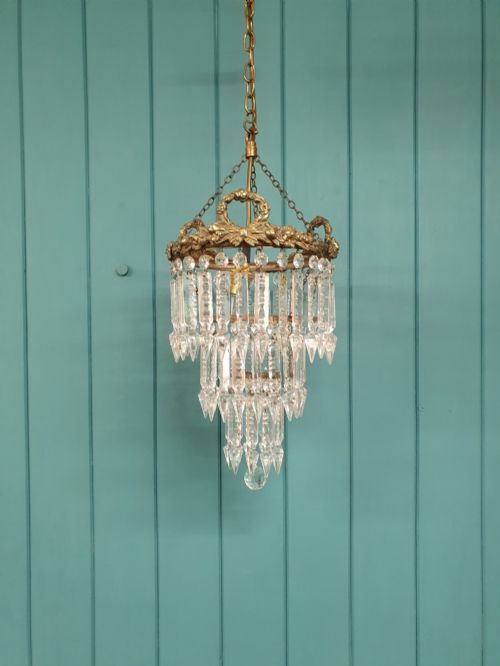
Beyond standalone mantel garnitures, the evidence shows these characteristic hanging drops utilised on table candelabras, candlesticks, and larger chandeliers. Whether you examine a simple pair of clear glass candlesticks or an elaborate French gilt brass chandelier, the defining characteristic remains the suspended crystal drops.
Assessing Quality and Execution
Quality rests heavily on the depth and crispness of the glass cutting, where sharper facets create cleaner light refraction while softer edges suggest lower grade production. The weight of the glass body and the clarity of the crystal material itself dictate the overall substance of the piece.
The completeness and matching nature of the hanging crystal drops influence the integrity of a set. Superior examples retain their original faceted prisms, securely mounted on substantial brass or gilt metal frames that show careful chasing and secure structural joints.
Listings feature items spanning the Regency period, William IV era, and Victorian times through to the Edwardian era.
The Cut Crystal Drop Lustres Glossary
- Lustre
- A decorative candlestick or vase featuring a ring of hanging crystal pendants designed to refract light. They became immensely popular during the Regency and Victorian periods for interior illumination.
- Cranberry glass
- A rich red-pink transparent glass coloured with gold chloride during production. It is frequently seen in Victorian mantel garnitures.
- Flash glass
- A glass object made by fusing a thin layer of coloured glass over a thicker body of clear glass. Craftsmen then cut through the top layer to reveal the clear glass beneath, creating sharp geometric patterns.
- Ormolu
- Gilt bronze mounted on decorative objects, created by applying a mercury and gold amalgam to cast bronze. The technique gives a rich golden finish seen on finer French table lustres.
- Mantel lustre
- An ornamental candle holder designed specifically to sit on a fireplace mantelpiece. They double as visual centrepieces when unlit due to their colourful glass bodies and dangling crystal prisms.
Cut Crystal Drop Lustres: Frequently Asked Questions
What is a lustre?
A lustre is a type of decorative candlestick or vase fitted with a circle of hanging glass drops. These prisms catch and multiply the light from candles or daylight.
They were designed primarily as decorative garnitures for mantelpieces and side tables during the nineteenth century.
How do I style mantel lustres?
Mantel lustres are traditionally displayed as pairs on a fireplace mantel, often flanking a clock or a decorative mirror. Their reflective drops bring light into darker corners of a room.
They also sit effectively on sideboards, chests of drawers, or console tables where light can pass through the crystal drops.
Are all lustres made of clear crystal?
While clear cut crystal is common, many period examples utilise coloured glass bodies. Victorian makers produced them in ruby, green, cranberry, and milk glass.
Coloured variants often feature hand-painted enamel details or flash glass cutting that exposes the clear glass underneath.
How do I spot a Regency lustre?
Regency lustres typically exhibit classical proportions, precise diamond cutting, and often incorporate bronze or ormolu mounts. The glass tends to be heavy and exceptionally clear.
Later Victorian versions frequently embrace brighter colours like ruby or cranberry, alongside more ornate Revival styling.