



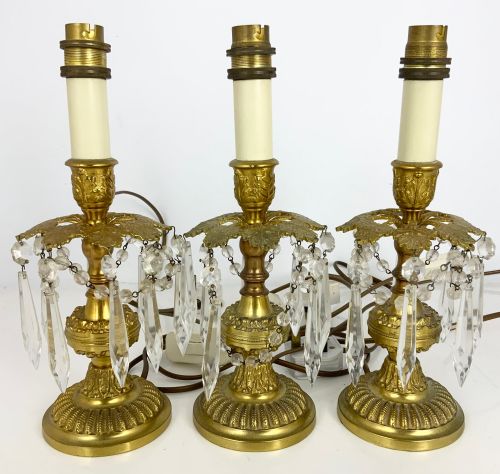


Pair Glass Mantel Lustres
These pair glass mantel lustres are decorative nineteenth-century ornaments that catch and reflect candlelight through suspended crystal pendants.
Pair Glass Mantel Lustres
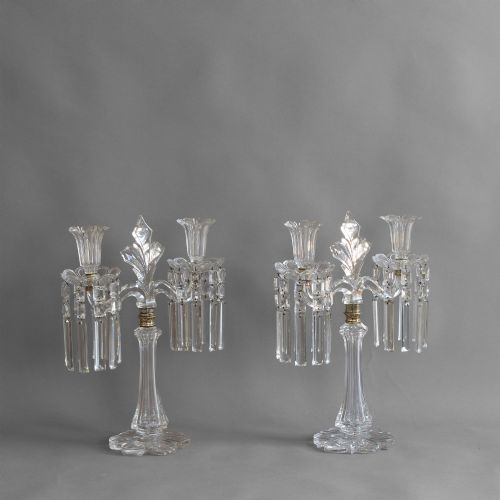
These pair glass mantel lustres are decorative dual mantelpieces ornaments designed to refract candlelight across nineteenth-century rooms. The listings on this page consist primarily of Victorian examples, alongside pieces from the Regency and William IV periods, functioning as both candleholders and sparkling focal points.
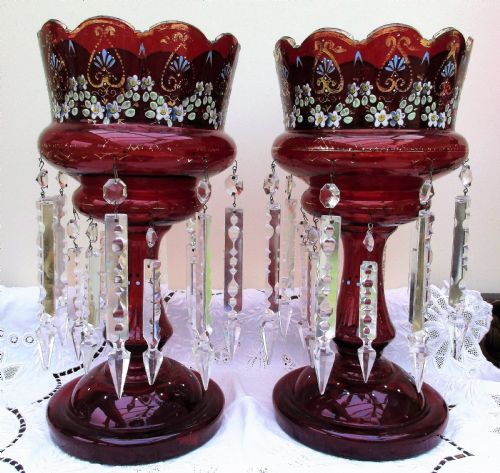
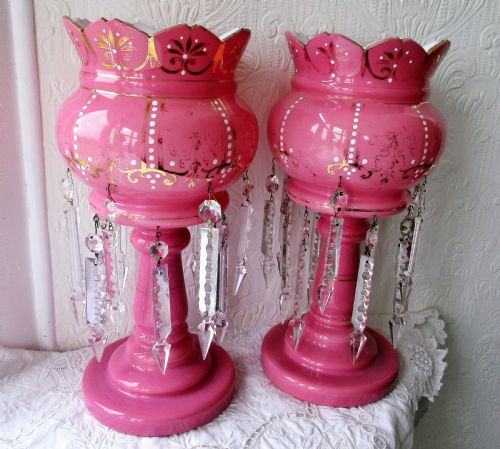
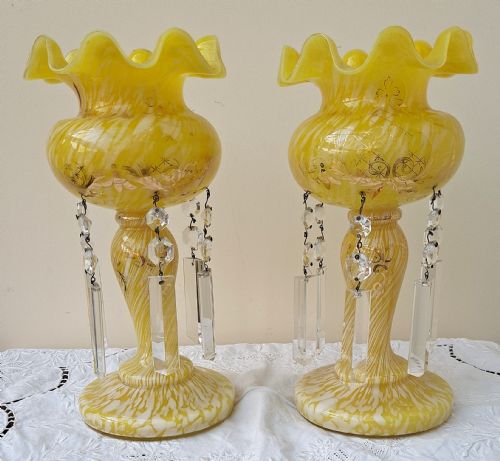
Most items appear as pairs of table or mantel lustres, manufactured in saturated colours like ruby, green, pink, yellow, and white opaline glass. They incorporate hanging glass prisms or drops suspended from a central sconce, originating from English and Bohemian workshops.
How they were made
Glassmakers shaped these pieces using heavy crystal and coloured flash glass, often employing overlay techniques where a clear or white layer of glass is cased in ruby or green before being cut away. This method exposed contrasting colours beneath the surface, creating depth when polished.
Many examples combine moulded or cut glass bodies with gilt metal fittings, brass components, and hand-painted enamel or gold leaf decoration. Cut-glass facets were ground by hand to maximise the prism effect of the hanging drops.
Victorian dining rooms grew brighter when ruby glass lustres multiplied every flicker of candlelight into dozens of ruby reflections.
What varies in quality
The distinction between standard and finer pair glass mantel lustres rests on the depth of the glass colour, the precision of the hand-cut facets, and the richness of any gilding or enamel work. Bohemian overlay pieces demonstrate greater technical complexity through layered glass cutting.
Proportion and scale also dictate quality, with larger nineteenth-century specimens commanding attention through substantial weight and well-balanced brass or gilt fittings. The completeness and original matching form of the hanging crystal drops influence the visual integrity of each pair.
The Pair Glass Mantel Lustres Glossary
- Lustre
- A decorative candlestick or candelabrum fitted with hanging glass pendants designed to reflect light. They were traditionally placed on mantelpieces and tables during the nineteenth century.
- Flash glass
- A thin layer of coloured glass fused over a colourless or contrasting base glass before being cut through to reveal the underlayer. This technique created sharp two-tone decorative patterns.
- Opaline glass
- An opaque, slightly translucent pale glass popular in nineteenth-century French and English decorative wares. It often appeared in soft pastel shades or brilliant white.
- Prism
- A cut-glass pendant suspended from the rim of a lustre to catch and refract light. These drops are typically attached by small brass wire hooks.
- Gilt metal
- Base metal treated with a thin layer of gold paint, leaf, or electroplating to simulate solid gold. It frequently frames the base and collar of glass mantel ornaments.
Pair Glass Mantel Lustres: Frequently Asked Questions
What are glass mantel lustres?
These decorative glass objects combine a candlestick or vase form with a ring of hanging crystal prisms. They were designed to sit on mantelpieces to amplify the flickering glow of candles.
During the nineteenth century, they served as both functional lighting and vibrant ornamental centerpieces in formal rooms.
How were they used?
People placed them on living room mantelpieces, side tables, and dining room sideboards to brighten dark Victorian interiors. When lit, the candles caused the glass pendants to sparkle and cast coloured light around the room.
They functioned primarily as decorative showpieces rather than main light sources, often remaining unlit during daylight hours.
How do I clean them?
Dust the glass body and hanging pendants gently with a soft, dry cloth to prevent scratching the surface or delicate gilding. For deeper cleaning, remove the glass drops and wash them individually in lukewarm soapy water before drying thoroughly.
Avoid submerging metal mounts or using harsh chemical cleaners that might damage gold leaf or enamel details.
How do I date a lustre?
Dating relies on examining the manufacturing techniques, glass colours, and stylistic markers recorded across the nineteenth century. Victorian examples often feature rich ruby or green flash glass, while Regency pieces lean toward cut crystal with gilt metal mounts.
The shape of the base, the cut of the prisms, and the weight of the glass help distinguish earlier Georgian forms from later Victorian production.