

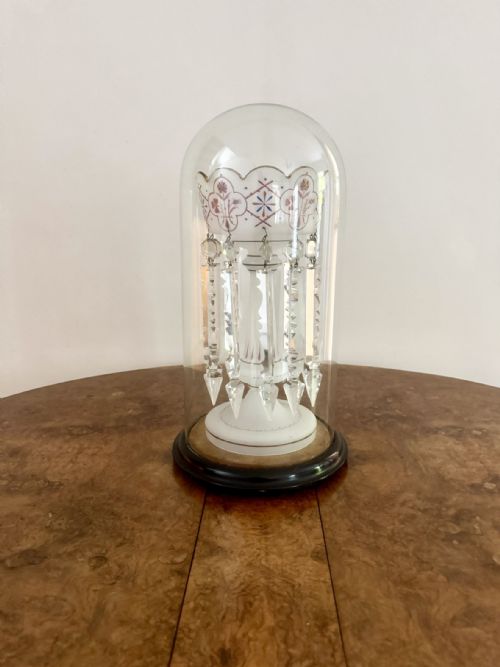


Victorian Crystal Mantel Lustres
Victorian crystal mantel lustres are glowing glass ornaments hung with crystal prisms, designed to catch and refract the flickering light of nineteenth-century rooms.
Victorian Crystal Mantel Lustres
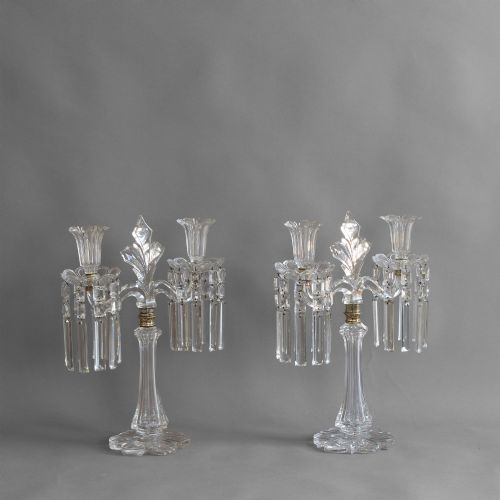
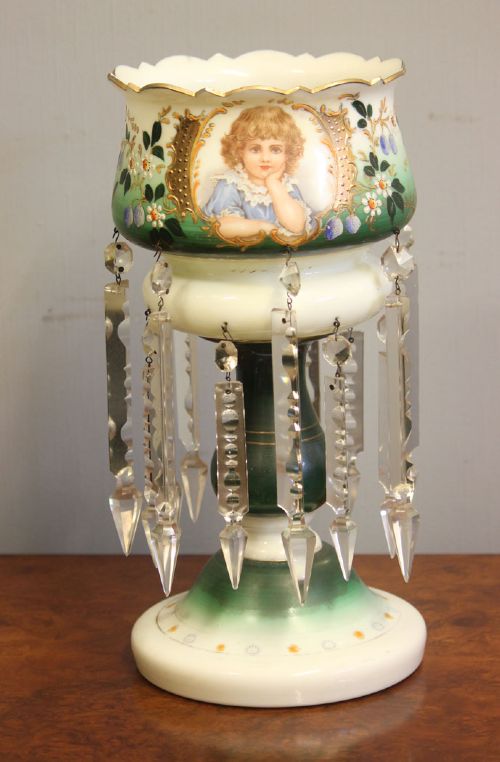
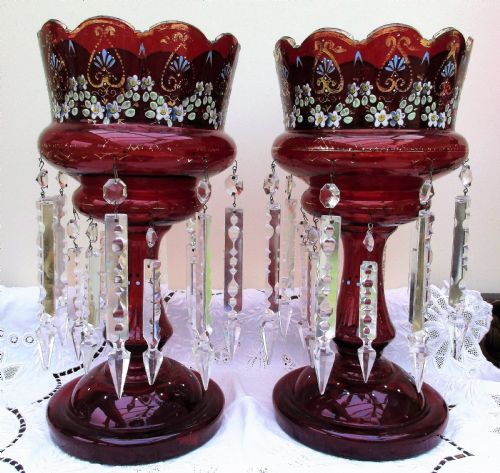
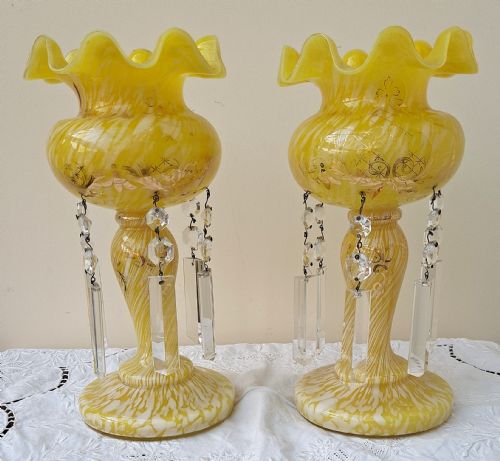
Victorian crystal mantel lustres are decorative display pieces designed to sit upon a fireplace mantel or a centre table, combining the function of a candlestick with the visual display of hanging crystal prisms. You are most likely to encounter matched pairs in vibrant coloured glass, particularly ruby, cranberry and green, alongside examples in opaline or clear cut glass. These items originate predominantly from the nineteenth century, including specific periods from the 1860s through to 1900, with occasional earlier Regency and William IV forms appearing in the listings.
The objects take various structural forms, spanning mantel lustres, table lustres and candelabras that incorporate socket mounts for candles. Many survive as pairs or sets, featuring long pendant drops suspended from a central sconce or bowl by means of wire loops or pins. While some pieces are strictly English or Bohemian in origin, others display French influences such as opaline glass or overlay techniques.
How they were made
The fabrication of these pieces relies heavily on blown and moulded glass, which was frequently layered using flash or overlay techniques to create contrasting colours. Makers then cut facets into the crystal and glass bodies by hand, producing sharp geometric patterns that maximise the refraction of light through the material. Lustres often incorporate gilt highlights, gold leaf, enamel painting and bronze or ormolu mounts to embellish the primary glass structure.
Hanging prisms, commonly referred to as drops, were individually shaped, cut and drilled before being attached to the upper rim with metal connectors. The integration of ruby glass, cranberry glass and green glass required precise chemical colouring agents within the molten batch during production. Artisans combined these coloured glass bodies with heavy circular bases and slender stems to ensure stability on the mantelpiece.
Listings feature items spanning the 18th century, Regency, William IV and Victorian eras, rendered in crystal, ruby glass, enamel and gold leaf.
What varies in quality
The distinction between ordinary and superior pieces rests heavily on the depth of the glass colour, the clarity of the crystal cut and the presence of hand-painted enamel or gilding. Rich ruby and cranberry hues, combined with crisp, deep hand-cutting rather than smooth moulding, indicate a higher grade of manufacture. Furthermore, the substantial weight of the glass body and the presence of original, matching crystal drops rather than later replacements elevate the standing of an individual pair.
Makers who incorporated sophisticated overlay glass techniques or detailed gilt enrichment produced pieces with greater visual complexity. The proportion between the central stem, the bowl and the length of the hanging prisms dictates the overall elegance of the silhouette. Pieces retaining all their original crystal pendants without chips to the delicate facets command greater appreciation among collectors.
The Victorian Crystal Mantel Lustres Glossary
- Lustre
- A decorative glass or crystal stand fitted with hanging glass prisms designed to catch and reflect light. These items typically functioned as decorative mantel ornaments rather than primary lighting sources.
- Prism
- A cut glass or crystal pendant suspended from the rim of a lustre to refract light. They are also known as drops.
- Ruby glass
- A deep red glass produced by adding gold or copper compounds to the molten batch during manufacture. It is a defining colour found across many nineteenth-century examples.
- Overlay glass
- A technique where a layer of coloured glass is fused over a base layer of clear or white glass, then selectively cut away to reveal the contrasting colour underneath. Bohemian makers frequently utilised this method.
- Opaline glass
- An opaque, milky-white or pastel-tinted glass popular in nineteenth-century decorative objects. It often provides a smooth, porcelain-like surface for enamel decoration.
Victorian Crystal Mantel Lustres: Frequently Asked Questions
What are mantel lustres?
Mantel lustres are decorative nineteenth-century glass or crystal ornaments designed to display hanging prisms around a central candle socket. They were placed on fireplace mantelpieces to catch and multiply the flickering light of the room.
While they can hold candles, their primary purpose was ornamental, showcasing vibrant colours like ruby, green and cranberry glass alongside detailed cutting and gilding.
How do I clean my lustres?
Cleaning requires removing the delicate crystal drops and washing them individually in lukewarm soapy water using a soft cloth. Harsh chemicals must be avoided to protect any gold leaf, enamel painting or gilt highlights on the glass body.
Care should be taken when reattaching the prisms with their metal connectors to prevent scratching the glass surface or chipping the fragile cut facets of the crystal.
Are these pieces functional?
Many examples include a socket designed to hold a standard taper candle, allowing them to function as both candlesticks and decorative ornaments. However, due to their age and the presence of hanging crystal prisms, modern owners typically display them unlit.
Their main role in a room is visual, utilising daylight or ambient room lighting to create shimmering reflections through the cut glass drops.
How do I identify Bohemian glass?
Bohemian glass is frequently identified by rich overlay techniques, where multiple layers of coloured glass are cut away to expose contrasting under-layers. These pieces often feature bold ruby or cranberry shades paired with heavy gilding and intricate hand-painted floral motifs.
The craftsmanship reflects the strong glassmaking traditions of nineteenth-century Central Europe, distinguishing them from plainer English or French opaline productions.