


Crystal Chandelier Lustres
Crystal chandelier lustres are decorative glass drops and prisms that catch and refract candlelight or electric light, bringing brilliant sparkle and period elegance to any interior.
Crystal Chandelier Lustres
Crystal chandelier lustres are hanging glass drops and prisms designed to adorn chandeliers, candelabras, and ceiling lights. When searching for crystal chandelier lustres, you encounter everything from individual cut-glass drops to entire antique chandeliers and table candelabras hung with lustres.
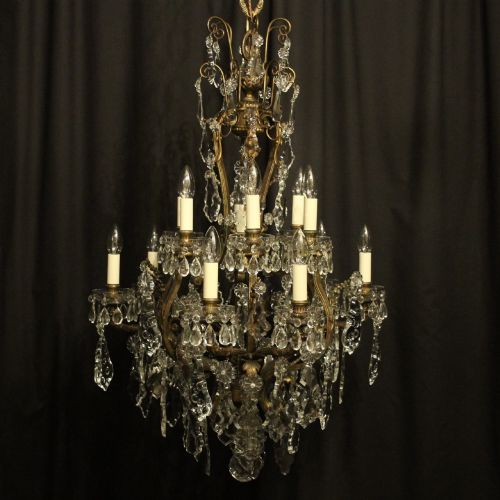
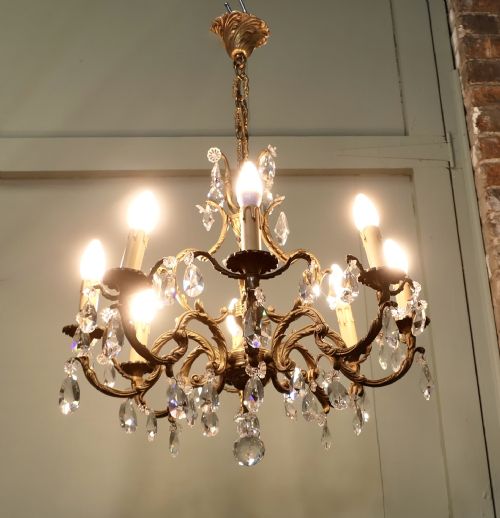
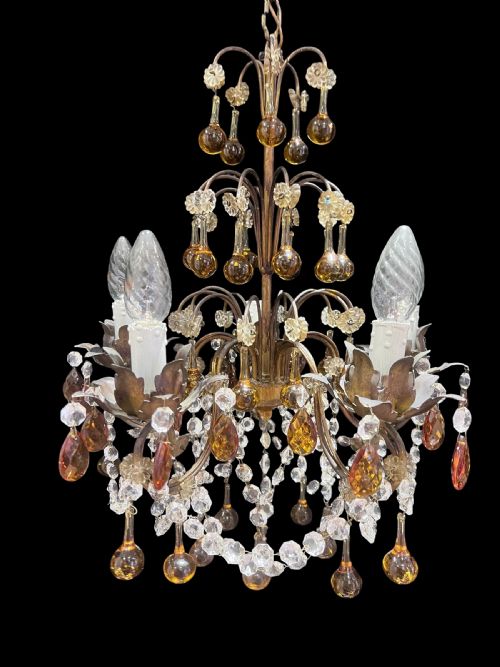
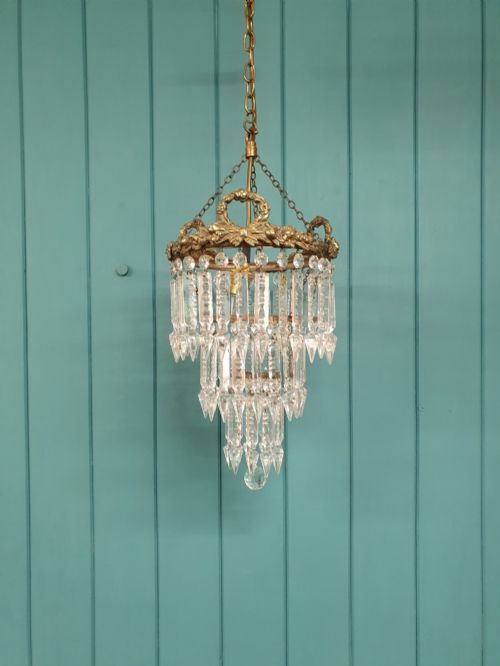
The pieces on this page span the Victorian and Edwardian eras through to the early twentieth century, originating from British, French, and Italian workshops. Forms range from small nine-inch lustre chandeliers to large multi-light fixtures in French gilt-brass and Italian Florentine styles.
You are most likely to meet twentieth-century small lustre chandeliers alongside nineteenth-century French gilded bronze fixtures decorated with extensive crystal drops. These items reflect traditional manufacturing methods that prioritise refractive optical clarity and formal symmetry.
How they were made
Makers utilised lead glass and crystal glass, cutting the material by hand to create sharp facets that maximise light dispersion. These glass components combine with structural frames cast in brass, gilded bronze, and gilt metal.
Metal components such as bronze and brass provide a sturdy armature for the numerous glass drops, which attach via wire loops or metal pins. Gilt finishes and silver plating on the bronze frames enhance the reflective quality of the hanging crystals.
Listings feature lead glass, cut glass, and crystal glass mounted on gilded bronze, brass, and gilt metal frames.
What varies in quality
Quality rests primarily in the purity of the glass and the precision of the hand-cutting on each lustre. Finer pieces feature high lead content glass that yields superior clarity and sharp, clean facets rather than soft or rounded edges.
The substance of the metalwork also distinguishes the range, as heavier cast bronze and brass frames securely support complex arrangements of drops without flexing. Artisanal chasing on the metal mounts and the uniformity of the crystal components indicate careful workshop production.
The Crystal Chandelier Lustres Glossary
- Lustre
- A cut-glass pendant or drop hung from a chandelier, candelabra, or wall sconce to reflect light. These prisms come in various shapes including spears, pear drops, and buttons.
- Cut Glass
- Glass shaped and patterned by holding it against a revolving abrasive wheel. This technique creates deep facets that refract light into spectral colours.
- Gilded Bronze
- Bronze metal coated with a thin layer of gold or gold-coloured alloy. This technique prevents tarnishing and gives a rich, warm metallic lustre.
- Lead Glass
- Glass containing lead oxide, which increases the weight, brilliance, and refractive index of the material. It remains the preferred medium for high-quality antique crystal components.
- Candelabra
- A branched candlestick holder designed to support multiple candles. Antique examples often incorporate suspended glass lustres to enhance their visual impact.
Crystal Chandelier Lustres: Frequently Asked Questions
What are crystal chandelier lustres?
Crystal chandelier lustres are the individual glass drops, pendants, and prisms that hang from lighting fixtures to scatter light around a room. They catch illumination from candles or bulbs and refract it through precision-cut facets.
These elements form an integral part of nineteenth and twentieth-century lighting design, particularly in grand French and Italian fixtures. Their presence transforms plain illumination into a glittering decorative feature.
How do I clean an antique lustre chandelier?
Cleaning requires patience and gentle handling to preserve both the glass and the underlying metalwork. Many people remove individual lustres carefully to wash them in lukewarm water with mild soap.
Avoid harsh chemical cleaners that can strip gilt finishes from the bronze or brass frames. Ensure every piece dries completely before reattachment to prevent moisture damage.
How do I date a crystal chandelier?
Dating relies on examining the metal casting techniques, wiring methods, and the specific cut of the glass drops. Nineteenth-century fixtures often feature heavy gilded bronze frames and hand-cut lead glass with distinct tool marks.
Edwardian and later twentieth-century pieces may show different structural assembly and standardised machine-cut facets. Comparing stylistic details like French Rococo or Italian Florentine motifs helps narrow the period.
Where should I hang a lustre chandelier?
These fixtures suit dining rooms, entrance halls, and principal reception spaces where their reflective qualities can be fully appreciated. Hanging height depends on ceiling clearance and whether the fixture sits above a piece of furniture.
Ensure the weight of the chandelier matches the load-bearing capacity of the ceiling structure. Positioning them away from high-traffic areas protects the delicate hanging lustres from accidental knocks.