

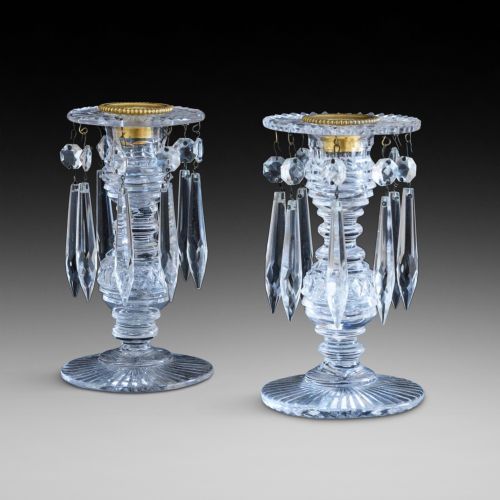


Victorian Prism Drop Candlesticks
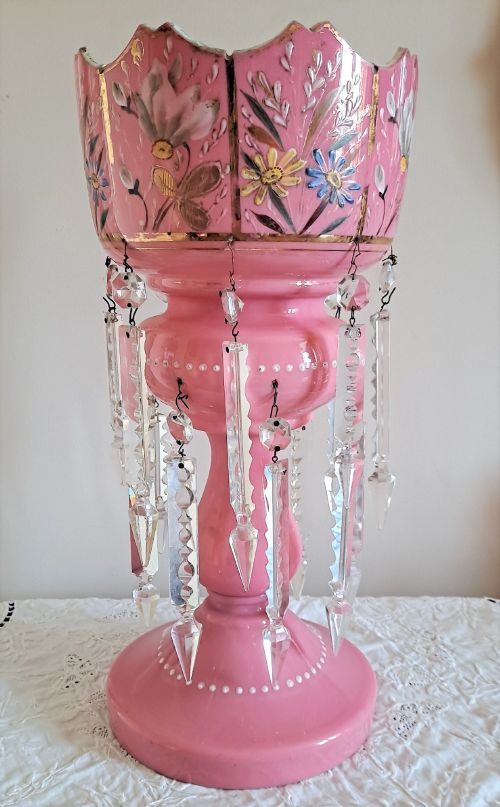
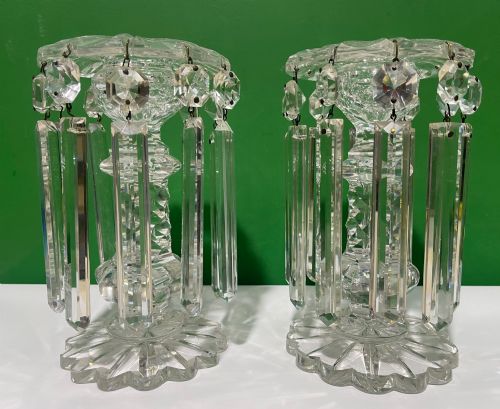
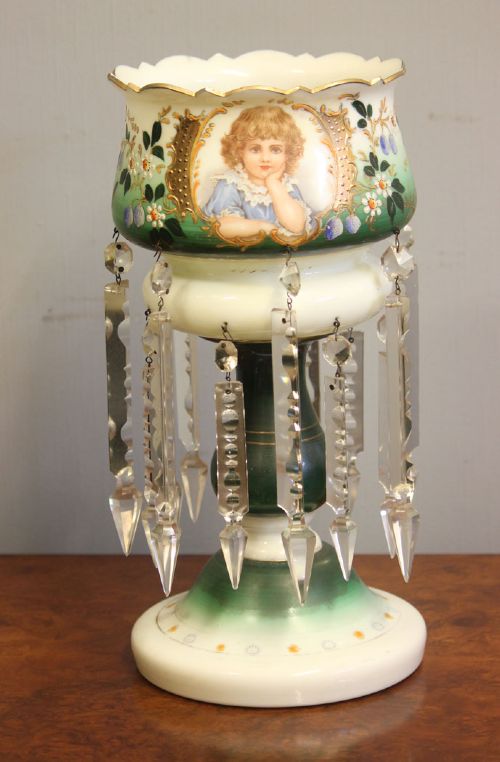
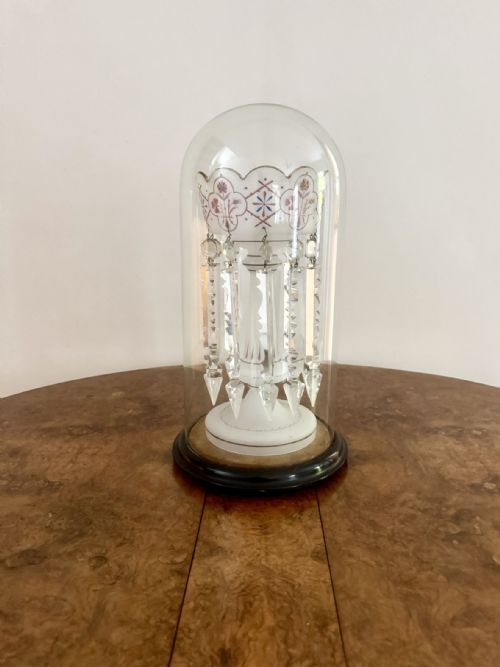
Victorian prism drop candlesticks are decorative glass candle holders hung with crystal lustres that catch the light.
Victorian Prism Drop Candlesticks
When you search for Victorian prism drop candlesticks, you are looking at decorative candle holders and mantel lustres designed to reflect and refract ambient light. These items emerge from the nineteenth century, with examples spanning the Victorian period alongside Regency and later nineteenth-century dates.
The versions you are most likely to meet on this page take the form of mantel lustres and pairs of glass candle holders. They appear in ruby glass, green glass, cranberry glass, and clear cut glass, often accompanied by hanging glass prisms or drops.
Makers and manufacturers produced these pieces in various configurations, including single items and balanced pairs. Their primary purpose shifted from functional illumination on mantelpieces to decorative display.
How they were made
The construction of these pieces relies heavily on moulded and blown glass, frequently enhanced by hand-cutting. Artisans shaped the main bodies in ruby, green, cranberry, or clear glass before adding surface ornamentation.
Gilt highlights and gold leaf details are applied to the glass or brass components, elevating the decorative scheme. Hanging glass prisms or drops are attached to the upper rims via small perforations, completing the traditional lustre form.
Victorian Prism Drop Candlesticks Retail Price Guide 2026
Typical asking prices for victorian prism drop candlesticks among the pieces listed under this phrase on Sellingantiques today, from the lower quarter to the upper quarter. They describe what is for sale here now, not the wider market.
The listings show glass and cut crystal as the primary materials, alongside gilt and brass accents.
What varies in quality
The distinction between standard examples and superior pieces rests on the depth of the glass cutting and the clarity of the material. Rich colour saturations in ruby and cranberry glass elevate the visual weight of an object.
The presence of matching sets of original cut glass drops dictates the integrity of a piece. Better examples retain their full complement of prisms, showing crisp facets that project light cleanly.
The Victorian Prism Drop Candlesticks Glossary
- Mantel lustre
- A decorative two-piece or single table ornament designed to sit on a mantelpiece, featuring hanging glass prisms. These objects combine the function of a candle holder with ornamental glass display.
- Prism drop
- A cut glass pendant suspended from the rim of a lustre to catch and refract light. They are typically attached by wire loops or metal pins.
- Ruby glass
- A deep red glass created by adding gold chloride to the molten batch during manufacture. This intense red colour is characteristic of mid-nineteenth-century decorative glassware.
- Cranberry glass
- A transparent pinkish-red glass produced through the use of copper or gold oxide. It appears frequently in Victorian table ornaments and mantel pieces.
Victorian Prism Drop Candlesticks: Frequently Asked Questions
What are mantel lustres?
Mantel lustres are decorative glass table ornaments designed to hold candles while displaying hanging cut glass drops. They were traditionally placed on mantelpieces to brighten Victorian rooms.
Unlike standard candlesticks, their primary function is the optical effect created when candlelight passes through the suspended prisms.
How do I hang the drops?
Glass drops hang from small holes around the rim of the lustre bowl using looped wire or metal connectors. Each drop must be aligned carefully to ensure balanced weight distribution.
When cleaning or moving the piece, remove the drops individually to prevent chipping or loss.
Are these pieces functional?
These items were originally manufactured to hold candles and illuminate interior spaces through reflected prism light. Many surviving examples retain sockets suitable for standard taper candles.
Today, they are more commonly displayed as decorative focal points on tables and mantelpieces rather than used for daily lighting.
How do I identify ruby glass?
Ruby glass exhibits a deep, saturated red colour that remains transparent when held up to a light source. It achieves its distinct tone through specific metallic oxides added during the glassmaking process.
Victorian examples often combine this red hue with gilt detailing or cut glass facets.