




Antique Glass Candle Lustres
Antique glass candle lustres combine functional lighting with prismatic sparkle, forming centrepieces that catch and scatter the light across a mantelpiece or table.
Antique Glass Candle Lustres
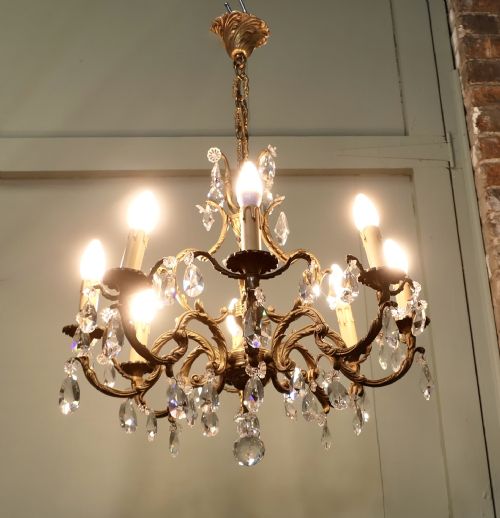
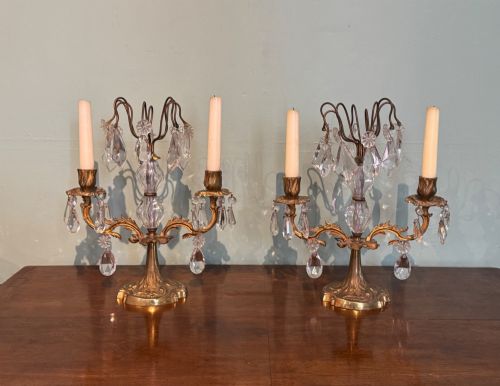
Antique glass candle lustres are decorative tabletop light fittings designed to hold candles while suspending faceted glass pendants from a central rim. These pieces take the form of mantel lustres, table lustres, and candelabra, frequently appearing in pairs to balance a fireplace or sideboard. The selection spans the nineteenth century, including Victorian, Regency, and William IV periods, alongside later examples from the early twentieth century.
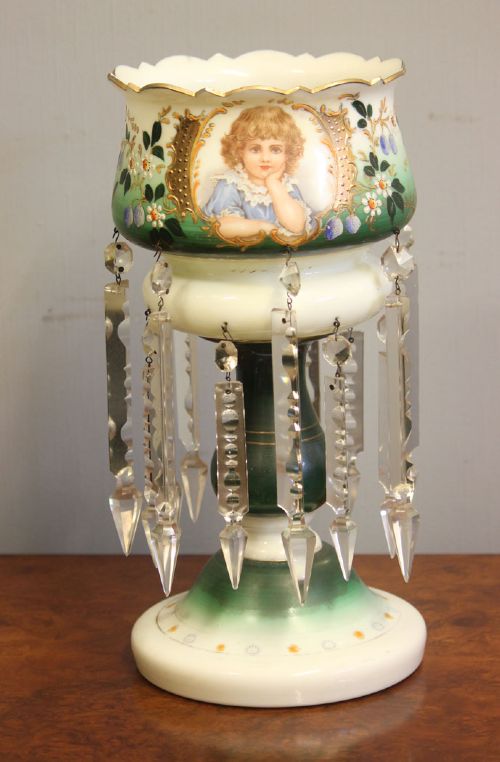
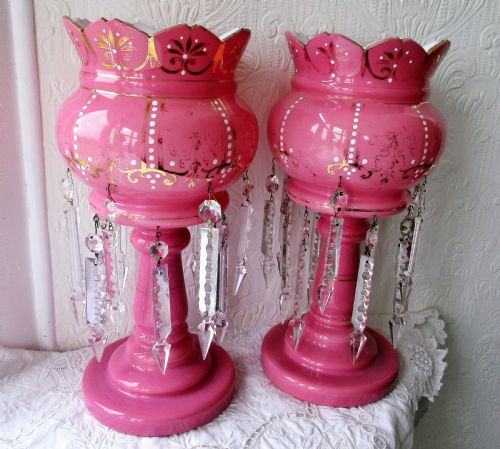
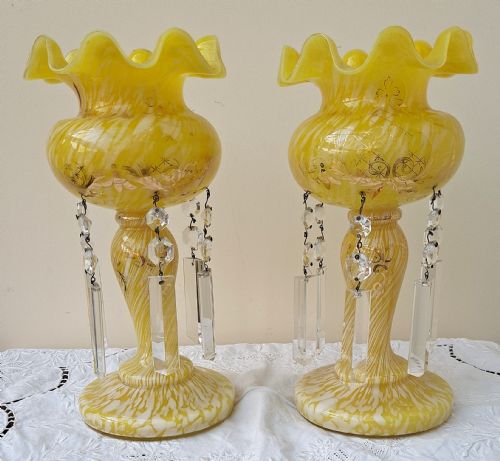
The forms originate from various European traditions, encompassing English, French, and Bohemian workshops, with specific regional variations in colour and metal mounting. Makers utilised ruby, green, pink, yellow, opal, and cranberry glass, often pairing coloured bodies with clear cut crystal prisms. Structural supports incorporate brass, gilt bronze, ormolu, and bronze, grounding the delicate glass components in heavy metal bases.
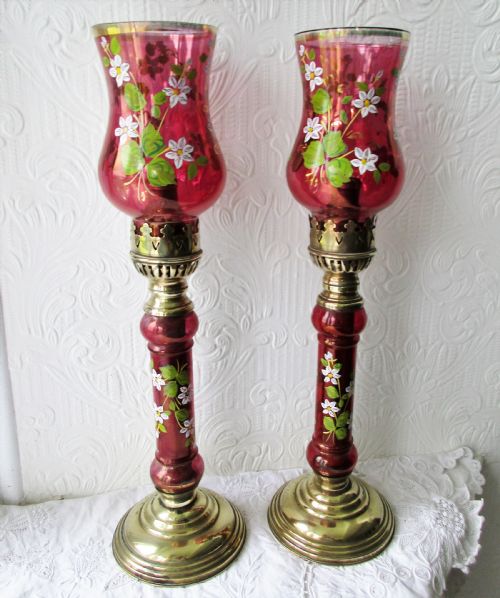
Beyond standard two-part mantel pieces, the category extends to larger chandeliers and candle-lamps fitted with storm shades or gilt capitals. Buyers encounter single lustres as well as matched pairs, with many items retaining their original hanging drops. The physical presence of these objects relies on the interplay between heavy moulded or cut glass bowls and the shimmering movement of suspended crystal prisms.
How they were made
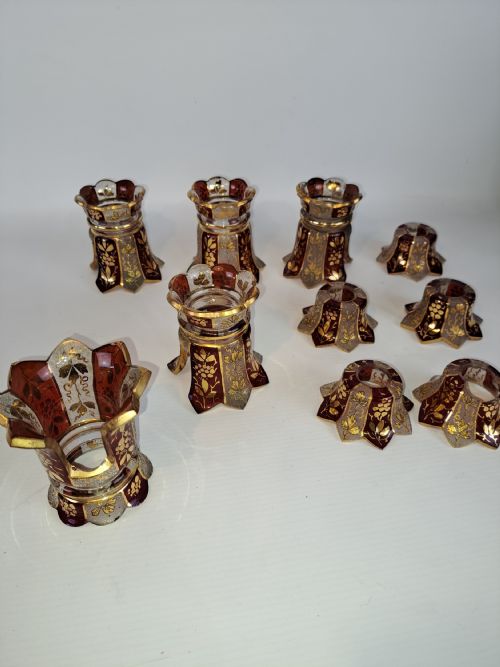
Glassmakers created the bodies of these lustres through blowing or moulding techniques, shaping heavy vessels of ruby, green, opal, or clear glass before applying surface decoration. Workers cut facets into the crystal or flash glass to enhance refraction, occasionally adding etched gilding or enamel detailing to the rims and bowls. Bohemian overlay methods produced multi-layered glass effects where contrasting colours were cut away to reveal the hue beneath.
Metal components such as brass, bronze, and ormolu were cast and chased to form sturdy bases, stems, and sconces that supported the heavy glass vessels. Artisans drilled the upper rims of the glass bowls to attach small metal rings, from which hand-cut crystal prisms and drops were suspended using wire loops.
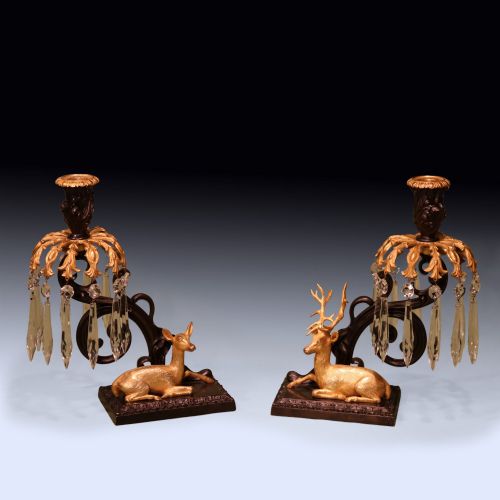
Stag and doe figures occasionally peek out from beneath the candle nozzles, holding up the lustre bowls like woodland bronze atlas figures.
What varies in quality
The distinction between standard and superior pieces rests on the depth of the glass cutting and the richness of the body colour, such as deep ruby or saturated green flash glass. Higher grade items display crisply faceted crystal pendants that match uniformly in length and cut, rather than mismatched or replacement drops. The integration of the metal mountings - whether gilt bronze, ormolu, or heavy brass - also dictates the calibre of the piece, with finer mountings showing precise chasing and solid construction.
Preservation of original gilding and enamel work elevates the standing of a lustre, as does the completeness of the hanging crystal fringe. Pieces that retain their matched sets of original prisms without chips or severe abrasions on the hanging points command greater interest from collectors. The weight and clarity of the glass itself signal the standard of the workshop.
The Antique Glass Candle Lustres Glossary
- Lustre
- A decorative tabletop candlestick fitted with a ring of hanging crystal pendants that catch the candlelight. These pieces were primarily ornamental centrepieces for nineteenth-century reception rooms.
- Prism
- A cut-glass pendant suspended from the rim of a lustre to refract light. Prisms come in various geometric shapes, including spear, button, and icicle forms.
- Flash glass
- Glass formed by coating a core of clear or coloured glass with a thin layer of a different colour before cutting through the outer layer. This technique creates high-contrast patterns and facets.
- Ormolu
- Gilded bronze mounts applied to the base or stem of a lustre. The technique involves fusing gold to a bronze metal base.
- Opaline
- An opaque or translucent pale glass popular in nineteenth-century decorative objects. It provides a smooth, milky surface often accented with gilt decoration.
Antique Glass Candle Lustres: Frequently Asked Questions
Where should I place antique glass candle lustres?
These pieces traditionally sit on mantelpieces, dining tables, or sideboards where ambient room light can pass through the hanging crystal prisms. Placing them near a light source or mirror maximises their reflective qualities.
Ensure they stand on a stable, flat surface away from heavy household traffic, as the suspended glass drops are vulnerable to accidental knocks.
Are the crystal drops usually original?
Many surviving examples retain their original hand-cut crystal drops, though replacements are common due to the fragile nature of hanging pendants over the decades. Inspecting the wear around the hanging holes and the consistency of the glass tint helps determine whether the drops match the age of the base.
Mismatched cuts or varying glass clarity among the pendants often point to later assembled replacements.
How do I tell Victorian lustres from Regency ones?
Regency period pieces typically exhibit cleaner, sharper geometric cutting, classical bronze or ormolu mounts, and restrained proportions influenced by neoclassical design. Victorian examples often showcase bolder colours such as deep ruby, emerald green, and pink, frequently paired with more ornate gilt encrustations or heavier moulded glass bodies.
Examining the metal casting style and the depth of the glass colour provides clear clues to the manufacturing era.