



Gilt Brass Candle Sticks
Gilt brass candle sticks bring brilliant metallic warmth to a room, turning a simple flame into a decorative focal point.
Gilt Brass Candle Sticks
These gilt brass candle sticks encompass everything from small chamber sticks to grand multi-light candelabras designed for formal tables. You will encounter pieces ranging from simple domestic designs to elaborate French revival forms.
The selection spans several centuries, drawing heavily on nineteenth-century Victorian production alongside earlier eighteenth-century examples. French workshops feature prominently, bringing classical motifs and ornate cast metalwork to the domestic interior.
Many items arrive as matched pairs, though single chamber sticks and larger church pieces also appear. They serve both to hold taper candles securely and to reflect the flickering light across polished surfaces.
Materials and construction
Foundry workers utilised solid brass and cast bronze as the primary structural metals for these items, often applying a mercury-gilded or ormolu surface finish to achieve a rich golden sheen. This chemical gilding bound a layer of gold amalgam directly to the base metal through intense heat.
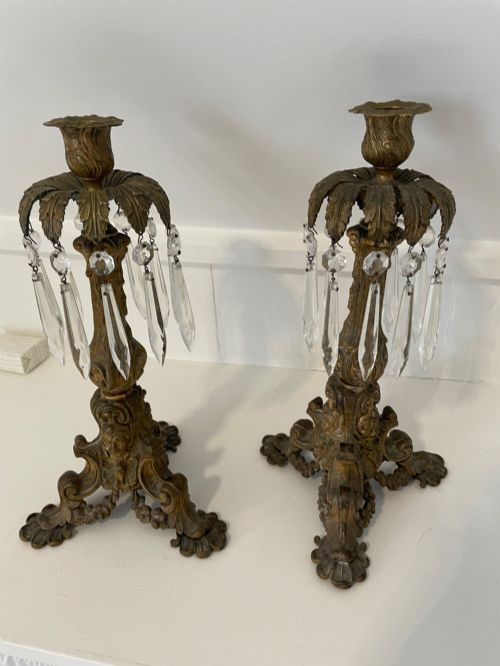
Secondary materials such as white marble, alabaster and agate frequently form the bases or column shafts, adding weight and textural contrast to the gleaming metalwork. Glass lustre drops occasionally hang from nozzles, catching the candlelight to create additional sparkle.
Gilt Brass Candle Sticks Retail Price Guide 2026
Typical asking prices for gilt brass candle sticks among the pieces listed under this phrase on Sellingantiques today, from the lower quarter to the upper quarter. They describe what is for sale here now, not the wider market.
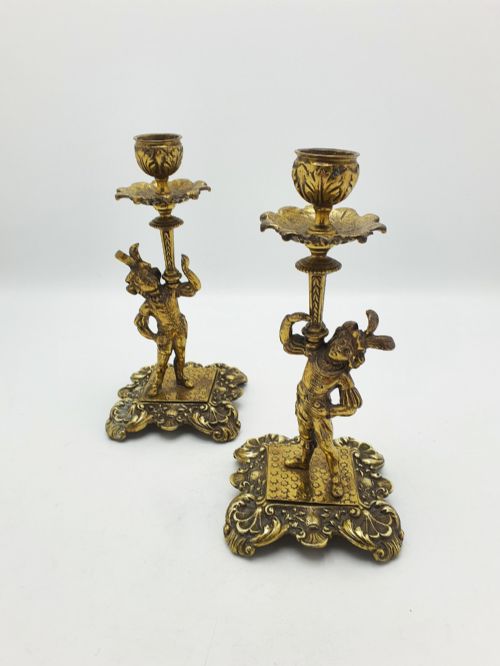
Dancing cherubs occasionally populate nineteenth-century stems, bringing a cheerful bounce to the dinner table.
Assessing quality and execution
The crispness of the chasing and engraving separates ordinary cast items from superior examples. Master metalworkers hand-tooled the cast surfaces after removal from the mould, sharpening acanthus leaves, cherubs and fluting to create sharp definition.
The weight and stability of the piece indicate the standard of manufacture. Top-tier items utilise heavy gauge cast brass combined with genuine marble or alabaster plinths rather than lighter hollow stampings.
The Gilt Brass Candle Sticks Glossary
- Ormolu
- A gold-coloured alloy of copper, zinc and sometimes tin, or the technique of applying finely ground gold to bronze. This finish creates the characteristic rich surface seen on French revival pieces.
- Chamber stick
- A low, saucer-like candleholder equipped with a handle and often a small conical snuffer. It lit the way to bed along drafty corridors.
- Candelabra
- A branched candlestick holding multiple taper candles from a single central stem. These larger fixtures often incorporated marble plinths and figural elements.
- Gilt bronze
- Bronze metal treated with a gold leaf or mercury gilding process. It offers deep durability and a warm metallic lustre.
- Lustre drop
- A cut glass or crystal pendant suspended from the nozzle or drip pan of a candleholder. They refract the ambient light.
Gilt Brass Candle Sticks: Frequently Asked Questions
How do I clean gilt brass candle sticks?
Dust the metal gently with a soft dry cloth to remove surface particles.
Avoid harsh commercial metal polishes, as abrasive compounds will strip away the historic gilt layer completely.
How do I date a pair?
Examine the cast details, assembly screws and secondary materials like marble or alabaster.
Stylistic cues such as French Rococo Revival or Victorian Gothic Revival point directly to specific decades within the nineteenth century.
What is the difference between ormolu and gilt brass?
Ormolu specifically denotes a mercury-gilded bronze metalwork associated with high-end French decorative arts.
Gilt brass applies a similar gold finish to a standard brass base, which appears frequently in domestic Victorian production.