


French Rococo Candlesticks
French rococo candlesticks bring elaborate asymmetry and fluid, organic scrolls into a room, largely originating from the nineteenth century.
French Rococo Candlesticks
French rococo candlesticks combine asymmetrical forms with shell and scroll motifs, following the decorative vocabulary associated with Louis XV style and nineteenth-century revivals.
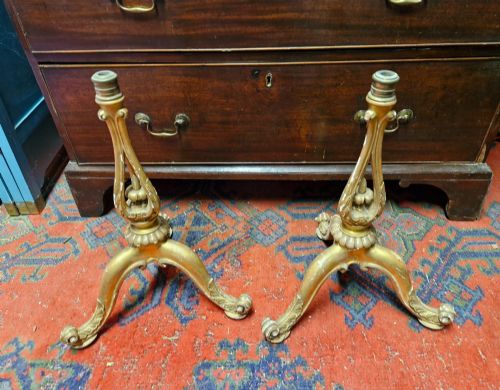
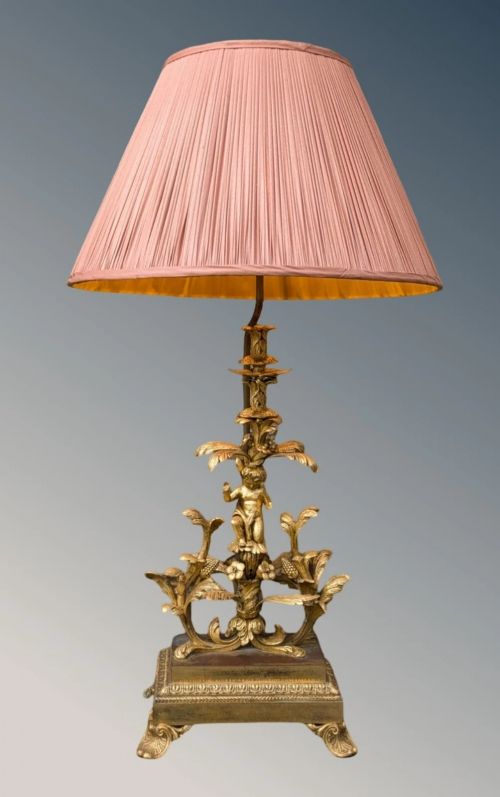
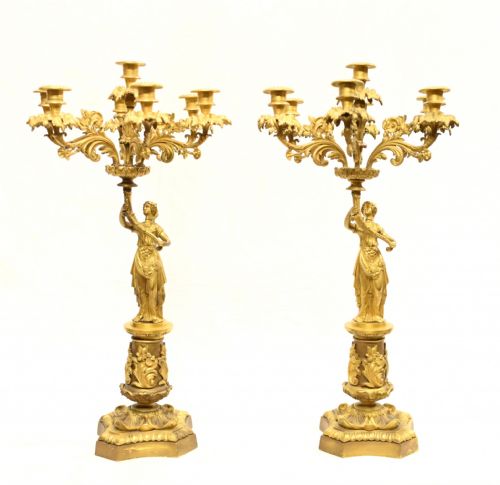
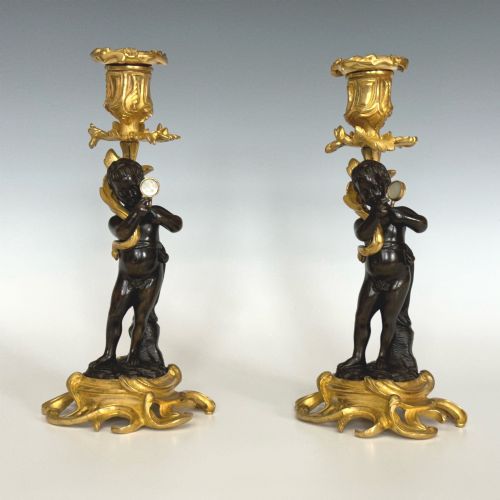
Buyers will most frequently encounter nineteenth-century pairs, ranging from simple brass stems to elaborate multi-branch candelabra fitted with cherubs, putti, or marble bases.
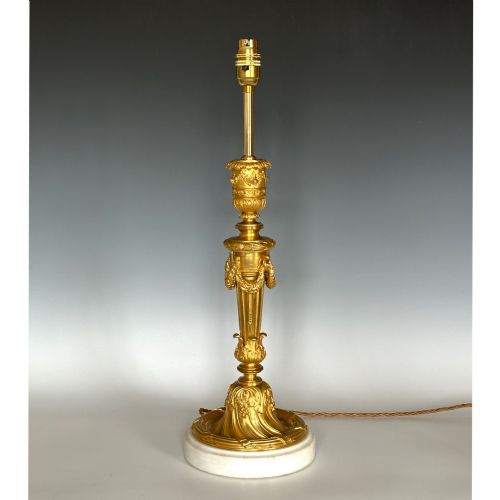
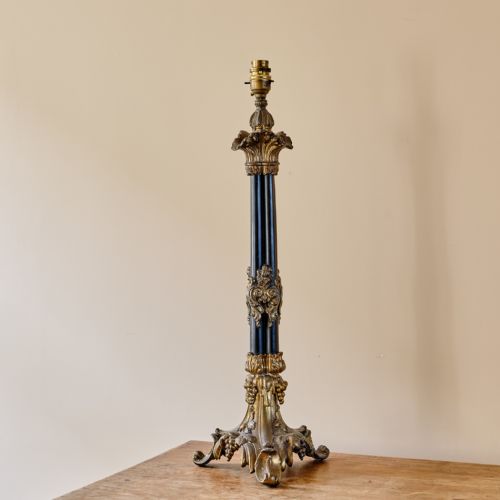
Many examples from this period also appear converted into table lamps or fitted with glass lustres, showing how these decorative objects adapted to later domestic lighting needs.
How They Were Made
Foundry workers utilised bronze, brass, and ormolu, employing cast bronze techniques to achieve the characteristic undulating lines and high-relief decoration.
Gilding methods, including mercury gilt or ormolu, created a rich metallic surface finish that highlights the intricate chasing and scrollwork.
Combinations with contrasting materials such as white or dark marble bases and glass components added structural weight and visual depth to the finished pieces.
Listings feature nineteenth-century materials including gilt bronze, ormolu, patinated bronze, and marble bases.
What Varies in Quality
The crispness of the chasing and hand-finishing on cast bronze elements separates standard production from superior work, as sharper definition reveals better workshop skill.
Substantial weight in the metal and the presence of securely fitted multi-branch components indicate robust construction rather than lighter, hollow casting.
The integration of secondary materials, such as finely turned marble plinths or well-preserved gilding, distinguishes the more ambitious pieces.
Meissen
The French Rococo Candlesticks Glossary
- Ormolu
- Gilded bronze produced by applying a mercury-gold amalgam to a bronze base and heating it. This technique gives the metal a distinctive warm lustre.
- Candelabra
- A branched candlestick holder designed to support multiple candles simultaneously. These often feature removable bobeches to catch wax drips.
- Putti
- Depictions of chubby male infants, frequently used as sculptural supports in rococo design. They appear widely on nineteenth-century bronze bases.
- Louis XV Style
- A revival aesthetic mimicking the asymmetrical curves, C-scrolls, and naturalistic motifs of the mid-eighteenth century. It dominates nineteenth-century French metalwork.
- Lustre
- A glass pendant hung from the arms of a candleholder to refract light. They dangle around the central stem to increase visual sparkle.
French Rococo Candlesticks: Frequently Asked Questions
Are these candlesticks usually sold as pairs?
Most surviving examples appear as matched pairs, which makes them suitable for mantelpieces or sideboard displays.
Single items do occur, though pairs remain the standard format for decorative pairs in this category.
How do I identify a nineteenth-century piece?
Nineteenth-century examples rely on revival styles like Louis XV and Napoleon III, using cast bronze and ormolu.
Construction details, such as threaded fittings and heavier casting techniques, typically distinguish these from earlier eighteenth-century work.
Can these converted lamps be reversed?
Many items have received electrical fittings through the central socket without drilling major structural holes.
Reversing the process depends on how the wiring was routed through the original candle tube or stem.
What is the difference between ormolu and brass?
Ormolu consists of gilded bronze finished with a gold-mercury layer, giving it a deep metallic sheen.
Brass is a solid copper and zinc alloy that shows a yellower tone and lacks the historic mercury gilding process.