





Ormolu Brass Candle Stands
These ormolu brass candle stands bring warmth and classical detail to a room, offering heavy cast metal and rich gilding.
Ormolu Brass Candle Stands
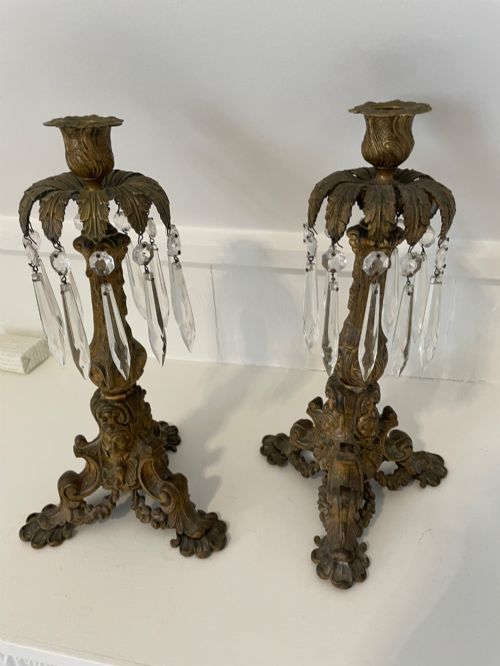
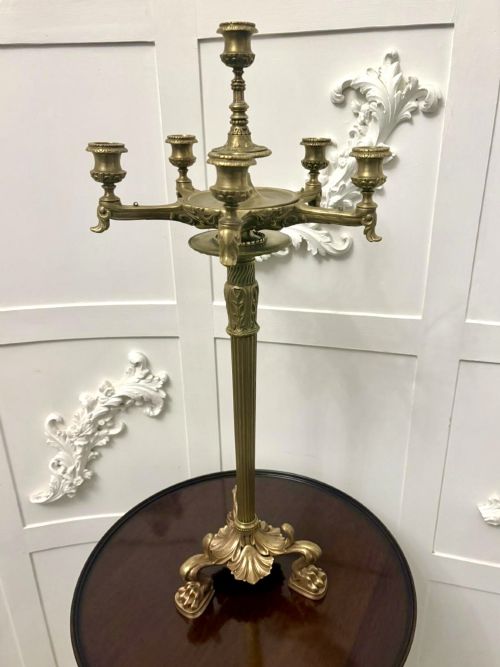
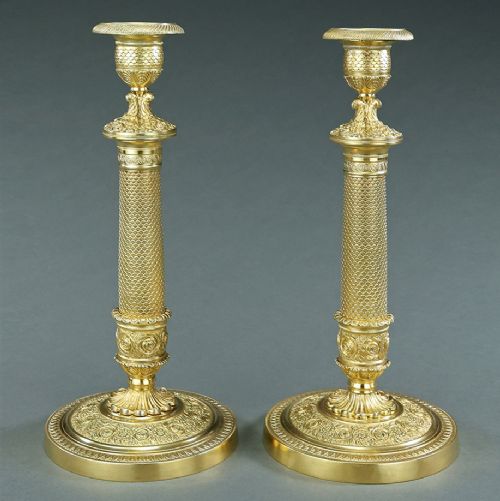
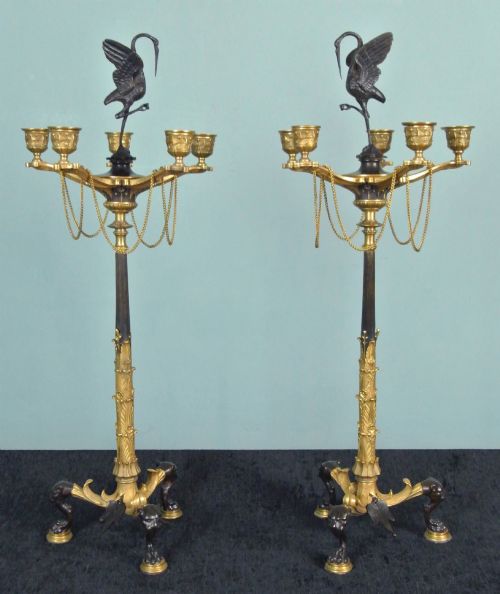
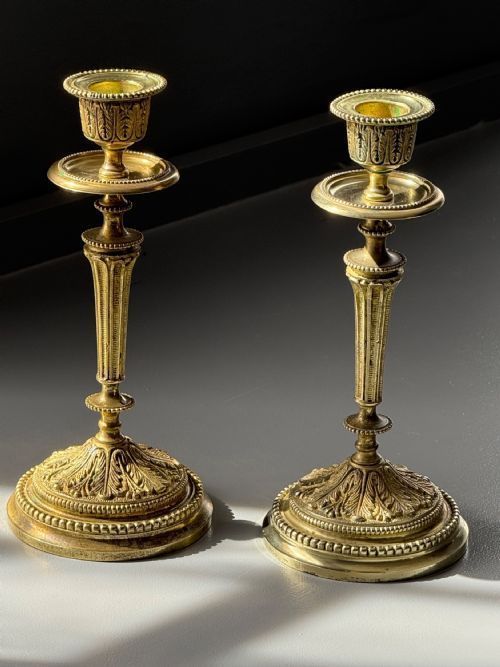
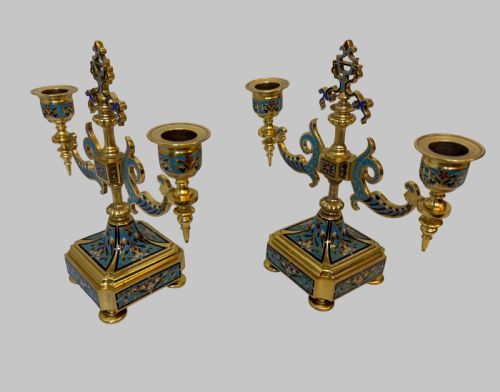
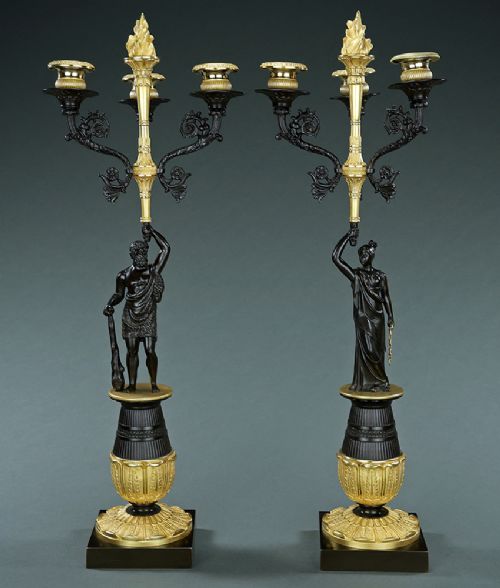
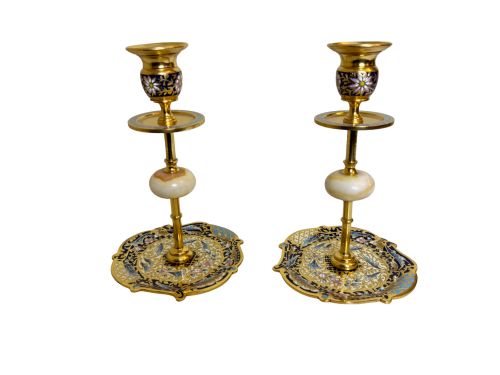
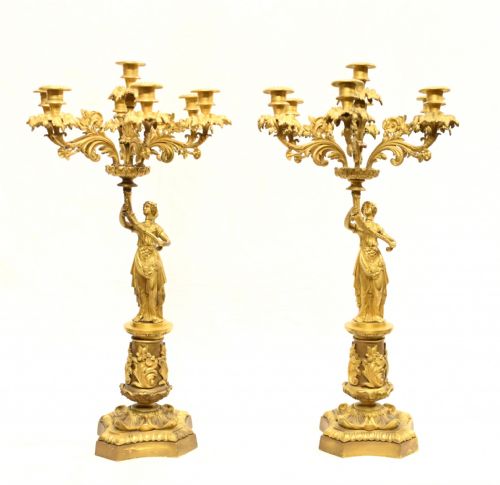
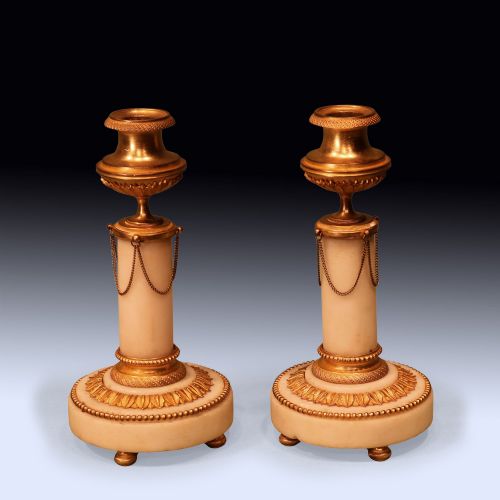
When you search for ormolu brass candle stands, you encounter a range of items designed to hold candles securely while adding decorative presence to a room. These objects include single candlesticks and multi-armed candelabras, often formed as pairs.
The pieces appearing on this page span several periods, from the eighteenth century through the nineteenth century and into the early twentieth century. Styles range from French Empire and Louis XVI to Regency and Victorian interpretations.
You are most likely to meet nineteenth-century French and English pairs featuring cast metalwork combined with marble or enamel. Forms extend from simple columnar candlesticks to figurative candelabras with multiple arms.
How they were made
Maker workshops utilised brass, bronze, and gilt metals to cast structural components and decorative motifs. Ormolu, or gilt bronze, provides a bright golden surface finish created by applying mercury amalgam or gold leaf to a base metal.
Many items incorporate contrasting materials such as white marble bases, onyx sections, cut glass, and champleve enamel panels. Individual components are cast in sections and secured with internal threaded rods or pins.
Ormolu Brass Candle Stands Retail Price Guide 2026
Typical asking prices for ormolu brass candle stands among the pieces listed under this phrase on Sellingantiques today, from the lower quarter to the upper quarter. They describe what is for sale here now, not the wider market.
Several stands incorporate porcelain birds perched quietly among the metal scrollwork, waiting patiently for the room to grow dark.
What varies in quality
The standard of a piece depends heavily on the crispness of the chasing and the depth of the metal casting. Superior examples show sharp relief in foliate scrolls, figures, and architectural details rather than softened edges from worn moulds.
The quality also rests in the weight of the bronze or brass and the preservation of the original fire gilding. Heavier castings combined with genuine marble plinths or inset enamel work indicate higher production standards.
Barbedienne Bronze
The Ormolu Brass Candle Stands Glossary
- Ormolu
- A gold-coloured alloy or the technique of applying finely ground gold to bronze objects. This process produces a rich, lasting metallic lustre.
- Candelabra
- A branched candlestick designed to hold multiple candles at once. These stands often feature a central shaft with radiating arms.
- Champleve
- An enamelling technique where troughs are dug into a metal surface and filled with vitreous paste before firing. The resulting coloured patterns sit flush with the metal.
- Torchiere
- A tall stand or candlestick designed to elevate a light source above floor level. They frequently appear in wood or metal forms.
- Regency
- A British design period spanning the early nineteenth century. Pieces from this era draw heavily on classical Greek and Roman motifs.
Ormolu Brass Candle Stands: Frequently Asked Questions
How do I clean ormolu candle stands?
Dust gently with a soft dry brush to remove particles from deep recesses. Avoid harsh chemical polishes that strip the thin gold surface layer.
Water and soap can damage porous elements like marble bases or enamel insets. Keep moisture away from vulnerable joints and mixed media surfaces.
Were these stands made as pairs?
Many surviving examples were produced as balanced pairs to flank mantelpieces, sideboards, or console tables. Matching sets remain common across nineteenth-century production.
Single stands do appear, often having lost their counterpart over time or originating from larger arrangements.
What is the difference between a candlestick and a candelabra?
A candlestick supports a single candle on a vertical shaft and base. They typically occupy less space and feature simpler silhouettes.
A candelabra includes multiple branches extending from a central stem to hold several candles simultaneously. These offer a wider spread of light and heavier ornamentation.
How do I identify a nineteenth-century piece?
Examine the construction methods visible on the underside or interior threaded components. Nineteenth-century castings often utilise hand-cut screws and heavier gauge brass.
Stylistic cues such as Victorian proportions or French Empire classical motifs help anchor the object within specific decades.