




Ormolu Candlestick Lustres
These ormolu candlestick lustres combine gilded metalwork with hanging glass prisms to catch and multiply the flicker of candlelight.
Ormolu Candlestick Lustres
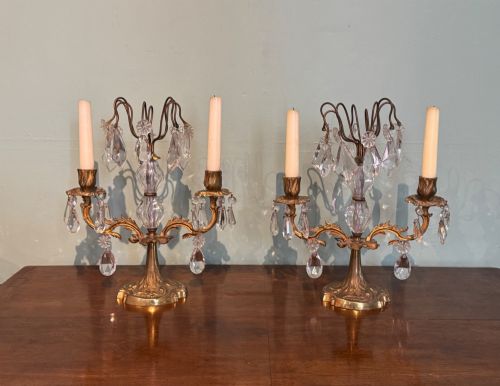
When you search for ormolu candlestick lustres, you encounter decorative table lighting designed to illuminate formal rooms while sparkling in the candle flame. These pieces frequently appear as matched pairs featuring central sconces surrounded by suspended glass drops.
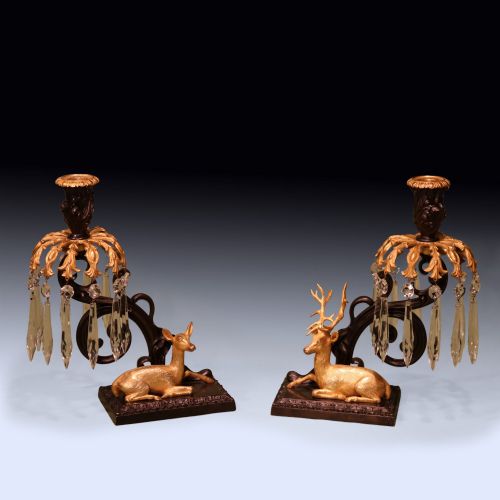
The selection on this page spans several distinct periods, with Regency and nineteenth-century examples forming the core of the offerings. Makers often combined gilded mounts with patinated bronze figures such as stags, does, or griffins to support the candle nozzles.
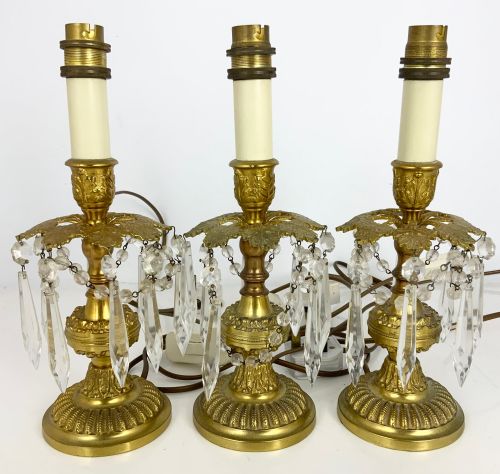
Alongside traditional candlesticks, the listings include multi-branched candelabra and occasional pieces adapted into table lamps. These diverse forms reflect how successive generations repurposed fine lighting for changing domestic interiors.
How they were made
The construction relies on the union of cast metalwork and faceted glass elements. Artisans formed the primary frames from bronze, brass, or softer metal alloys, applying mercury gilding or surface finishing to achieve the distinctive ormolu appearance.
Cut glass and crystal formed the dangling lustres and bobeches that suspend from the metal branches. Small wire loops or pins connect these glass drops, allowing them to sway and catch the light whenever air moves in the room.
Listings for ormolu candlestick lustres span the eighteenth century, the Regency era, and the Victorian period, frequently employing cut crystal and patinated bronze.
What varies in quality
The clarity and cutting of the glass drops also separate standard production from superior work. High-quality lustres feature deep hand-faceting that refracts light cleanly, paired with matching original glass components rather than later replacements.
The Ormolu Candlestick Lustres Glossary
- Ormolu
- A gilded bronze or brass finish produced by applying a gold amalgam to the base metal. It provides a warm, durable golden lustre that resists tarnishing over decades.
- Lustre
- A glass pendant or drop hung from the upper sections of a candlestick or candelabrum. These elements amplify the illumination by reflecting the candlelight.
- Candelabra
- A branched lighting fixture holding multiple candles simultaneously. They offer a grander scale than single candlesticks.
- Patinated bronze
- Metal darkened through chemical treatment or natural ageing to create contrast against bright ormolu mounts. It frequently appears on figural bases depicting animals or mythical creatures.
- Bobeche
- A collar or drip pan fitted beneath the candle nozzle to catch melting wax. They often support the wire pins from which glass lustres hang.
Ormolu Candlestick Lustres: Frequently Asked Questions
Were these pieces wired for electricity?
Most antique examples were originally made exclusively for wax candles before later owners adapted them for modern lighting. Some listings preserve the pure candle form while others include electrified table lamp conversions.
Check the individual descriptions to determine if the wiring is modern or if the piece retains its original lighting configuration.
How do I spot a matched pair?
Examine the casting details, base dimensions, and the exact count and shape of the glass drops. Hand-cast and hand-cut antiques often display subtle irregularities that confirm they grew together in the workshop.
Matching patination and identical wear patterns across both items further verify that they originated as a unified pair rather than assembled mates.
What distinguishes Regency period examples?
Regency pieces often incorporate classical revival motifs, patinated bronze figures like griffins or stags, and precise ormolu mounts. The overall design language draws heavily on ancient Roman and Greek aesthetics.
These items date from the early nineteenth century and represent a high point in British and French decorative metalwork.